The post Traitors star Amanda helped by north Wales walk to say ‘goodbye mum’ appeared first on CANADA VOICE.
]]>By Lucy Wallis,BBC News
Amanda Lovett, star of the first series of The Traitors, used to keep her mother’s ashes beside her bed. She’d had trouble saying goodbye. But a trip of a lifetime with six strangers gave her the courage to move on.
Amanda, 56, was catapulted to public attention in the BBC’s first series of The Traitors – where she donned her hooded cloak, before being betrayed by a fellow traitor and banished by the faithfuls when her deception was uncovered.
She is stepping away from the dark side and into the light – as one of seven well known personalities, of differing faiths and beliefs, to tackle a modern-day pilgrimage for a new BBC Two series. Walking the North Wales Pilgrim’s Way, Amanda followed in the footsteps of the ancient pilgrims on a spiritual and personal journey.

BBC/CTVC / Amanda (right) with her fellow pilgrims, Christine McGuinness, Eshaan Akbar, Sonali Shah, Tom Rosenthal, Michaela Strachan and Spencer Matthews
As a mother of five and grandmother of six, Amanda decided to go on The Traitors and Pilgrimage because “it was my time to be me”, she says, and “not have to worry about school runs”.
As a practising Catholic, she initially wanted to go on the BBC Two show to question her faith, particularly as she disagreed with its more traditional stance on same-sex relationships. After her appearance on The Traitors, Amanda was warmly embraced by the LGBTQ+ community, who she describes as a family.
“I have gone from a traitor to a pilgrim in a year. You couldn’t ask for a better student, could you?” says Amanda.
But her journey took her on a different path, as she began to realise there was something she needed to let go of.
Amanda’s childhood was unconventional, particularly her relationship with her mother.
“She wasn’t a doting, loving mother,” says Amanda. “My mum was a functioning alcoholic, which I know now. I didn’t know growing up. She came over from Ireland. She couldn’t read and write when she met my dad.
“My mum was a bingo lady, with the American tan tights and the Benson and Hedges cigarettes.”
Growing up, Amanda wanted a more conventional “Kellogg’s cornflakes advert family”. She wanted to feel “normality and acceptance”, she says, as her family was so different from her friends and peers at school.
Amanda’s father passed away when she was just 10 years old, and she says she had to take on more adult jobs – like dealing with letters and bills.
But when her mother died six years ago, Amanda couldn’t bring herself to say goodbye.
“I’d looked after her for so many years and I just wasn’t ready to let her ashes go,” she says.
“My sister said to me, ‘She’s got to go back to Ireland, that’s where she wanted to go,’ and I was being selfish and I said, ‘No, she’s not going, I want to keep her’.”
Amanda would cuddle her mother’s ashes when they were in a box, she says, before she placed them in an urn, which sat by the side of her bed.
“I’m back with my first husband,” says Amanda, “we’d got divorced, but we’re back together.
“He used to say, really, do you have to keep her by the side of our bed?”

BBC/CTVC / Amanda, with wildlife presenter Michaela Strachan – who places her faith in the natural world
In a pivotal moment on the pilgrimage, Amanda realised it was finally time to say goodbye when a priest, who leads community worship high up in the Welsh hills, spoke about a place where the barrier between Earth and heaven is thinner.
“We were taught about a ‘thin place’, which is when you breathe and you look out at the world and it’s almost like the most beautiful thin line between our world and heaven,” says Amanda.
Sitting on the beach one day, with her fellow pilgrims, she looked up at the sky and saw “the most beautiful face in the clouds” she says. She wasn’t sure whose face it was, but she knew it meant it was time to let her mother go.
“I felt this warmth,” she says, “this huge, beautiful golden warmth coming through me.”
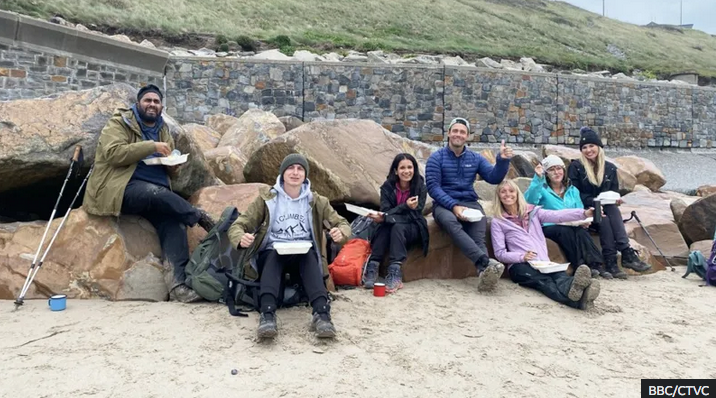
BBC/CTVC / The pilgrims take a rest on Traeth Aberdaron beach in Gwynedd in the north-west of Wales
After filming the show, Amanda honoured her mother’s wishes and took her back to Ireland and feels at peace now with their relationship.
“It was such a release for me, and a happy release, that I almost could feel her flying. I could feel her wings and so the [Pilgrimage] journey that I went in for, really I came out with a totally different journey.”
Religious or not, Amanda feels everyone could benefit from the breathing space of a pilgrimage. The time to walk and appreciate the beauty of the natural world, away from the hectic, pressurised pace of life.
“We all talk a lot, but I don’t think people actually listen anymore, sit and actually listen to one another,” she says.

BBC/CTVC / Amanda formed a close friendship with Christine McGuinness, seen together here on the right
She enjoyed getting to know her fellow pilgrims and formed a close bond with TV personality Christine McGuinness, whose father battled addiction during her childhood.
Like many, Amanda was glued to the second series of The Traitors, but felt grumpy watching the first episode.
“I was quite protective over my cloak,” she says. “I was like, ‘Well, who’s going to wear my cloak this time, I hope they’re worthy of it.”
Amanda thinks Harry Clark, a traitor who went on to win the second series, played a “marvellous game” and “had nerves of steel”.
When Harry came face-to-face with his close friend Mollie Pearce at the roundtable, he denied he was a traitor as she questioned him in the nail-biting final moments.
Amanda says she doesn’t think she would have been able to keep up the pretence of being a traitor with Mollie.
“But Harry, gosh, he just stood there at the end and said, ‘No, I’m not’.”

Getty Images / Amanda, with fellow traitor from series one, Wilfred Webster, who made the final but missed out on the prize money
It is very difficult, says Amanda, when you have invested your trust in someone.
“I think Mollie did know,” she says.
But as in life, even if your gut feeling is telling you something different, because you’ve invested your time and trust in that person, “it’s like admitting you’re wrong, so it’s a very difficult thing to do,” says Amanda.
If there was ever an all-stars version of The Traitors, she would love to return to the castle and see Claudia Winkleman again.
But would she want to be a traitor or a faithful this time?
“Oh, traitor, absolutely, so much fun,” she says.
“It’s like playing Cluedo, but being live playing it, and the wickedness,” she says. “I suppose the little wicked streak that we’ve all got in us just comes out.”
Pilgrimage: The Road Through North Wales starts on Friday 29 March at 21:00 GMT on BBC Two. Or catch up afterwards on BBC iPlayer..
If you are affected by any of the issues raised in this story, support and advice is available via the BBC Action Line.
The post Traitors star Amanda helped by north Wales walk to say ‘goodbye mum’ appeared first on CANADA VOICE.
]]>The post Homan dethrones Switzerland’s Tirinzoni to win Canada’s 1st curling world title since 2018 appeared first on CANADA VOICE.
]]>Gregory Strong · The Canadian Press
Riding one of the strongest seasons in recent curling history, Canada skip Rachel Homan had every reason to be confident entering the final at the women’s curling world championship in Sydney, N.S.
On Sunday night, she again showed no fear and it paid off with her first world title since 2017.
Homan made a game-turning split for three points in the ninth end and forced Silvana Tirinzoni of Switzerland to concede in the 10th for a 7-5 victory.
“I believed in my team and my team believed in me,” Homan said.
Homan and her top-ranked side of third Tracy Fleury, second Emma Miskew and lead Sarah Wilkes ran the table at the national championship and picked up where they left off against the 13-team field at Centre 200.
Canada was 11-1 in round-robin play and beat South Korea’s Gim Eun-ji in the semifinal. When Switzerland beat Italy’s Stefania Constantini in the other semifinal, it set up a one-versus-two showdown that was as tight a matchup on ice as it looked on paper.
With Carole Howald, Selina Witschonke and Tirinzoni setting up the steady Alina Paetz at fourth, the defending champions wrested hammer from the Ottawa-based side with a force in the opener.
Canada made some small mistakes early as Miskew hit and rolled out in the second end and Homan’s freeze attempt was slightly off. Paetz made a soft hit for two and the lead.
Canada was forced again in the third end and Homan’s final stone undercurled in the fourth to set up a Swiss hit for two. But Paetz was heavy on back-to-back throws in the fifth to allow Canada to pull even with a pair.
“We had to ride out the storm a little bit,” said Canadian coach Viktor Kjell.
After the break, two blanks preceded an eighth end with rocks in play. Fleury made a hit that rolled frozen on the button and Tirinzoni couldn’t blast out the Canadian stones.
Homan made a hit to sit four and Paetz was forced to draw for one.
Critical 9th end
In the critical ninth end, Homan made two great team shots that turned the game.
Her rocket double-takeout left Canada sitting three. Paetz followed with a double-takeout that left Canada as shot stone with two Swiss rocks on the back of the 12-foot ring.
Homan elected to tap her own rock just before the rings and both stones rolled in to score three, thrilling the near-sellout crowd of 4,373.
“It was just a phenomenal team shot to really get a leg up on Switzerland for the first time in the whole game,” she said.
Tirinzoni was hoping to get a force on the Canadians in that end.
“Our chance to win would have been so much higher, but you have to make all the shots and we didn’t,” she said.
The Swiss players offered handshakes when they didn’t have a shot to tie the game in the 10th. That ended Tirinzoni’s streak of four straight world titles and improved Homan’s season record to an incredible 62-6.
“It’s really hard to sum it up,” Kjell said. “I think it’s going to take a long time before another team in the world can have a season like this.”
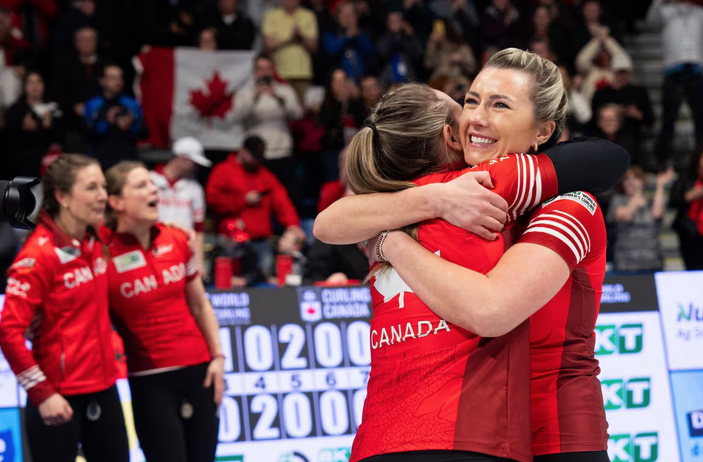
Miskew, right, and Homan celebrate their second world title on Sunday. (Scott Tanner-USA TODAY Sports via Reuters)
‘She was on fire’
All eight players shot at least 78 per cent. Team totals were virtually identical with Switzerland shooting 87 per cent to Canada’s 86 per cent.
Homan led all fourths throughout the competition at 88.6 per cent.
“She made a ton of shots this week,” Miskew said. “She was on fire.”
In round-robin play, Homan ended Tirinzoni’s 42-game win streak at this competition. The Canadian’s lone loss came in an essentially meaningless playoff tune-up against Gim when the first seed was already secured.
“The more games we have together, the stronger we get,” said Fleury, who joined the team at the start of the quadrennial.
Drought ends
Homan’s title also ended Canada’s six-year gold drought at this event. Jennifer Jones was the last Canadian to win, taking top spot in 2018 in North Bay, Ont.
Homan has also won the last two Grand Slam titles. She’ll cap her memorable campaign at The Players’ Championship next month in Toronto.
“It’s one of the best seasons I’ve ever heard of,” said Canadian fifth Rachelle Brown.
Earlier Sunday, Gim defeated Italy 6-3 to win the bronze medal.
Homan and Miskew were named all-stars and Howald took the nod at lead. Sweden’s Sara McManus was named top third and Italian second Angela Romei won the sportsmanship award.
Overall attendance at the nine-day event was 45,602. Uijeongbu, South Korea will host next year’s world women’s championship.
The men’s curling world championship begins Saturday in Schaffhausen, Switzerland. Brad Gushue of St. John’s will skip the Canadian team.
CBC’s Journalistic Standards and Practices|About CBC Sports
Corrections and clarifications|
From left: Canada skip Rachel Homan, third Tracy Fleury, second Emma Miskew, lead Sarah Wilkes and alternate Rachelle Brown celebrate after defeating Switzerland 7-5 for gold at the women’s curling world championship in Sydney, N.S., on Sunday. (Frank Gunn/The Canadian Press)
The post Homan dethrones Switzerland’s Tirinzoni to win Canada’s 1st curling world title since 2018 appeared first on CANADA VOICE.
]]>The post The ‘Lost Games:’ When the Olympics are stopped by extraordinary world events appeared first on CANADA VOICE.
]]>(CNN)It was meant to be the first Games to be held beyond Europe and North America, a spectacle to showcase to the world that Tokyo had overcome the earthquake that had devastated the city some years earlier. But the 1940 Olympics was the Games that never was.
No one aged under 80 had ever lived through a time when the Olympics was postponed or canceled until Tuesday’s announcement that Tokyo 2020, originally scheduled to start this July, will now be held next year.
As a pandemic takes hold of the world and the International Olympic Committee and Tokyo 2020 organizers grapple with the complicated logistics involved in holding the greatest show on earth later than planned, a look at the past throws up some uncanny similarities between now and what has been described by some as the Lost Games of 1940.
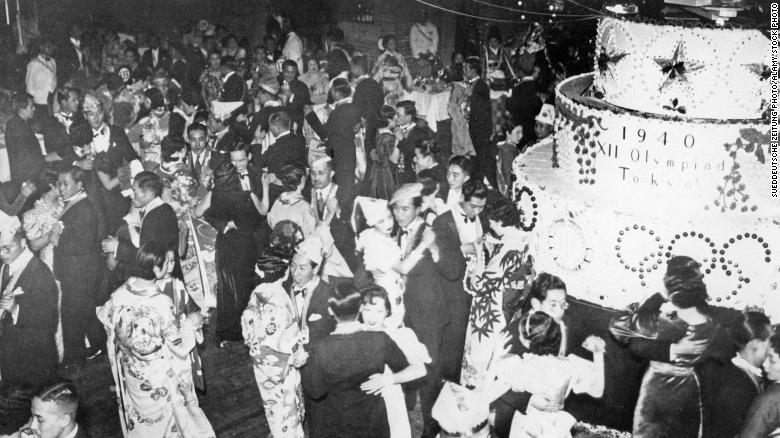
At a Christmas party in Tokyo, on the right is a large cake with the inscription 1940 XII Olympiad Tokyo to celebrate the upcoming Olympics in Japan.
Glory on the world stage
Before the 2020 Olympics was postponed, sport’s biggest extravaganza has been called off three times in modern history, all in wartime, and the last time being the year Tokyo was supposed to be the host city.
It was the success of Japan’s athletes at the 1932 Olympics in Los Angeles and international criticism of the country’s invasion of Manchuria in 1931, as the Japanese empire continued to expand into China, which helped persuade the country’s government to fully support an Olympic bid, something which had previously been the preserve of elite cities in the west.
Japan’s male swimmers had dominated in LA and, as David Goldblatt writes in his book “The Games”: “The correlation between international prestige and Olympic achievement … made the idea of a Japanese Olympics first plausible, then desirable and, finally, an essential element of foreign policy.”
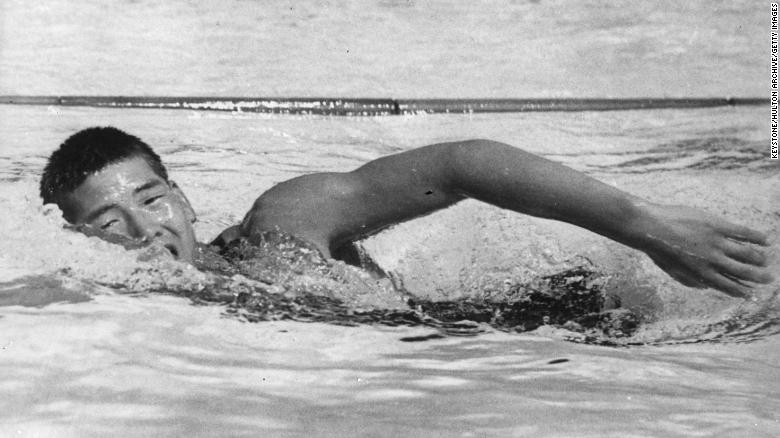
Yasuji Myiazaki of Japan on his way to a gold medal in the 100m freestyle swimming event at the 1932 Los Angeles Olympics. The 15-year-old set a new Olympic record of 58.0 seconds in the semi-final. (Photo by Keystone/Getty Images)
Just as the 2020 Olympics were billed as the “Recovery Olympics” nine years after the Fukushima disaster, Nagata Hidejiro, the mayor of Tokyo, had first announced in 1930 a bid for the 1940 Games, envisioning the Olympics as a way of aiding the city’s recovery from the earthquake of 1923, which had destroyed much of the metropolitan region.
An Olympics in Tokyo in 1940 would also coincide with the 2,600th anniversary of Emperor Jimmu’s mythical accession and the foundation of the nation. Goldblatt described it as the “perfect notion around which to build support for a Japanese Olympics in an increasingly nationalist culture.”
The campaigning begins
In the 1930s, Japan had Olympic pedigree. In 1912, it had become the first non-European/American country to participate in the Olympics and, significantly, also had delegates on the International Olympic Committee (IOC).
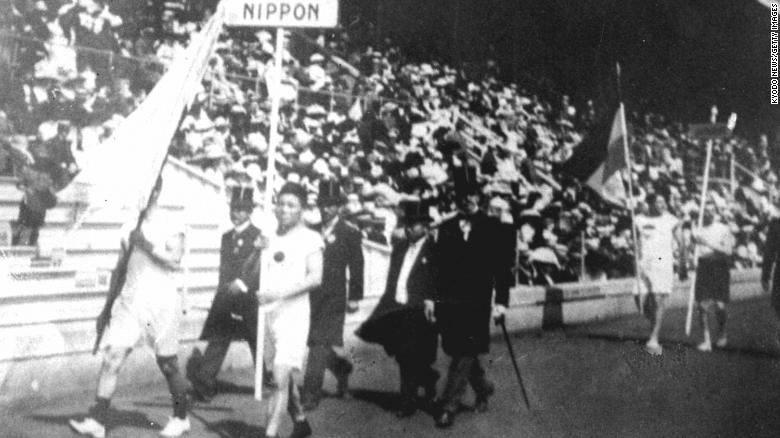
The Japanese athletic delegation marches during the opening ceremony of the 1912 Olympic Games in Stockholm, Sweden, which marked Japan’s first Olympic appearance. The sign holder was marathon runner Shiso Kanaguri (R front) and the flag bearer was sprinter Yahiko Mishima (L front). (Photo by Kyodo News Stills via Getty Images)
“Japan had been agitating to hold the Games in the early 1930s,” William Kelly, Sumitomo Professor of Japanese Studies at Yale University, tells CNN.
Judo pioneer and IOC member Baron Jigoro Kano is widely believed to have played a major role in Japan’s bid, giving a keynote speech to the IOC at the end of the 1932 Games.
According to the IOC leader of the time, Henri de Baillet-Latour of Belgium, Kano told those in the room that holding the Games in Japan would extend the vision of the movement’s founder, Pierre de Coubertin, and bridge the gap that existed between the East and the West.
In this context, the 1940 Olympics was “instrumental in legitimizing the IOC rhetoric that the Olympic movement was universal,” writes Dr. Sandra Collins in her book “The 1940 Tokyo Games: The Missing Olympics.”
While liberals had visions of a global festival, Japan’s government saw the benefits of hosting the Olympics differently, as an opportunity to influence a world dominated by the west.
In the first half of the century, the country was committed to maintaining and strengthening its position as its region’s lead and during the Great Depression there was a growing belief that Japan would solve its economic problems through military conquests.
But Tokyo was not guaranteed to win the race to host in 1940. Rome and Helsinki were the city’s main rivals, with the Italian capital regarded the favorite.
So in 1935, Japan’s IOC member Sugimura Yataro traveled to Italy to visit the fascist dictator Benito Mussolini to ask Rome to withdraw its bid.
“In the you-scratch-my-back kind of deal that has become the norm in international sports politics, Mussolini announced with usual candour, ‘We will waive our claim for 1940 in favour of Japan if Japan will support Italy’s effort to get the XIII the Olympiad for Rome in 1944,” writes Goldblatt.
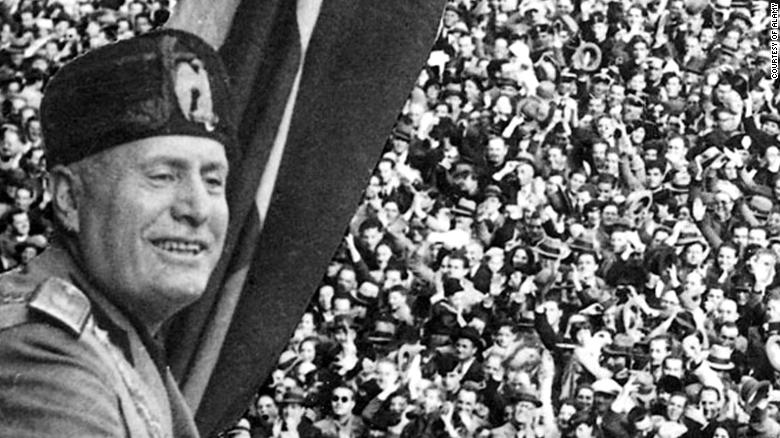
Benito Mussolini withdrew Rome’s bid for the 1940 Games.
The significance of 1936 Berlin
During the conclusion of the 1936 Olympics, the Games that had been the Nazi power show, the IOC awarded 1940 to Tokyo, with the Japanese capital receiving 37 votes to Helsinki’s 26. Four years after Nazi Germany had hosted the Olympics, Japan — a country already regarded as an imperial aggressor — was set to also have its time in the sporting limelight.
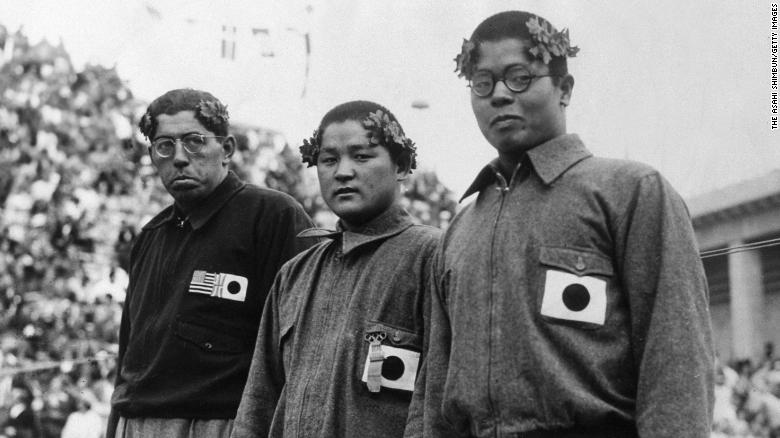
(L to R) Silver medalist Jack Medica of the United States, gold medalist Noboru Terada of Japan and bronze medalist Shumpei Uto of Japan pose on the podium during the medal ceremony for Swimming Men’s 1,500m Freestyle during the Berlin Olympic at Swimming Stadium on August 15, 1936 in Berlin, Germany. (Photo by The Asahi Shimbun via Getty Images)
And in 1938, a year after Japan had invaded China, the IOC awarded the Winter Olympics to the Japanese city of Sapporo.
But that same year, with major countries threatening to boycott as Japan’s ferocious destruction of Chinese cities was reported in the American and European press, the Japanese government forfeited the right to host both the Summer and Winter Olympics.
Embroiled in a war with China and knowing a global conflict was on the horizon, the military government passed the National Mobilization Act.
“Three months later, with little fanfare, the Japanese pleaded the need for ‘the spiritual and material mobilization of Japan,’ and relinquished the 1940 games,” writes Goldblatt.
“The suspension can’t be separated from the 1936 Olympics,” reasons Kelly. “The Americans, the British and French started talking about boycotting the 1940 Olympics because they felt they had been badly used by Hitler in staging this enormous propaganda Games so it was really the Berlin Olympics effect that caused the Japanese government to withdraw its bid. Japan knew it would be worse to put on the Games without the major powers.”
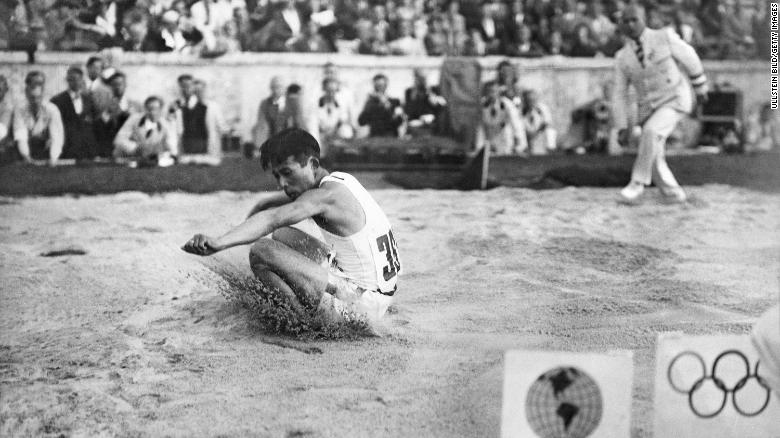
Naoto Tajima (Japan) competing in the triple jump at Berlin 1936 (Photo by ullstein bild/ullstein bild via Getty Images)
The IOC proceeded to award the 1940 Games to Helsinki, but the Soviet Union’s invasion of Finland in November 1939 ended any hope of holding an Olympics that year. Much like in 2020, the IOC held on in hope until succumbing to the inevitable.
Kelly adds: “The IOC said the world is increasingly at war but the Games will go on … [but] bowed to the reality that Europe was in flames and so was the rest of the world and they canceled the games all together.”
The cost of canceling
Tokyo’s preparation for the 1940 Games had been “quite considerable,” says Kelly, with significant economic investment made on infrastructure projects, such as transportation, sanitation and the building of hotels.
“The local businesses that had been persuaded to invest heavily in facilities, in providing goods and services for the Games found themselves without a prospective customer base, so the business community was upset in Tokyo but this was at a time when you could not really express anger at the government,” explains Kelly, arguing the country suffered more politically than economically in 1940.
“You’re not able to use the largest mega event in the world in order to demonstrate to the rest of the world what a great country you are,” he adds.
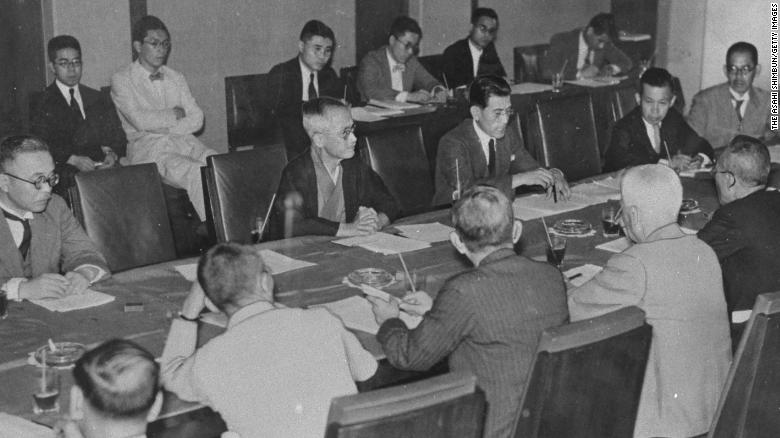
A general view of the 1940 Tokyo Olympic Organising Committee meeting, when the forfeiture of the 1940 Tokyo Olympic was decided, at Mantetsu Kaikan, on July 16, 1938 in Tokyo, Japan. (Photo by The Asahi Shimbun via Getty Images)
As the impact of postponing Tokyo 2020 is calculated, it’s worth remembering that the Olympics in the 1920s and 1930s were a different animal to the billion-dollar movement we are familiar with today.
David Wallechinsky, president of the International Society of Olympic Historians (ISOH), tells CNN Sport: “There wasn’t this huge emphasis that this is it, this is the Olympics.
“In ’48 when the Games came back after 12 years people were just happy to have it happen at all. Of course, the introduction of the television, when people could watch it live, or at least follow a daily report, in the ’60s, it was a whole other deal.
“By the time you got to 1968 you only had to follow what happened to the non-violent the protest of Tommie Smith and John Carlos to see that there was international interest in the Olympics.”
The future
Whenever an Olympics is held, there seems to be a crisis. In 2012 there were security issues, in 2016 it was the Zika virus. Now in 2020 it’s the coronavirus.
Last week, Japan’s deputy prime minister even went as far as to tell a parliamentary committee last week that Tokyo 2020 was “cursed,” arguing that the Olympics is stopped by extraordinary world events every 40 years.
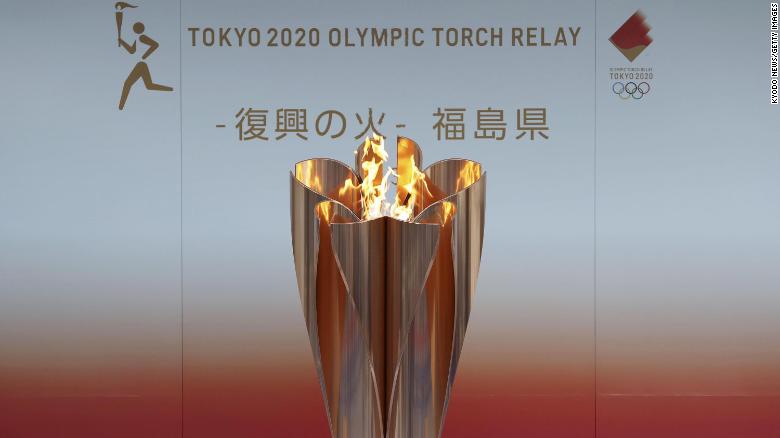
Photo taken March 24, 2020, shows the flame for this year’s Tokyo Olympics exhibited in Fukushima. (Photo by Kyodo News via Getty Images)
The Olympic movement has survived much: the boycotts of 1980 and 1984, the tragedies of Munich 1972 and Atlanta 1996, but in the last 100 years the world has not experienced something like the coronavirus pandemic.
“We [the media], in the run up to the Olympics are always looking for the negative because that’s a good story,” says Wallechinsky.
“To tell people in 2012 that everything in London is going great, that’s not a good story. Even the best organized Olympics, like Sydney in 2000, there’s always these negative stories in advance and whenever I’ve spoken to people in organizing committees I’ve warned them about this — it’s not you, it’s us — but sometimes these warnings are real and in this case they are.”
The post The ‘Lost Games:’ When the Olympics are stopped by extraordinary world events appeared first on CANADA VOICE.
]]>The post How did Canada become a tennis superpower? It’s complicated appeared first on CANADA VOICE.
]]>Bianca Andreescu, Denis Shapovalov and Félix Auger-Aliassime, who arrive at Roland Garros seeded and poised to make an impact, are the faces of a Canadian revolution
The Guardian /Stephanie Myles in Paris/ @opencourt
Canada is the toast of pro tennis right now.
The country’s rising young stars – Denis Shapovalov, Bianca Andreescu and Félix Auger-Aliassime – can’t win a match without being asked how a winter-sport nation with a sparse, spread-out population of 37m has produced three champions-in-waiting at the same time.
The Canadian high-performance program’s architect, Louis Borfiga, has been the subject of numerous stories lauding him as the genius behind the tidal wave from the Great White North.
But even Borfiga can’t really answer the multimillion-dollar question: how is Tennis Canada doing it?
If there were a foolproof recipe, the inventor would be sailing his or her yacht around their private Caribbean island after selling the secret to every national tennis association on the planet.
So the short answer to that question is: it’s complicated.
One given is that you need a lot of money.
Tennis Canada is blessed with significant revenue from the men’s and women’s Rogers Cup tournaments. And it has invested heavily in the national training center it opened in Montreal in 2007.
But having near-unlimited funds won’t buy you success.
Ask Britain’s Lawn Tennis Association, which gets the lion’s share of Wimbledon’s profits.
You need a strong development program. But ask Serbia how it produced three world No 1s – Novak Djokovic, Ana Ivanovic and Jelena Jankovic, all born within a two-and-a-half-year period – with little infrastructure and even less money.
Mostly, what you need is plain old luck.
* * *
Andreescu, 18, shocked the tennis world when she won the BNP Paribas Open in Indian Wells, California, in March.
Shapovalov reached the top 20 two weeks before his 20th birthday after he and his good friend Auger-Aliassime, 18, both made the Miami Open semi-finals later that month.
All three arrive at the French Open as seeded players to watch.
The other seeded Canadian is Milos Raonic, who had a similarly quick rise and already was seeded when he played in very first French Open at age 20, back in 2011. Raonic, who whose career-best ranking is No 3, reached the 2016 Wimbledon singles final.
“If you look back before 2011 or 2010 and anybody said, ‘Hey, we might have a chance to compete for Grand Slams in singles’, I don’t know if anybody would have taken you seriously in any aspect of the tennis world,” Raonic said.
Raonic, along with Genie Bouchard, Vasek Pospisil and Rebecca Marino, paved the way for this new generation.

Félix Auger-Aliassime is tipped to be a future grand slam champion. Photograph- Ciambelli:SIPA:REX:Shutterstock
But with the exception of Bouchard, already a top prospect when she moved back home to Montreal from her training base in Florida at age 15, they were not products of the high-budget program. They came along a little too early.
What Tennis Canada did for those players was what it arguably has done best in the current regime. It provided top-class international coaches and support staff during the challenging transition from the juniors to the pros.
But even with the current crop, there is no standardized formula. Auger-Aliassime is the first pure, start-to-finish product of the system to reach the top 100. Tennis Canada have done everything right with him, especially in emphasizing the big picture over short-term results.
But Auger-Aliassime came to the sport because his father is a tennis coach.
Exceptionally, Tennis Canada made accommodations for Andreescu to not have to move to the national center. She remained at home in Toronto and developed there.
As for Shapovalov, he was never part of the program. His mother Tessa also is a tennis coach; she remains his coach today. He had a private sponsor to help fund his early career.
‘Children of immigrants’ v ‘The buddy system’
One of the theories put forth for Canada’s success is that so many of its young players are children of immigrants. That they’ve absorbed an ambition and work ethic that serves them well in a highly competitive business.
It’s an obvious conclusion; so many of the more recent players fit that description.
But at least in part, that might merely be a reflection of Canada’s big-city demographics.
A better theory is one of internal competition driving up the level.
As Marino put it this week in Paris, these things tend to come in bunches.
“With Milos and Vasek and I, all born in 1990 – Vasek and I trained at the same center in Vancouver, too – you push each other,” Marino said.
“Canada being a big country, everybody would be from a different province and play in their own provincial ranks and meet up just for nationals,” Raonic said.
“For my group, it was Vasek and I. We were the same age. For Denis and Félix, they had each other. I think that kind of constant national competition made them strive and try to make the most of things. And I think that’s a big part of the reason the success has been on such a big incline over the last few years.”
National Training Center attendance dwindling
It took 10 years after “Team 1990” for another group to put its hand up. Shapovalov was born in 1999, Andreescu and Auger-Aliassime in 2000.
But it doesn’t appear the next wave is coming any time soon.
Originally designed for a dozen players, one estimate several years ago had the cost of the services the NTC provides to each player – coaching, lodging, travel, education – at $150,000 annually. Multiply that by 12, add in administrative salaries and additional investments such as the building of five indoor Har-Tru courts at the Montreal center, and you get an idea of the magnitude of the investment.
But of the 41 kids who went through before the current class, 27 went to college in the U.S. Some have tried the pro tour. But while the success stories are notable, they are rare.
The ‘big player’ bounce

Denis Shapovalov cracked the top 20 two weeks before his 20th birthday. Photograph- Julian Finney:Getty Images
Conventional wisdom says the sport will get a big bounce when a country can produce one or several top-level pros to set the tone. The logic is that if young kids will see what is possible, if they see it on television, they’ll want to take up the sport.
“I think they had different idols. Like when they were first watching tennis, I wasn’t on tour in that sense,” Raonic said of the current crop. But I think with my breakthrough I sort of gave them the sense of belief that as a Canadian, you can do this. That the work that you put in can pay off, and it isn’t unchartered territory.”
At least in terms of numbers, that bounce has yet to occur.
When he came to Montreal to start the national center, Borfiga brought a track record of success with the French federation.
Borfiga also brought with him the French federation’s fairly rigid structure. Ultimately, you do it the Tennis Canada way, or it’s the highway.
The program’s unwillingness to be flexible may well have cost it an opportunity to claim Shapovalov as an institutional success story.
A year ago in Paris, 15-year-old named Leylah Annie Fernandez reached the girls’ singles semifinal in her first appearance at the junior Grand Slam level.
Fernandez was the only Canadian to compete in the boys’ or girls’ events. She continued her success at the Australian Open this year, reaching the girls’ singles final. But she worked with an outside coach as well as father Jorge – not with Tennis Canada coaches.
While Tennis Canada has provided some financial assistance from other bursary funds outside its high-performance structure, it hasn’t been nearly enough.
Fernandez and her family now live in Florida.
There will be three Canadians in the French Open juniors this year.
But only one, Taha Baadi, is an NTC student. This is Baadi’s final year of junior eligibility, and this will be the first time his ranking is high enough to get him into a junior Grand Slam.
Also playing is Fernandez, who will be seeded No. 2 despite playing very little junior tennis. She mostly plays low-level ITF pro events, many closer to her home.
The third Canadian is Liam Draxl, currently ranked No. 10 in the boys’ ITF rankings. But Draxl has a private sponsor.
At the national center, a program built for 12 is now down to four boys.
And the NTC is now “boys only”. Tennis Canada determined the girls simply didn’t flourish when they moved away from home to train. And so the better prospects work out of regional centers in their own cities.
On the plus side, it’s possible the new generation could have a far bigger impact than the Bouchard-Raonic-Pospisil generation.
Andreescu, Shapovalov and Auger-Aliassime are all crowd-pleasing, charismatic, appealing players.
Together, the three could finally jolt tennis out of its position as a niche sport in a hockey-mad country.
But it’s going to take more time, a lot more money and – hopefully – more luck.
The post How did Canada become a tennis superpower? It’s complicated appeared first on CANADA VOICE.
]]>The post Argentinos Juniors: The ‘Argentinean Ajax’ where Diego Maradona emerged appeared first on CANADA VOICE.
]]>“Sir, I’ve got a friend who’s better than me. Can I bring him next week?”
Fifty years ago, in 1969 Buenos Aires, Diego Maradona’s football legend played out its opening chapter.
Francis Cornejo listened carefully to Goyo Carrizo, one of the best players of his under-10 team, and nodded. Cornejo had recently published an advert in a newspaper offering trials for players. A coach at the Argentinos Juniors academy since 1953, he would soon experience the most magical moment of his career.
“They say people witness at least one miracle in their lives, but most do not even realise. I certainly did,” Cornejo wrote in his book, Cebollita Maradona.
“My miracle occurred on that rainy Saturday in 1969, when an eight-year-old kid, an age I could not believe, did things with the ball that I’d never seen in my life.”
Cornejo, who died in 2008, was the man who discovered Maradona. But he was also among the great minds who helped shaped one of Argentina’s most distinctive football clubs.
Where Europe has Ajax Amsterdam, South America has Argentinos Juniors. Both clubs stand for two things most of all: a love for the ball and a devotion to their youth academies.
While Ajax have played every game since 1982 (1,753 matches) with at least one graduate from their academy, Argentinos have done so since July 1979 (1,668 games).
Each has produced a legend of world football, and both have named a stadium in their honour. Dutch side Ajax play at the Johan Cruyff Arena, renamed following the former Netherlands attacker’s death in 2016, while Argentinos play at the Estadio Diego Armando Maradona.
This is where Maradona played his first five years as a professional, making his debut 10 days short of his 16th birthday in 1976, before leaving for Boca Juniors in 1981. It is also where Lionel Messi first played for Argentina, as a substitute in an U20 friendly match against Paraguay in June 2004.
Underneath the stands there is a museum filled with memorabilia from the Maradona years. A Maradona statue was unveiled last year. And as if it were a Maradona theme-park, there is a giant inflatable tunnel in the shape of Maradona’s head and chest, through which players emerge on to the pitch.
Visitors to this ‘Maradonaland’ can even take a tour of the flat he was given after signing his first contract with the club. The owner, a former Argentinos board member, bought the apartment and recovered most of Maradona’s original furniture, transforming it into a nostalgic passageway back to the late 1970s.

The ‘Casa de Dios’ museum is located at the house where Maradona lived in La Paternal, owned by Alberto Perez
Argentinos Juniors are based in the Buenos Aires neighbourhood of La Paternal, and in Argentina’s capital city competition for players has always been fierce. River Plate, Boca Juniors, Racing Club, Independiente, San Lorenzo, Huracan, Velez Sarsfield, Ferro, Lanus, Banfield, Platense, and many more, are all within 50km.
With each club trying to catch, nurture and develop young talents, it is almost like fishing in a swimming pool. But Argentinos were always different. They don’t just fish. They manufacture; they turn raw gems into polished diamonds. Their reputation owes everything to their teaching process.
“The difference with Argentinos Juniors has always been technique,” says Roberto Saporiti, who managed the club in 1984 and was assistant coach to Cesar Menotti with Argentina at the 1978 World Cup.
“And it’s not something new. They have been doing this for 50 years.”
Saporiti and Menotti attended Maradona’s professional debut in 1976, although he would be left out of their Argentina squad for the home tournament they won two years later. So many people later claimed to have been present at that first game that Maradona said: “If everyone who claims to have attended actually had, the game should have been played at the Maracana.”
Maradona would go on to shine brightest of the stars discovered by the club’s youth academy, but he is far from the only one. Argentinos define themselves as ‘el semillero del mundo’, the world’s academy.
“It’s a very accurate nickname,” says Fernando Batista, a former Argentinos player and academy director who now manages the Argentina Under-20 team.
“So many amazing players were produced during the years that the list is almost never-ending. It’s proof that it’s not just one golden generation, but the result of hard work and a style that was never lost.
“Argentinos are a role model for the teaching and shaping of footballers, not just from the technical point of view but also from the human perspective. It’s not a coincidence they’ve produced so many Argentina captains, from Maradona to [U20 captain] Diego Markic, to Juan Pablo Sorin.”
Fernando Redondo, Juan Roman Riquelme, Sergio Batista, Fabricio Coloccini, Claudio Borghi and Esteban Cambiasso are just a few of the other full internationals they have produced over the years. Argentina’s current U20 team captain is Atletico Madrid’s 18-year-old defender Nehuen Perez – another Argentinos graduate.
Many talents left before the club benefited from their full potential – Riquelme, Coloccini and Cambiasso each departed before even being promoted to the first team, the first two to Boca Juniors and the last to Real Madrid.
But it was actually in the years immediately after Maradona’s move to Boca that Argentinos enjoyed their period of greatest success, inspired by another singular talent: Jose Pekerman.

Jose Pekerman (fourth from left) receives a special presentation before a Colombia match against Costa Rica at Argentinos Juniors
The man who managed Argentina from 2004-2006 and Colombia from 2012-2018 was pulling the strings at Argentinos’ academy in the 1980s.
The youth players he produced helped the first team win two league titles in 1984 and 1985 and the Copa Libertadores of 1985, then almost achieve victory over Michel Platini’s Juventus in the Intercontinental Cup of the same year, losing on penalties.
His work at Argentinos would lead him first to the Argentina Under-20 job, and under his guidance they won four U20 World Cups: in 1995, 1997, 2001 and 2005. They were also awarded several Fair Play trophies, in stark contrast with what had happened at the 1991 tournament, when a massive fracas saw Argentina banned from the 1993 event.
Maradona’s playing exploits aside, Argentinos’ biggest connection with the national team remains Pekerman. But while the mid-1990s brought him success, his old club Argentinos were enduring a turbulent spell.
Desperately short of money, they accepted a broadcasting deal that forced them into playing their 1993-94 home games 1,000km away from Buenos Aires in the province of Mendoza. And in 1996, Boca Juniors bought Club Parque, a small feeder club that for years had provided Argentinos with some of their most promising players.
But despite financial worries, and with bigger clubs lurking, Argentinos have managed to keep their factory line going.
“There were ups and downs, wrong decisions, financial problems, but the academy always kept pointing north, which is why the whole system did not crash,” says Saporiti.
Last season, striker Nicolas Gonzalez, now 21, was sold to Stuttgart for a reported £7.5m, a historic moment for the club as Maradona’s record transfer fee was finally beaten – Argentinos had received around £6m from that sale to Boca and his subsequent move to Barcelona.
And it will soon be time to say farewell to 20-year-old Alexis MacAllister, who in January was sold to Brighton for around £6.5m before re-joining Argentinos on loan. “We have now restored our name abroad,” said president Cristian Malaspina. MacAllister’s brother, Kevin, was recently sold to Boca, too.
Argentinos have been relegated four times since 1996, but have bounced back to the top flight almost immediately each time, always thanks to their academy. At La Paternal, new generations blossom after every storm.
This season is a case in point – they finished bottom of the Superliga in April. As relegation is decided by teams’ average points total over the past three years, they did not go down, but focus will switch to avoiding the drop next year.
Before then, there is still the domestic cup to fight for, and under new manager Diego Dabove, a specialist in working with youngsters, they recently defeated San Lorenzo in the Copa de la Superliga last-16 first leg, having already knocked out giants Independiente.
Victory marked the debut of 17-year-old Matko Miljevic, their latest prodigy. Born in Miami to Argentine parents, he spent seven years at the academy, scoring 49 goals in 107 games and is eligible to represent the United States, Argentina and Croatia.

Argentinos Juniors fans cheering on their team during a home match against Boca Juniors
Argentinos Juniors have always been one of the clubs determined to back their talented youngsters.
“Control, control, control,” Fernando Batista says. “Instep, pass, control, instep, pass…” Exercises by repetition.
“Argentinos have been doing these exercises for decades, and unlike other clubs, the players keep doing this when they’re promoted [out of the academy].
“Tactics, strategy and intelligence can be enhanced over the years. But it’s very difficult to change technique if you don’t know how to control the ball properly. At Argentinos’ academy, technique is non-negotiable.”
At this small yet imposing ground, players should think twice before sending a long aerial ball up the pitch.
Half guardian, half gargoyle, a giant inflatable Diego Maradona watches every action from close at hand.

Maradona shares a welcome video message with Riquelme on his return to Argentinos in 2014

Maradona played 91 times for Argentina between 1977 and 1994, scoring 34 goals. He inspired his country to World Cup victory in 1986

The flat Maradona was given after signing with Argentinos has been transformed into a museum

A mural paying homage to Diego Maradona outside Argentinos Juniors’ ground
The post Argentinos Juniors: The ‘Argentinean Ajax’ where Diego Maradona emerged appeared first on CANADA VOICE.
]]>