The post How Covid Changed Nursing appeared first on CANADA VOICE.
]]>Health care workers reflect on four years of the pandemic
Four years ago this week, an eighty-two-year-old patient at a Brooklyn hospital became the first person in New York to die from Covid-19. In the time that’s elapsed since, certain memories of those early pandemic days have been relegated to dusty corners of the brain. An NBA season that was canceled after a player jokingly touched the mics of reporters, before a test revealed he was Covid-positive. The New York City subway shutting down its night service, which remained closed for more than a year. The way some people maniacally banged on pots and pans for health care workers at 7 p.m. daily.
As vaccines started trickling out in 2021, and a ladle hit a frying pan for health care heroes one last time, politicians attempted to usher us all back to pre-Covid life. The CEOs of corporate hospitals followed suit. But a huge chunk of the medical workforce, reeling in the aftermath of the relentless death and suffering they were exposed to on the job, either retired or switched careers completely. Years later, nurses who stayed in the profession say that they are seeing the effects of the pandemic in their patients as well: since so many people put off care during the height of Covid, they are now presenting with more severe forms of illness.
But in addition to trauma and exhaustion, the pandemic also catalyzed a historic wave of organizing among nurses directed at improving staffing levels, low pay, and burnout. One of the earliest strikes after the height of the pandemic involved fifteen thousand nurses in Minnesota, who walked off the job for three days in September 2022. In early 2023, more than seven thousand nurses across two large New York City hospitals also struck for three days. The action has continued apace. In the last six months alone, seventy-five thousand health care workers at Kaiser Permanente walked out across six states; nurses at a medical center in Washington held a five-day strike; and nurses at SSM Saint Louis University Hospital did the same for two days. In December, nurses at a New Jersey hospital finally ratified a new contract after a monthslong strike over unsafe labor practices.
What follows is a series of interviews with hospital nurses in New York about their experience with burnout during the pandemic, and how some are fighting to improve working conditions today. These interviews have been condensed and edited for clarity.
Jennifer, ICU night shift nurse at Albany Medical Center
[At my hospital,] we were the ones who admitted all those Covid patients who were in overflow from New York City because they ran out of ICU rooms. It was like the end of the world. I still remember very clearly that night: the helicopter was nonstop because the helipad was directly above us. The doors to the ICU had been opening and receiving all these patients all night; we were intubating patients left and right. They could barely have a few minutes to say goodbye, or to talk with their family members. A lot of them were scared, frightened, anxious because they didn’t know whether they were going to live to the next day. They didn’t know whether it was the last time they were going to be able to see their family.
There are times when I just get quiet. There was a time back then when I was so tired, so exhausted, my heart was breaking so much for my patients, and so much for the family who just lost a family member, that I had to cry in my car. Sometimes I don’t know how to cope. A lot of nurses are the same way. We mask our feelings with humor, we talk with our peers, we vent, we just talk about it because we know, we do understand, that the next time, we are still going to do this all over again.
It was like the end of the world.
I had to be with one Covid patient from the moment he came and was admitted in the ICU. I started my shift as a charge nurse at 7 p.m. [Editor’s note: a charge nurse oversees a department of nurses.] I had been with that patient for six hours, until the patient expired and passed away. I have witnessed the helplessness; I have witnessed the fear; I have witnessed the pain. I strived so hard to make sure the patient was comfortable. I was there holding his hand. I was there talking to him and saying, “You will be okay.” But deep inside, we both knew he was not going to be okay, and he was not going to survive that night. And he didn’t.
We’ve been hard hit ever since the pandemic started. A lot of experienced nurses left the bedside because they are not able to deal with the stress of the pandemic. They are not able to deal with the stress of watching patients die daily. It was a rough time for us.
It took me time to understand the importance of being part of a union, but ultimately, I wanted to advocate for my co-workers and address the issues affecting them. We are still fighting for a fair contract here at Albany Med because we wanted the hospital to invest in us, invest in the staff, invest in us nurses. If we want more money and to be recognized, we must go through all this extra education, meaning that we have to jump through these hoops for the hospital, to show that we are good enough. Even though we work every day in the busiest ICU in the area, taking care of patients that other hospitals cannot take care of, we must go to school to prove that we’re valid. So we can prove to the hospital that we are worthy of what? A few dollars’ raise. And then we get to be a charge. I’m one of the senior nurses, I assume charge nurse all the time, and what do I get? An extra dollar an hour.
We need to improve the recruitment and training of nurses and retain those nurses, and the way to do it is through better working conditions. We need strong staffing enforcement that holds the hospital accountable, because too often hospitals put profits before patients and staff us to the bare minimum.
Sandra, procedural unit nurse at NYU Langone; former ICU nurse
I would have days when I went home thinking, Maybe I should have done this, what could I have done better? You obviously do have people who code and die. Maybe it’s a really long code, and I’ve done it for forty-five minutes, and it’s very physical, obviously, because of the CPR. Then you have to take care of this person’s family and do postmortem care after you’ve been taking care of them all day. At the end of the day, you have another patient too, and you need to go into that room. You can’t be like, “Sorry, I can’t get you your juice because my patient just died next door.”
I just wanted to sit in silence. Even TV was too stimulating for me.
Before the pandemic, if I had a patient [with an airborne illness], like with tuberculosis, they were in a specific negative pressure room, and you’d put on a mask and throw it out when you left the room, that’s it. We did have [personal protective equipment], N95s, but you had one, and you were using it for like two weeks. In the medical ICU, you were doing all these things for people, and nothing was working. So, you were functioning at that level, and it didn’t really matter. I think at the end of that, after watching a lot of people die — also, I have a lot of student loans — watching a unit of travel nurses each make like ten grand a week, when there was not even pandemic pay for nurses who stayed, is hard.
After the pandemic, I thought I was taking care of myself, but I kept going on these travel contracts where I was being further traumatized, seeing more people die. I was in therapy, but I realized that the feeling that I had was different from normal sadness or depression. I realized with my therapist that it was burnout. I just wanted to sit in silence. Even TV was too stimulating for me. So I was just reading all the time. I just need to be quiet for a while. It was a big reason why I couldn’t go back to the ICU.
The nice thing about the job I have now is, yes, I have to think critically, I have to move fast, I have to take care of patients — but I don’t take it home. At the end of the day, I’m not like, I could have looked at this lab and done things differently.
Margaret, day shift surgical nurse at Vassar Brothers Medical Center
Our patients are sicker than ever. A lot of people delayed care during Covid, so we definitely are seeing an uptick in the acuity of who is being admitted. We are getting patients who typically, a few years ago, would have been considered more of a critical care unit patient than a medical-surgical unit patient. So that has added to the stress of nurses everywhere. Because it is everywhere; it’s not just the Hudson Valley where people might have delayed care during the pandemic. And that is contributing to the burnout that nurses are feeling. Because if you have a patient who is taking up a considerable amount of your time, and they are one of eight patients that you have, then there is only so much time that you can devote to the others in your group.
Eight patients per nurse means you have just seven-and-a-half minutes out of each hour to care for that particular person, if you want to average it out. That’s passing meds, making sure they are taken care of, making sure that all of the documentation is done, that you might have spoken to family to give them updates, that you’ve spoken to doctors to let them know what is going on. You can’t effectively look after people seven minutes out of every hour. It just can’t be done.
Last year, Vassar hired 158 nurses between January 1 and December 31, and 124 of them left.
It seems to be part of the corporate playbook that understaffing is a good money saver. And every hospital website that you go onto, they always have a mission statement talking about quality patient care and the experience everyone is going to have once you go into that facility. But the truth is different. They are always understaffed. This was a problem before the pandemic; it’s just more exaggerated now because so many nurses left the profession. I think the mindset is: Well, when something needs to be done, the nurses will do it. So if we are short a secretary, then it is okay because nurses are there, and they will see that it gets done somehow. I also think a part of it is just the sheer amount of people who left the health care field because of the pandemic. A lot of people said, “I’m close to retirement, I don’t need to stick around for this,” and they left or opted to go to a position where maybe there wasn’t as much stress.
When the pandemic was considered over in terms of the lockdowns ending, and it seemed to be something that was going to be part of the daily fabric of health care life, the mindset changed to, Okay, we’ve gone through this; now it’s back to business as usual. So there wasn’t a big push to recruit nurses or to retain them, and there still isn’t. We’re fighting to be able to go into our jobs and provide the patient care that we’re qualified to do and trained to do. And that we want to do. That’s where you get a lot of this guilt complex coming in, because you know you can do better. Last year, Vassar hired 158 nurses between January 1 and December 31, and 124 of them left. So the hospital message is that there is a nursing shortage nationwide. But that doesn’t sound like a nursing shortage. That’s a retention issue.
The union has been very good within the hospital. We have open communication with the nurses, they are coming to us and letting us know issues which might just be specific to their floor. Because there’s so many different areas; there could be a completely different scenario in ICU that would never apply to me. We put it on the agenda to discuss with management, and we have a rep that is in house a couple of days a week, and she tries to deal with things quickly. With regards to staffing, we did have the state Department of Health in recently to talk to us about the [Safe Staffing for Hospital Care Act] and its enforcement, and we are waiting for that report to come back from them with the recommendations. We fought many years to get [a bill], but if you’re not enforcing it, then it has no teeth. The behavior will just continue.
We have spoken about retention every month for over three years, and the answer that we used to get was: there are no plans to retain nurses right now. Now, we do have a new chief nursing officer. She started at the beginning of the year. She is trying to change the mindset within the hospital; she is looking to actively retain nurses when she can. The nurses continue to leave. We’re not that far from New York City, the pay is higher in New York City, so nurses will take the train and go down there and get paid more. Their ratios may not be any better than ours, but the thought process is, Well, at least I’m getting paid more for this.
The post How Covid Changed Nursing appeared first on CANADA VOICE.
]]>The post ‘There is no right or wrong way to have alopecia’ appeared first on CANADA VOICE.
]]>Gail Porter has been praised by campaigners and people living with alopecia after she posed for a photoshoot with a wig for the first time this week.
In a photoshoot for the Sun, the Scottish TV presenter said she loves being bald – but her new wig will give her an opportunity to do different things.
For many people who have alopecia like Gail, choosing whether to wear a wig and other accessories can be a tough call to make.
Sue Schilling, the chief executive of Alopecia UK, says it is key to give people the freedom to explore different options – and choose to look however they want to.
Sue, who has alopecia herself, says she applauds Gail’s choice to “mix it up”. Although Sue has not worn a wig in over seven years, she says she is now considering buying a new one.
Despite its visible impact, she says, hair loss is far from being just a cosmetic issue.
“The process of losing your hair can be really traumatic and lead to lasting effects on your quality of life,” she adds.
Speaking to BBC Access All Podcast in August last year, Gail said losing her hair in 2005 led to her TV career ending overnight.
“It was so quick,” she said. “I had long blonde hair, and then four weeks later I was completely bald. People didn’t want to go near me for television or anything because I looked different.”
‘My wig made me feel like me again’
 Stephanie Plastow/ICONIC FCKIN HAIR
For Lillie Goldie, 19, getting diagnosed with alopecia as a child had a huge impact on her life.
She grew up with long, blonde hair and up until she was 17, she says her alopecia had been “manageable” – showing up as little bald patches the size of a 50p coin.
But just before her 18th birthday, Lillie, lost all of the hair on the top of her head.
“I completely shut myself off from the world,” she says.
Lillie, who is a dancer from east London, had contemplated dropping out of performing arts college because of it.
“Dancing is what I loved most, but alopecia made me hate it,” she says.
“Losing my hair not only brought down my appearance, but my whole confidence.”
Once some of her hair grew back, she was able to get a mesh integration – a permanent hairpiece system similar to a wig that can last up to a year.
A video of Lillie getting her first mesh integration went viral on social media, with Lillie, her mother and the stylist seen in tears at the end.
“I just felt like me again,” she says.
After finishing her performing arts course, she started a TikTok account to share her experience with hair loss.
“If performing arts doesn’t work, I know in one way or another I can help people who’ve been through what I’ve been through,” she says.
“That’s what I want to do with my life. So they don’t feel as alone as I felt.”
‘Alopecia changed the course of my life’
 Laura Mathias
Laura Mathias, 32, says Gail Porter is a role model to those experiencing hair loss.
“People knew what alopecia was because of Gail Porter showing that bald is beautiful,” she says.
Despite rocking the bald look herself, she says Gail’s new wig looks amazing.
Laura, who is a campaigner for alopecia awareness from Suffolk, says losing her hair at 13 entirely changed the course of her life.
“I never went out in public again without a wig for 17 years,” she says.
But when the Covid pandemic hit, Laura began to embrace her baldness, partly because she often developed small cuts on her scalp from wearing wigs so much.
“I was putting other people’s social comfort above my own physical discomfort, and I’m not willing to do that anymore,” she says.
Laura says she would never say never to wearing wigs again.
“I can embrace my alopecia now, but that doesn’t mean I hate wigs or resent anyone who wears wigs,” she says.
“There’s no right or wrong way to have alopecia, the whole point is to have a choice.”
‘I opened a salon to help black women feel heard’
 Ebuni Ajiduah
Ebuni Ajiduah opened a salon in 2022 to help black women manage hair loss and have a safe space to talk about black hair.
“The aim was to give black women a really good salon experience and make women with hair loss feel more comfortable,” she says.
“Losing your hair can feel isolating and women often don’t want to visit salons.”
Many of her clients had tried to seek help for hair loss before but felt unheard and not taken seriously, Ebuni says.
She now runs a hair loss support group where women can talk freely about issues with their hair, and runs classes on protective styling.
‘Men struggle to open up about hair loss’
 Tom Spencer
Tom Spencer, from Huddersfield, lost all of his hair over the course of four to six weeks as a 17-year-old teenager – and initially turned to wearing caps and hats to hide his sudden hair loss from the world.
He says: “In general, men find it quite difficult to open up about things like this, and there is an added stigma around it.
“For men, wearing hats, wigs or getting micropigmentation tattoos can make them feel more comfortable and feel good about themselves.”
But going to alopecia support groups and meeting other men who struggle with hair loss empowered him to now bare his bald head whenever he wants to.
Tom says that finding others who understand is key for anyone – man or woman – who experiences hair loss.
“Everyone has days they don’t feel good or confident about themselves, but meeting other people who experience hair loss has been really fulfilling to me and it has made me a stronger person.”
‘Speaking about it on TV was important’
 Jenna Robinson
Jenna Robinson, from Blackpool, decided to be open about her alopecia as a participant on Channel 4’s Married at First Sight UK in 2022.
“Being able to speak about it on a TV show was really important because we don’t get a lot of representation on TV,” she says.
She often receives messages from people who have watched the show and have alopecia, thanking her for being open about it and asking for advice.
For Jenna, who has had alopecia since she was twelve years old, trying on wigs was the only thing that would make her feel better growing up.
She hopes that she will one day have the confidence to go outside without a wig.
“I look up to, and wish I could have the confidence of people like Gail Porter, to bare all – and have people accept them as they are.”
The post ‘There is no right or wrong way to have alopecia’ appeared first on CANADA VOICE.
]]>The post Why age matters when it comes to cancer appeared first on CANADA VOICE.
]]>
Scientists are beginning to understand why our cancer risk increases as we get older. Now it’s hoped that this could one day lead to new treatments.
King Charles’ cancer diagnosis may have sent shockwaves around the world over the past few days, not least because of Buckingham Palace’s unusually candid disclosure. But many experts have taken the opportunity to raise awareness of the increased cancer risk that older people face.
The steady march of time has long been known to be one of the greatest risk factors for developing cancer. According to the US National Cancer Institute, the average age of cancer onset is 66, while more than half of all new UK cancer cases are in those aged 70 and older.
There are many reasons for this. The first and simplest is that as we pass through life, we progressively accumulate more damage to the DNA in our cells due to a breadth of factors. Some of the most common include exposure to UV rays, chronic inflammation, environmental toxins, consuming alcohol and smoking, and microbial infections. But over time, our cells become less efficient at repairing this damage, leading to accumulating DNA mutations in a tissue-specific manner. The more mutations that build up in our body, the greater the risk of uncontrolled cell division, or cancer.
“Basically, the repair mechanisms that might prevent the onset of changes that lead to cancer, are in decline as we age,” says Richard Siow, director of ageing research at King’s College London in the UK. “As we age, the balances that maintain normal cellular function go into decline.”
Studies have also found that these accumulating mutations impair the ability of immune cells to suppress and destroy cancer cells. In particular, Masashi Narita, who researches cancer and ageing at the University of Cambridge, points to a particularly well-known molecular pathway known as p53, which is involved in suppressing tumours. However, the efficacy of this pathway declines as we age, due to gathering mutations in the p53 gene.
 Alamy
AlamyWhen various gene mutations occur in blood stem cells, they induce them to progressively expand in size over time, something which biologists have dubbed clonal hematopoiesis. This is very rare in the young but more common in older people, and it can have two major consequences. The first is an increased risk of blood cancers, and the second is to alter the function of various immune cells such as monocytes, macrophages, and lymphocytes, all of which arise from blood stem cells.
Narita and his research group have been experimenting with various cancer-causing gene mutations which become more common with age, to try and understand what happens to the human body. “We take one of these genes, introduce it into an adult animal and examine what happens at the single-cell level,” he says.
He and his team have already found that this seems to trigger a rise in cellular senescence – which is when old and damaged cells cease to divide and grow. An excessive accumulation of senescent cells can modulate their surrounding environment in numerous harmful ways, triggering chronic inflammation which can cause further damage and increase susceptibility to cancer.
But these processes are still just a small handful of the ways in which ageing might impact cancer risk. Other new theories, ones which are even wilder and weirder, are already beginning to emerge.
Cells losing their memory
Just as human memory declines with age, making us increasingly forgetful and prone to lapses, some cancer biologists suspect that individual cells might also lose their memory over time and forget how to behave correctly.
Luca Magnani, an epigeneticist at the Institute of Cancer Research in the UK, says that this is a working theory for breast cancer, potentially triggered by the hormonal changes which begin in menopause. According to the NHS, eight out of 10 cases of breast cancer occur in women over the age of 50.
“A common hypothesis that is forming in the field is that these cells are losing their memory and begin proliferating even if they aren’t supposed to,” says Magnani.
One of the ideas for why this might happen, not just in breast cancer but many other age-related cancers, is that over the course of a lifetime, your genome becomes less stable at transmitting information. This is a result of so-called epigenetic changes or genetic modifications that impact gene activity without changing the DNA sequence.
 Getty Images
“Information is transmitted in a less coherent and reliable way as you get older,” says Andy Feinberg, an epigenetics and cancer professor at Johns Hopkins Medicine in Baltimore, Maryland. “There’s more noise and that leads to more randomness or uncertainty about the pattern of which genes are supposed to be on and which are supposed to be off. It’s been shown that the parts of the genome that have this increased noise, they’re more likely to undergo changes that are carcinogenic.”
But these ideas could also lead to completely new ways of tackling cancer. One of the most active realms of cancer drug development is small molecules which attempt to address the deleterious effects of mutations in the p53 pathway and restore its normal tumour-suppressing functions.
Feinberg believes that the more we understand how epigenetics contribute to these increased noise and randomness, we might be able to find ways to reverse these changes. “The encouraging thing is that epigenetic changes are sort of by definition, reversible,” he says.
Anti-ageing scientists are currently conducting early-stage clinical trials exploring various chemical cocktails which selectively kill and remove senescent cells without damaging healthy tissue. Known as senolytics, they include an antioxidant called fisetin, a grape seed extract called polyphenol procyanidin C1, and the drug Dasatinib in combination with another natural chemical named quercetin.
At the moment, trials are testing some of these senolytics on frail, elderly individuals who have survived a previous battle with cancer to see whether they can boost their immune function and general health. If successful, they may have wider applications.
Siow is optimistic that research into newer treatment options which could reverse age-related changes and boost a person’s health-span – the number of years that a person is healthy – could make a huge difference to population health in the years to come.
“The aim is also to reduce the healthcare economic burden,” he says. “…The care infrastructure is going to be really expensive because populations are living longer with disease.”
—
If you liked this story, sign up for The Essential List newsletter – a handpicked selection of features, videos and can’t-miss news delivered to your inbox every Friday.
Join one million Future fans by liking us on Facebook, or follow us on Twitter or Instagram.
The post Why age matters when it comes to cancer appeared first on CANADA VOICE.
]]>The post Study finds link between Alzheimer’s and circadian clock appeared first on CANADA VOICE.
]]>theguardian \ Ian Sample Science editor @iansample
People who develop Alzheimer’s disease can experience sleep disturbances years before the condition takes hold, but whether one causes the other, or something more complex is afoot, has always proved hard for scientists to determine.
Now, researchers in the US have shed light on the mystery, in work that raises hopes for new therapies, and how “good sleep hygiene” could help to tackle the disease and its symptoms.
The findings show that humans’ 24-hour circadian clock controls the brain’s ability to mop up wayward proteins linked to Alzheimer’s disease. If the scientists are right, the work would explain, at least in part, how disruption to circadian rhythms and sleep disturbances might feed into the onset and progression of Alzheimer’s disease, and how preventing such disruption might stave off the condition.
Advertisement
“Circadian disruption is correlated with Alzheimer’s diagnosis and it has been suggested that sleep disruptions could be an early warning sign of Alzheimer’s disease,” said Dr Jennifer Hurley, who led the research at Rensselaer Polytechnic Institute, in New York.
Alzheimer’s takes hold when connections are lost between nerve cells in the brain. The disease is progressive and linked to abnormal plaques and tangles of proteins that steadily build up in the brain. The disease is the most common cause of dementia and affects more than half a million people in the UK, a figure that is set to rise.
To keep the brain healthy, immune cells called microglia seek out and destroy troublesome proteins that threaten to accumulate in the brain. One type of protein targeted by the cells is called amyloid beta, a hallmark of Alzheimer’s.
Writing in the journal Plos Genetics, Hurley and her team describe how they found a daily rhythm in microglia, which drove regular waves of protein-clearing. When the cells lost their circadian rhythm, the clearing routine faltered.
“The disruption of the proper timing of amyloid beta clearance could be one of the reasons we see an increase in plaques that form in the brain during Alzheimer’s disease,” Hurley said.
While sleep disturbances often arise before Alzheimer’s disease, Hurley and many other scientists suspect there is a complex interplay between the two. Disrupting sleep and circadian rhythms allowed amyloid beta to build up, Hurley said, but this in turn damaged brain cells that ran the circadian clock, causing further accumulation of amyloid beta.
“We have known for a while that there is a rhythm in the clearance of amyloid beta in the brain,” Hurley said. “As we age, and more so in Alzheimer’s patients, this rhythm disappears. This loss could lead to the increase of amyloid beta in the brain.”
But the findings point to therapies that could potentially reduce the risk of Alzheimer’s or lessen the severity of the symptoms. Hurley said it may be possible to stimulate the brain’s ability to clear out amyloid beta with simple interventions, such as exposure to light, or via more sophisticated therapies that boost the activity of the immune cells.
“Taking care of our sleep or circadian rhythms – sometimes called good sleep hygiene – may be able to reduce amyloid beta burden over our lifespan,” she said. “Reducing amyloid burden could mean a reduction in Alzheimer’s symptoms or a delay in the onset or progression of the disease.”
Topics: Alzheimer’s\Health\Sleep\Medical research\Health & wellbeing\news
The post Study finds link between Alzheimer’s and circadian clock appeared first on CANADA VOICE.
]]>The post New blood test can tell if cancer has spread around the body appeared first on CANADA VOICE.
]]>
By Amy Barrett \ Science focus
Cancer researchers have developed a new blood test that could improve diagnosis and treatment for patients. The test is the first to be able to detect not only the presence of cancer but also the spread of the disease around the body, which is often categorised in cancer stages.
Currently, patients who are diagnosed with cancer have to undergo imaging and testing before doctors can tell if it has spread to any other part of the body. A cancer that has spread is called metastatic cancer.
This knowledge then informs treatment, as patients with tumours in a single area are offered a local treatment, like surgery, while those with cancer that has spread would need whole-body treatments like chemotherapy or hormone therapy.
Now, a new blood test has successfully identified metastatic cancer in 94 per cent of the 300 patients sampled.
The test, developed by researchers at University of Oxford, uses a new technique called NMR metabolomics, which identifies the presence of biomarkers in the blood, called metabolites. These are small chemicals that our body naturally produces.
“Metabolites are any small molecules in blood such as glucose, lactic acid, or amino acids,” explained oncologist Dr James Larkin, who worked on the study. “The exact pattern of metabolites present in your blood varies depending on what is going on in your body, something which is influenced by diseases like cancer.”
Read more about cancer:
- Breast cancer: Artificial intelligence boosts accuracy of tumour diagnoses
- Revolutionary cancer vaccine trials inspired by COVID jab begin
Crucially, the test can tell whether a person’s cancer has spread, they will have a certain metabolomic profile that is different from a patient with localised cancer, or from someone without cancer.
The NMR metabolomics technology could open up a wide range of new avenues for disease detection, not just in cancer but in other conditions too, said Larkin.
“We are only now starting to understand how metabolites produced by tumours can be used as biomarkers to accurately detect cancer,” he said. “We have already demonstrated that this technology can successfully identify if patients with multiple sclerosis are progressing to the later stages of disease, even before trained clinicians could tell.
“It is very exciting that the same technology is now showing lots of promise across a wide range of diseases, including those often confused for multiple sclerosis, such as neuromyelitis optica, as well as other diseases like ulcerative colitis.”
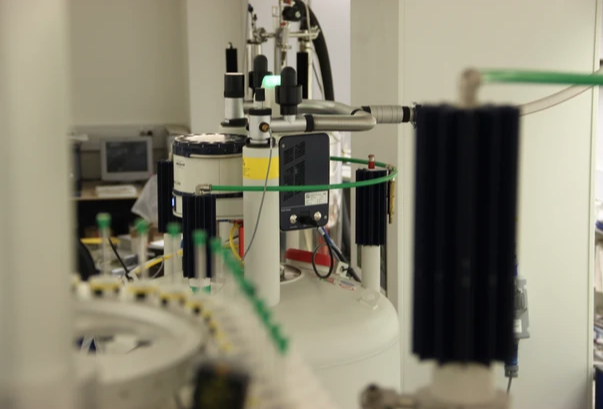
To perform the test, the researchers put a blood sample into a long glass tube for nuclear magnetic resonance analysis, which uses radio waves and high magnetic fields to produce the “fingerprint” of the metabolites present in the blood © Oxford Cancer
“We are only really beginning to scratch the surface of what can be done with this technology and have high hopes for future discoveries as we explore what can be done,” said Larkin.
The team say that their new test will help patients who have symptoms that aren’t specific to cancer of a particular body part. Whereas some symptoms, like a lump, would cause a doctor to immediately test for cancer, there are others that may be missed or go undiagnosed for some time.
They hope that patients presenting these non-specific symptoms, such as fatigue or weight loss, could receive the cancer test as part of a routine blood test.
However, there is still a way to go before the new cancer blood test is being offered by GPs. Larkin says the key barrier is regulatory approval.
“Our next steps are to raise funding for a spinout company from Oxford University, and run a clinical validation trial with recruitment of patients from multiple sites across the UK,” said Larkin. “This will be 2,000 – 3,000 patients over the next two to three years, depending on the timing of a successful funding round. This trial will build evidence that we can submit to regulatory bodies, like the MHRA, for clinical approval.”
“The goal is to produce a test for cancer that any GP can request,” said Dr Fay Probert, lead researcher of the study. “We envisage that metabolomic analysis of the blood will allow accurate, timely and cost-effective triaging of patients with suspected cancer, and could allow better prioritisation of patients based on the additional early information this test provides on their disease.”
The post New blood test can tell if cancer has spread around the body appeared first on CANADA VOICE.
]]>The post Does gluten sensitivity exist appeared first on CANADA VOICE.
]]>
Medical News Today \Written by Jillian Kubala, MS, RD on September 5, 2021 — Fact checked by Jessica Beake, Ph.D.
Man people avoid gluten in their diet, but why is gluten an issue? Does gluten sensitivity exist? And if it does, what is the difference between celiac disease and gluten sensitivity? In this edition of Honest Nutrition, we examine the details.
Share on PinterestDoes gluten sensitivity exist? Design by Diego Sabogal
Gluten sensitivity, or non-celiac gluten sensitivity (NCGS), is a genuine condition that falls under the umbrella term “gluten intolerance.”
This article covers the various types of gluten intolerance, including NCGS.
Sex and gender exist on spectrums. This article will use the terms “male,” “female,” or both to refer to sex assigned at birth. Click here to learn more.
What is gluten?
Gluten is perhaps one of the most controversial and misunderstood food compounds. Although often seen as a single protein, gluten encompassesTrusted Source a number of proteins called prolamins.
Prolamins are present in wheat, rye, barley, and a cross between wheat and rye known as triticale.
Although there are many prolamins present in these grains, gliadin and glutenin are the main prolaminsTrusted Source in wheat.
These proteins are resistant to complete digestion by digestive enzymes that reside in the gastrointestinal (GI) tract.
This is because enzymes that the pancreas, stomach, and brush border of the intestinal tract produce are unableTrusted Source to fully break down proteins that have a high content of proline residue. Proline is an amino acid — the building block of protein — that is present in gluten.
Incomplete digestion of these proteins allowsTrusted Source large units of amino acids called peptides to cross over through the wall of the small intestine.
These fragments cross the intestinal barrier and travel to other parts of the body, where they can triggerTrusted Source an inflammatory immune response in susceptible individuals.
It is important to note that gluten proteins are exceptionally resistant to digestion in all peopleTrusted Source, not just in people who have celiac disease, which is an autoimmune condition.
Types of gluten-related conditions
“Gluten intolerance” is an umbrella term that refers to three major typesTrusted Source of gluten-related conditions. Below, we look at each in turn.
Celiac disease
Celiac disease is perhaps the most well-known gluten-related medical condition. It is an autoimmune disease that involvesTrusted Source the immune system reacting to gluten proteins.
When people with celiac disease eat gluten, it leads to damage in the small intestine and causes a wide range of symptoms, including diarrhea, abdominal pain, and bloating.
Prolonged gluten exposure in people with celiac disease can lead to decreased bone mineral density, significant weight loss, iron deficiency anemia, seizures, muscle weaknessTrusted Source, and other serious symptomsTrusted Source.
Prevalence varies around the world, with some countriesTrusted Source experiencing higher rates than others.
Experts estimate that the condition currently affects around 1–2%Trusted Source of the population in the United States and is more commonTrusted Source in females.
Celiac disease is also more common in people who have other autoimmune conditions, including type 1 diabetes.
Experts believe that the condition is due to both genetic and environmental factors. Doctors usually recommend that people with celiac disease follow a strict gluten-free diet.
Wheat allergy
According to researchTrusted Source, people with a wheat allergy have an allergic reaction to proteins present in wheat. This type of allergy is much more common in children, although it can also affect adults.
Wheat allergy can produce severe symptoms, including anaphylaxis, which is an allergic reaction that can be life threatening.
Although both celiac disease and wheat allergy are serious conditions, the mechanisms involved in either of them differTrusted Source.
For example, unlike celiac disease, wheat allergy can be immunoglobulin E (IgE) mediated. This means that wheat-specific IgE antibodies bind to wheat, thereby triggering the release of inflammatory compounds, including histamine.
IgE-mediated immune responses are immediateTrusted Source and can be life threatening. A response can also stem from wheat inhalation — for instance, when baking with wheat flour.
NCGS
Some people experience reactions to gluten even though they do not have celiac disease or an allergy to wheat. Experts refer to this type of gluten intolerance as NCGS.
According to a 2019 reviewTrusted Source, NCGS is much more common than celiac disease and may impact up to 13% of the population.
Like celiac disease, NCGS is more common in females.
People with NCGS experience GI symptoms that include bloating, gas, and diarrhea, as well as non-GI symptoms, such as fatigue, anxiety, and headaches. These symptoms often improve on a gluten-free diet.
Experts believe there is a link between NCGS symptoms and an immune response, although there is still some controversyTrusted Source surrounding the precise cause. NCGS is more common in people with autoimmune diseases.
Some scientists suggestTrusted Source that other components of wheat, not just gluten, may cause or contribute to NCGS. There is still much to learn about NCGS, and scientists continue their efforts to better understand this condition.
If a person experiences the symptoms listed above after consuming gluten, a doctor must rule out celiac disease and wheat allergy before they can diagnose NCGS.
There are currently no tests that can help diagnose NCGS, which is why the condition remainsTrusted Source a diagnosis of exclusion.
Following a diagnosis of NCGS, an individual should avoid gluten by following a gluten-free diet.
HEALTHLINE NEWSLETTER
Healthline’s Allergies & Asthma newsletter can help
When dealing with allergies and asthma, it’s hard to filter out the noise to navigate your inbox. Healthline gives you actionable advice from doctors that’s inclusive and rooted in medical expertise.
The bottom line
Gluten sensitivity, or NCGS, is a type of gluten intolerance.
Celiac disease and wheat allergy are other gluten-related conditions, but they differ from NCGS in many ways.
If a person has symptoms such as diarrhea, bloating, or headaches after consuming gluten, they should consult a doctor about tests for gluten intolerance.
Check for gluten intolerence with an at-home testing kit
Test for celiac disease from home with LetsGetChecked. Get free shipping, medical support, and secure online results within 5 days. Order today for 30% off.
The post Does gluten sensitivity exist appeared first on CANADA VOICE.
]]>The post Borage seed oil for rheumatoid arthritis appeared first on CANADA VOICE.
]]>Borage seed oil may help lower inflammation in people with rheumatoid arthritis (RA), which may reduce symptoms such as pain or swelling. But more research is necessary to prove that it works effectively.
Borage seed oil is available over the counter as a dietary supplement, often in the form of a soft gel capsule. It may be safe to take orally, but some supplements can contain a substance that is toxic to the liver. It is important to discuss the potential benefits and safety of any supplement with a doctor before trying it.
In this article, we will look at borage seed oil for RA, including what the research says, whether it is safe, and other supplements that may help.
What is borage seed oil?
Share on PinterestDi Na/Stocksy
Borage is an annual herb and flowering plant native to the Mediterranean. Its seeds contain an omega-6 fatty acid known as gamma-linolenic acid (GLA). The GLA content of borage seed oil is between 15–22%Trusted Source, making it one of the richest dietary sources available, according to research from 2013.
Some other names for borage include:
- bee plant
- bee bread
- ox’s tongue
- starflower
In supplements, borage seed oil generally comes in the form of a soft gel capsule.
How could borage seed oil help with RA?
Borage seed oil may be able to help with RA due to its GLA content. GLA is anti-inflammatory and may have the ability to regulate the immune system. As RA is an inflammatory autoimmune disease, GLA may have a positive effect on RA’s symptoms.
The body converts GLA into a type of hormone known as a prostaglandin. Prostaglandins are responsible for controlling inflammation. The body usually releases prostaglandins when tissue becomes damaged, such as through an injury.
But with inflammatory forms of arthritis such as RA, the body remains in a chronic state of inflammation. Some believe that GLA may counteract this.
Borage seed oil may also boost GLA levels in situations where the body cannot make enough on its own. Several factors can interfere with GLA production, such as:
- aging
- some nutritional deficiencies
- viral infection
- certain diseases
What the research says
Although borage seed oil may have properties that could benefit people with RA, there are few high-quality studies that prove it is an effective supplement.
A small, double-blind clinical trial from 1993 found that 24 weeks of borage seed oil supplementation significantly reduced RA symptoms in 37 people. Participants reported a 36% reduction in the number of tender joints and a 45% reduction in tenderness scores. By comparison, the participants taking a placebo saw no improvements.
Another small study from 1996 with 56 participants observed similar improvements, but this time in pure GLA. Of those who took GLA, 64%Trusted Source had a reduction in joint tenderness and morning stiffness, compared with around 20% who took a placebo.
These studies have a number of drawbacks. Both involved a small number of people, which makes it difficult to know if these benefits would remain consistent across a large population. Additionally, the 1996 study used GLA in far higher doses than a person might find in a plant oil, such as borage seed oil.
Does borage seed oil have risks?
As with all dietary supplements, borage seed oil may cause side effects or adverse reactions in some people. Most of these are minor.
Some of the potential side effects of borage seed oil include:
- nausea
- indigestion
- headache
If someone is mildly allergic to borage seed oil, they may also develop a rash, hives, or itching. More serious allergic reactions may involve swelling of the airways and difficulty breathing. If a person reacts this way, call 911 or the number of the nearest emergency department straight away.
Some people should not take borage seed oil. This includes people who:
- are pregnant or breastfeeding, as borage may cause complications
- take blood-thinning medications, such as Warfarin
- have liver disease, or who take drugs that can harm the liver, such as anabolic steroids or ketoconazole
Borage plants naturally contain pyrrolizidine alkaloids (PAs), a type of chemical that some plants produce to protect against insects. PAs are damaging to the liver, and may be present in some borage seed oil supplements. For this reason, it is essential to look for products that are certified as being free of PAs.
Regularly taking nonsteroidal anti-inflammatory drugs (NSAIDs), such as aspirin or ibuprofen, may make borage seed oil less effective. Always check with a doctor before taking a new supplement, and do not give borage seed oil to children.
Alternatives to borage seed oil
If a person cannot take borage seed oil or they are concerned about the PA content, they may prefer to try an alternative source of GLA. Two other prominent sources are blackcurrant seed oil (BCSO) and evening primrose oil (EPO).
Limited evidence suggests that BSCO and EPO may have similar benefits to borage seed oil. In one study, participants took 10.5 grams (g) of BSCO daily over 24 weeks. They experienced significant reductions in their symptoms compared with a group taking a placebo.
An older study from 1988 found that compared with a placebo, in 16 participants EPO lowered the need for them to take NSAIDs. Again, though, more up-to-date and large-scale studies are necessary to better understand the benefits of these supplements for RA.
Other complementary approaches that may help people with RA include:
- Fish oil: Fish oils contain omega-3, which is another type of essential fatty acid. Some studies suggest that fish oil may be anti-inflammatory and help ease arthritis symptoms.
- Dietary changes: A diet high in fresh fruits and vegetables, whole grains, and lean protein may help RA by reducing inflammation. Some research suggests that a vegan diet, or the Mediterranean diet, may be especially beneficial. An anti-inflammatory diet that contains antioxidant-rich foods may also help.
- Elimination diet: An elimination diet involves removing and then re-testing individual foods to see if they could be triggering symptoms of a medical condition. If a person with RA has food allergies they are not aware of, eating those foods may worsen their symptoms. A dietician can help someone perform an elimination diet to test for this.
Summary
Borage seed oil contains an omega-6 fatty acid that may lower inflammation in people with RA. A few small studies suggest that it can reduce pain, although the evidence is not high quality.
People who wish to try borage seed oil should first speak with a doctor to ensure the product they want to use will be safe for them. If minor side effects occur, people may wish to consider EPO or BCSO as an alternative.
Discontinue use and seek emergency help if serious side effects develop after taking borage seed oil.
Last medically reviewed on September 5, 2021
- Rheumatoid Arthritis
- Rheumatology
- Supplements
- Bones / Orthopedics
- Complementary Medicine / Alternative Medicine
The post Borage seed oil for rheumatoid arthritis appeared first on CANADA VOICE.
]]>The post Airborne transmission of viruses ‘more prevalent than previously recognized’ appeared first on CANADA VOICE.
]]>- Interdisciplinary researchers recently conducted a review to investigate the airborne transmission of respiratory viruses.
- The authors conclude that most of the respiratory viruses, including SARS-CoV-2, spread via aerosols at both short and long ranges.
- The researchers write that airborne transmission may be the most dominant transmission route for all respiratory diseases.
In 2016, in the United States, lower respiratory tract infections were the seventh most common cause of death, contributing to around 95,992 deaths.
Traditionally, experts believed contact with contaminated surfaces and inhaling droplets from coughs and sneezes were the main transmission modes of respiratory diseases.
However, a comprehensive review of 206 studies in the journal Science finds that aerosols may be the most dominant transmission route for several respiratory diseases.
AerosolsTrusted Source are tiny particles of “microscopic liquid, solid or semi-solid particles that are so small that they remain suspended in air,” say the authors.
Talking, breathing, coughing, and sneezing can all produce aerosols, but because talking and breathing are regular, these activities transfer more of the virus than more occasional coughing and sneezing.
According to the review authors, aerosols “can remain suspended for many seconds to hours, travel long distances, and accumulate in air in poorly ventilated spaces.”
In contrast, droplets are larger particles that originate from coughing and sneezing that can carry infection over short distances. A distance of up to 0.2 meters (m) provides the optimum distance for the transfer of infection by droplets.
Aerosols carry more of the virus and can penetrate deeper into the lung tissue than droplets, which are too large to reach the lower respiratory tract.
The authors hope that a better understanding of this transmission route will help design better ways to prevent infection.
“This review outlines a new paradigm that would be helpful in assuring better air quality and preventing airborne infectious diseases in the future.“
– Prof. Chia Wang, corresponding author
A new review
Prof. Chia Wang told Medical News Today: “I decided to conduct the literature review on this topic at the beginning of the outbreak of COVID-19, with a goal to understand better the transmission pathways of SARS-CoV-2 and other respiratory viruses.”
Dr. Shahyar Thomas Yadegar, acritical care medicine specialist, pulmonologist, and medical director of the ICU at Providence Cedars-Sinai Tarzana Medical Center in Tarzana, CA, also spoke with MNT. Discussing the importance of the review’s findings, he said:
“Small viral particles remaining in the air, long after an individual [with the infection] has left an area, can still [cause infection in] an otherwise healthy [person]. It should sound an alarm on rethinking how healthcare providers and public health officials approach respiratory diseases, especially COVID-19, that continues to evade full scientific and clinical understanding.”
The review provides three key reasons why aerosol transmission is the best explanation for the spread of SARS-CoV-2:
- Aerosols are the only explanation for super spreader events since not everyone could have touched a single contaminated surface. Similarly, not everyone with an infection could have stood within less than 1 m from the index case, or indeed at the optimum transmission distance of less than 0.2 m.
- Aerosols explain the marked differences in transmission rates between inside and outdoor environments because ventilation affects only aerosols. Droplets behave the same indoors as outdoors, while aerosols, because they are lighter, clear more easily by air currents in the outside environment.
- Aerosols are also the best explanation for the variability in virus transmission between people. Just 10–20% of individuals account for 80–90% of infections. Some people produce higher quantities of aerosol than others during normal speech and breathing, while the amount of droplet production during coughing and sneezing is less variable.
A range of experimental methods corroborates these findings. These approaches include animal experiments, epidemiology, laboratory and clinical studies, airflow simulation studies, and air sampling of contaminated sites at a distance from the source of infection.
These lines of research show there are similar levels of corroboration for transmission of other respiratory viruses by aerosol, particularly for the influenza virus.
The authors breakdown in depth how airborne transmission occurs to inform policymakers about how to counteract transmission by aerosol.
Through each of the processes, from the generation of virus-laden particles, to transport through the air, inhalation by a susceptible host, and deposition in their respiratory tract, the virus needs to stay viable. Knowledge of what can disrupt each of these stages can lead to interventions to disrupt transmission.
Humidity as an example
Relative humidity impacts both the aerosol size and how well the human respiratory tract can clear inhaled aerosols.
Below a relative humidity of about 80%, respiratory aerosols can reach a size up to 40% smaller than usual. This means the virus can travel further and penetrate deeper into the respiratory tract.
The mucus from the lungs that helps clear inhaled particles is less efficient in low relative humidity.
Some respiratory viruses are more susceptible to changes in relative humidity than others, which explains why influenza and some common cold viruses are seasonal.
Some research shows there is an impact of humidity and possibly temperature on the transmission of SARS-CoV-2.
However, it will be difficult to disentangle the effects of access to tests, behavior in cold weather, and measures to prevent transmission, such as mask wearing. This might not be possible until the majority of people have some protection from vaccination or infection.
Implications of the review
While discussing the implications of the study, Prof. Wang told MNT: “One of the important points in this review is that airborne transmission is a major transmission pathway not only for SARS-CoV-2 but also for many other respiratory viruses, which have been previously considered as droplet-driven.”
“With the improved understanding of airborne transmission,” she continued, “it is time to take this transmission pathway into serious consideration and add aerosol precautionary measures to prevent outbreaks of other respiratory viruses.”
Dr. Shahyar added: “While treatment of these diseases continues to require further research, these findings take a big step towards decreasing disease prevalence. With lower disease rates, hospitalizations and mortality will also decrease, leading to better patient outcomes.”
Healthline’s COPD newsletter can help
When dealing with COPD, it can be hard to filter out the noise and navigate your inbox. Healthline gives you actionable advice from doctors that’s inclusive and rooted in medical expertise.
Preventive measures
Experts suggest proper ventilation, open space, disinfection of toilet areas and their proper use, and sanitizing personal protective equipment are highly effective in limitingTrusted Source the concentration of SARS-CoV-2 RNA in aerosols.
Airflow and ventilation can influence aerosols greatly. Ensuring proper natural ventilation and air filtration — along with maintaining physical distance, wearing masks, and avoiding crowded spaces — can help reduce airborne transmission of respiratory diseases.
Since the pandemic, the use of plexiglass among workers has become widespread. However, there is little evidence to support its effectiveness against blocking infectious aerosols.
According to the authors of the new review, these barriers “can impede the airflow and even trap higher concentrations of aerosols in the breathing zone and has been shown to increase transmission of SARS-CoV-2.”
The way forward
To prevent respiratory diseases, which are responsible for a substantial economic burdenTrusted Source, governments, along with healthcare professionals, should implement aerosol protective measures.
These, the authors suggest, could include proper ventilation in indoor areas, avoiding recirculation of contaminated air, ensuring universal masking, using UV sterilization lamps, and air filtration to remove airborne particles effectively.
“An improved understanding of aerosol transmission will allow for better-informed controls in numerous ways. For example, by understanding that aerosols are largely influenced by airflow and ventilation, it allows people to consider the importance and effectiveness of ventilation systems, such as ensuring sufficient ventilation rates and avoiding recirculation to reduce the risk of exposure to virus-laden aerosols,” Prof. Wang told MNT.
“An improved understanding of the aerosol filtration efficiencies of various masks would allow one to make better choices in what masks to wear and how to wear them properly to protect against aerosol transmission,” she continued.
“Also, the improved understanding of the physical plexiglass barriers, which can impede the airflow, trap higher concentrations of aerosols in the breathing zone, and therefore increase the infection risk, would allow for a proper adjustment on this ineffective control.”
The post Airborne transmission of viruses ‘more prevalent than previously recognized’ appeared first on CANADA VOICE.
]]>The post Viral gastroenteritis: Symptoms and seeking help appeared first on CANADA VOICE.
]]>Viral gastroenteritis, also known as stomach flu, is a condition that affects the stomach and intestines. Symptoms can be mild or severe and include stomach cramps, diarrhea, and vomiting. It is an infectious condition and can occur as a cluster of outbreaks in close communities, such as hospital wards. Different viruses can cause viral gastroenteritis, and they can present with similar symptoms.
Viral gastroenteritis is the most common cause of diarrhea in the world, according to a 2021 studyTrusted Source. Norovirus is the most common virus responsible for viral gastroenteritis. It can be resistant to both freezing and hot conditions and alcohol- or chorine-based disinfectant.
Good hygiene is essential to control the spread of the condition.
This article will explain the symptoms of viral gastroenteritis in adults and children and how long they may last. It will also explain when a person should contact a doctor and what treatment may be effective.
Symptoms
Share on PinterestJasmin Merdan/Getty Images
Signs and symptoms of viral gastroenteritis may include an upset stomach in adults as well as children.
Symptoms in adults
Symptoms of viral gastroenteritis include:
Occasionally, a person with viral gastroenteritis may experience fever, which may include chills and aches.
A common complication of viral gastroenteritis is dehydration. Symptoms can include:
- infrequent urination
- dark urine
- feeling very thirsty
- dry mouth
- tiredness
- sunken eyes or cheeks
- lightheadedness or feeling faint
A person may also experience decreased skin turgor. This means that if a person pinches and releases their skin, it does not immediately return to how it usually looks.
Symptoms in young children
Symptoms of viral gastroenteritis in infants and children are similar to those in adults, and include:
- diarrhea
- vomiting
- abdominal pain
- fever
But dehydration may be more serious and have more quickly appearing complications in infants than adults.
Dehydration in infants and children
Caregivers should monitor infants and children carefully for signs of dehydration, which can cause serious complications.
Signs of dehydration a caregiver may notice include:
- urinating less frequently, for example, having no wet diapers for 3 hours or more
- dry mouth
- crying with no tears
- sunken cheeks or eyes
- decreased skin turgor
- a lack of energy
A caregiver who suspects that an infant is severely dehydrated should seek immediate medical help.
Learn how to tell if a toddler is dehydrated here.
Duration
Viral gastroenteritis can last between 1 and 3 days for otherwise healthy adults.
The disease can cause symptoms for longer in children, older adults, or those with compromised immune systems.
Learn more about how long viral gastroenteritis can last here.
When to contact a doctor
A person who has viral gastroenteritis should know when to contact a doctor to avoid possible complications of the condition.
If a person develops any of the following symptoms, they should consult their healthcare professional immediately:
- feeling irritable or lacking in energy
- temperature aboveTrusted Source 103.1°F (39.5°C)
- diarrhea lasting longer than 48 hours
- regular vomiting alongside diarrhea
- sharp pains in the stomach or bottom
- black, tarry stools that may contain blood
- dehydration symptoms
- inability to drink enough liquid or oral hydration solutions
Adults who have compromised immune systems (for example due to cancer treatment), pregnant people, and older adults should contact their healthcare professional immediately upon experiencing symptoms of viral gastroenteritis.
When to contact a doctor for infants and children
Infants and children are particularly susceptible to complications from viral gastroenteritis. A caregiver should talk with a healthcare professional for advice if they are concerned.
Seek help if the child has any of the following symptoms or signs:
- drowsiness, irritability, lack of energy
- diarrhea lasting longer than 24 hours
- pain
- black, tarry stools or signs of blood or pus
- frequent loose, watery stools
- frequent vomiting
- unable to keep liquid in the body long enough to rehydrate
- signs of dehydration
- fever
Causes
Different viruses can be responsible for viral gastroenteritis, and they can cause similar symptoms. These include:
- Norovirus: Symptoms of norovirus often begin 12–48 hours after exposure to the virus. They may last for 1–3 days.
- Rotavirus: Symptoms of rotavirus often begin 2 days after exposure to the virus. They may last for 3–8 days.
- Adenovirus: Symptoms of adenovirus often begin 3–10 days after exposure to the virus. They may last for 1–2 weeks.
- Astrovirus: Symptoms of astrovirus often begin 4–5 days after exposure to the virus. They may last 1–4 days.
Treatment will be similarTrusted Source among different viruses that have caused viral gastroenteritis.
Diagnosis
A healthcare professional will diagnose viral gastroenteritis by analyzing a person’s symptoms. They may also ask for a medical history and perform a physical examination.
A stool test may be useful to distinguish the virus responsible for the illness.
Treatment
A person with viral gastroenteritis will usually get better with rest and plenty of fluids. Replacing fluids is the most importantTrusted Source goal of treatment.
Healthcare professionals advise drinking water and oral hydration solutions to help replace electrolytes. Sipping small amounts of clear liquids can help to retain liquid if a person is still vomiting.
Liquids that can help to replace fluid include water, broth, and fruit juice. Saltine crackers can help electrolyte replacement.
Medical treatment
Some over-the-counter (OTC) medications may help a person with viral gastroenteritis relieve their symptoms. For example, loperamide (Imodium) and bismuth subsalicylate (Pepto Bismol or Kaopectate) can help relieve symptoms of diarrhea.
People who have a fever or who are noticing blood in their stools should not take OTC medicines. These people should consult a healthcare professional for advice on how to treat their condition, which may include medication to control vomiting or the use of probiotics.
Treatment for infants and children
OTC medications may not be safe for children to take. Caregivers should discuss medical treatment with a doctor.
Children should continue to drink breast milk or formula if it is part of their usual routine.
Ask a healthcare professional for advice before giving a child oral rehydration solution. A 2016 studyTrusted Source found that dilute apple juice could be substituted for oral hydration solution with few ill effects for children between 6 months and 5 years of age with mild gastroenteritis.
Diet
A person with viral gastroenteritis should eat when they feel they are able. They should keep drinking plenty of liquids to maintain hydration. A person with viral gastroenteritis may lose their appetite for a short while, or they may vomit after eating.
| Include: | Avoid: |
| small portions | high fat foods |
| fresh fruit | high sugar foods |
| cooked vegetables | high fiber foods |
| lean meat | spicy foods |
| fish | caffeine |
| bread | dairy, if the stomach is not tolerating lactose |
| eggs | |
| rice and pasta |
When a person’s appetite returns, they should resume their usual diet. They may wish to reintroduce heavier foods more slowly.
Learn 33 foods to eat if a person has the stomach flu here.
Prevention
To help prevent viral gastroenteritis, a person can:
- wash their hands well, especially:
- after using the bathroom
- after changing a child’s diaper
- before and after handling, preparing, or eating food
- disinfect surfaces, especially if they have had contact with infected stools or vomit
- wash clothes or fabrics, especially if they have come into contact with a person’s infected vomit or stools
- avoid handling or preparing food for other people if they have symptoms of viral gastroenteritis
- keep children and adolescents at home if they have symptoms of viral gastroenteritis
- protect children by vaccinatingTrusted Source them against rotavirus, which is a common cause of viral gastroenteritis
Summary
Viral gastroenteritis can occur due to a number of viruses, but the main symptoms include vomiting, diarrhea, and stomach cramps. The condition is highly infectious, so a person should maintain good hygiene to avoid infecting other people.
It is important to keep drinking clear liquids to avoid dehydration.
Consult a healthcare professional if the person is an infant, toddler, or older adult, or has a compromised immune system. Carefully monitor possible signs of dehydration, which is a potentially serious complication of viral gastroenteritis.
An otherwise healthy person should recover fully with rest, plenty of drinks, and light meals.
Last medically reviewed on September 1, 2021
- GastroIntestinal / Gastroenterology
- Infectious Diseases / Bacteria / Viruses
- Pediatrics / Children’s Health
The post Viral gastroenteritis: Symptoms and seeking help appeared first on CANADA VOICE.
]]>The post Methotrexate for rheumatoid arthritis appeared first on CANADA VOICE.
]]>
Medical News Today \ Medically reviewed by Stella Bard, MD — Written by Zia Sherrell, MPH on September 2, 2021
Rheumatoid arthritis (RA) is a chronic condition that occurs when the immune system attacks healthy joints. Doctors may treat the resulting inflammation and pain with methotrexate, a drug that suppresses the immune system.
Since the 1940s, doctors have used methotrexate as a treatment for cancer. In the 1980s, scientists discovered that it could also help ease the pain and swelling of RA, as well as other symptoms of the condition. Three years later, the Food and Drug Administration approved the drug for this purpose, and it is now a first-line treatment for RA.
Methotrexate is a disease-modifying antirheumatic drug (DMARD). This means that it is one of a group of drugs that changes the course of RA and can slow its effect on the joints.
In this article, we explore methotrexate for RA, including the average dosages and safety considerations.
What is the average oral dosage of methotrexate?
The average dosage of oral methotrexate for RA starts at 7.5–10 milligrams (mg) weekly. This is equivalent to 3 or 4 pills taken once a week.
If necessary, a doctor can raise the dosage to 25 mg per week or more, depending on what a person can tolerate. A 2017 review notes that methotrexate alone can significantly reduce the progression of RA at dosages of 7.5–25 mg per weekTrusted Source.
A person’s RA may respond better to a combination of methotrexate and another DMARD. Researchers have yet to determine conclusively whether a single-drug or a combined approach is more effective.
It is important to note that taking methotrexate by mouth involves taking weekly — not daily — doses. This can cause confusion. In some cases, people assume that this instruction is a mistake and take their weekly doses every day. This is dangerous and can cause an overdose.
Always follow the instructions from a pharmacist or doctor carefully when taking methotrexate. Anyone who is unsure about the right dosage should check with a medical professional.
What is the average dosage for injections?
The average dosage for injectable methotrexate is the same as for oral methotrexate. The dosage is always weekly.
If a person does not respond well to oral methotrexate, they may respond better to the injectable form of the drug. This is because administering the drug under the skin allows it to bypass the digestive system. This helps methotrexate act more efficiently without increasing the risk of side effects.
What is the lowest dosage for RA?
A doctor may recommend a weekly starting dosage of 7.5 mg for methotrexate. A dosage lower than this may not be as effective, but anyone who is interested in a lower dosage should speak with their doctor.
What is the maximum dosage?
Many studies report that the upper dosage of methotrexate is 25–30 mgTrusted Source. However, some people who experience no side effects may benefit from higher dosages.
Doctors start people on low dosages of methotrexate to allow them to monitor for adverse effects. It may take 3–6 weeks before the drug starts improving RA symptoms, so it may not be immediately effective.
Side effects
According to the Arthritis Foundation, medical professionals regard methotrexate as one of the safest arthritis drugs. However, some people may experience side effects, such as:
Many of methotrexate’s side effects happen because of the drug’s effects on folate levels in the body. People may be able to alleviate the side effects by taking a daily folate or folic acid supplement. A doctor can provide instructions about the best dosage to try.
A healthcare professional may also recommend other measures to reduce side effects, such as splitting the dose, switching from oral methotrexate to injections, taking antinausea medication, and using a pain-relieving rinse for mouth sores.
Risks
A high or long-term dosage of methotrexate can be dangerous. In some cases, it can cause serious adverse reactions. For example, taking methotrexate for a long period can increase the risk of liver damage, particularly for those who:
- drink large amounts of alcohol
- have preexisting liver disease
- are older adults
- have diabetes
- have obesity
People with a high risk of liver damage may not be able to take this drug.
Other potential risks of methotrexate treatment include:
- severe infections, due to suppression of the immune system
- lung damage
- damage to the lining of the digestive tract
- severe skin reactions
Methotrexate is also not safe for people who are pregnant or could be pregnant, or people who breastfeed.
It is also important to know that methotrexate interacts with some common medications. Only take this drug as prescribed, and let the doctor or a pharmacist know before taking any other medications or supplements.
Safety
It is important to store and use methotrexate safely.
Storage
A person should store methotrexate tablets at room temperature, away from excess heat and moisture. Store injectable vials of the drug at temperatures of 68–77°F (20–25°C) and away from light.
Usage
To use methotrexate, follow the instructions on the medication carefully, unless a doctor or pharmacist has a different recommendation.
For injections, manufacturers typically supply methotrexate in prefilled syringes. To use one:
- Prepare the equipment:Gather the supplies, including an alcohol swab, a cotton ball, the methotrexate syringe, and a puncture-resistant container for disposing of the needle afterward.
- Check the medication: Check the date to ensure that it has not expired. The liquid should be yellow and contain no lumps or particles. But air bubbles are normal.
- Wash the hands:Use soap and warm water and wash thoroughly.
- Choose an injection site: This should be the stomach or thigh. Do not inject methotrexate into the arms or within 2 inches of the belly button. Also, avoid any tender, bruised, or scarred areas.
- Clean the injection site: Use the alcohol swab and allow the skin to dry. Do not touch the area before administering the injection, and do not fan or blow on the skin to dry it faster.
- Prepare the syringe and needle:Hold the body of the syringe and remove the needle cover. Do not touch the needle or allow it to touch anything else. To inject, squeeze the area of cleaned skin and, using a swift motion, insert the needle into the skin at a 45-degree angle. Slowly push the plunger down until the syringe is empty.
- After the injection:Gently remove the needle and cover the site with a cotton ball for 10 seconds. Dispose of the syringe needle and cap in the puncture-resistant container. Record the date and site of the injection.
Remember to dispose of used syringes in an sharps container that the FDA has approved.
Learn more about disposing of needles and syringes safely.
Missed doses
If a person forgets to take their dose of methotrexate, they should take it as soon as they remember. However, if the dose is more than 2 days late, contact the doctor for advice.
Do not take two doses together to compensate for a missed dose.
When to speak with a doctor
Ask a doctor or pharmacist any questions about using methotrexate for RA.
It is important to understand:
- whether it is safe to take
- the right dosage
- when to take it
- how to manage any side effects
- what medications to avoid during the treatment
Anyone who does not notice an improvement in their RA symptoms should let their doctor know. The doctor might increase the dosage or combine methotrexate with another medication for better overall effects.
Anyone who develops any of these symptoms after taking methotrexate needs medical attention right away:
- signs of an infection, such as a fever, chills, or a sore throat
- unusual bruising or bleeding
- pale skin
- severe tiredness
- shortness of breath
- a severe rash or blistering of the skin
- confusion or seizures
Call 911 or the local emergency number if a person has taken too much methotrexate — possibly because they took two doses close together — or if they have taken another medication that may cause an interaction.
Describe what the person has taken, and how much, to the emergency services responder.
Summary
Methotrexate is an immunosuppressant drug that doctors often use to treat the pain and inflammation of RA. It is a DMARD that can slow RA’s damage to the joints.
Unlike many medications, methotrexate has a weekly, not a daily, dosing schedule. This true whether a person takes methotrexate tablets or injects the medication.
Regardless of the form of the drug, the starting dosage is 7.5 mg weekly, which doctors can increase gradually to 25–30 mg per week.
Methotrexate is generally safe with proper use, but like all drugs, it can cause side effects. It is important to be aware of these and other associated risks, such as drug interactions and overdose.
If a person has any questions or concerns about taking methotrexate for RA, they should contact a pharmacist, doctor, or another healthcare professional.
Last medically reviewed on September 2, 2021
The post Methotrexate for rheumatoid arthritis appeared first on CANADA VOICE.
]]>