The post Bad blood over Singapore Taylor Swift Eras tour subsidies appeared first on CANADA VOICE.
]]>BBC / By Frances Maoin Singapore
In the glitzy Asian city-state of Singapore, the sequins are out, limousines polished and hotel pillows plumped.
The city’s hosting Taylor Swift’s Eras tour this week – an honour, but one that has come at a cost.
That price was initially reported to be as high as S$24 million (£14m; $18m) for the six shows to be exclusive to the South East Asian country.
Culture minister Edwin Tong has since told Singapore’s CNA the figure was “nowhere as high” – although he still refused to be drawn on the exact figure. The broadcaster, however, suggested it may have been just S$2m for all six.
But the fact any money had been spent only came to light after an outburst from the prime minister of Thailand, who accused Singapore of paying concert organisers US$2-3m per night.
That triggered criticism across the region. In the Philippines, a lawmaker criticised the move, saying “this isn’t what good neighbours do” – and called for a formal protest against the grant.
But while governments are seeing red – it’s the fans who are paying the price, literally.
Swift is heard everywhere across South East Asia, home to roughly 700 million people – from alleyways in Ho Chi Minh to taxi cabs in Bangkok.
So for many it was a punch in the guts to learn all six shows would be held in the region’s most expensive city.
Singapore’s currency – one of the strongest in Asia – has long been a deterrent for visitors. But for a chance to see their idol, many of her fans are willing to grin and bear it.
Look what you made me do
Flight-loads of fans have been touching down at Singapore’s Changi Airport all week, many coming from China and its territories.
Swift isn’t playing in China so Singapore is the next best thing for many.
One woman flying in from Shenzhen told the BBC she and her friend had spent S$1,200 each on tickets alone. They’ve resorted to camping at a friend’s house after hotel rates across the city surged.
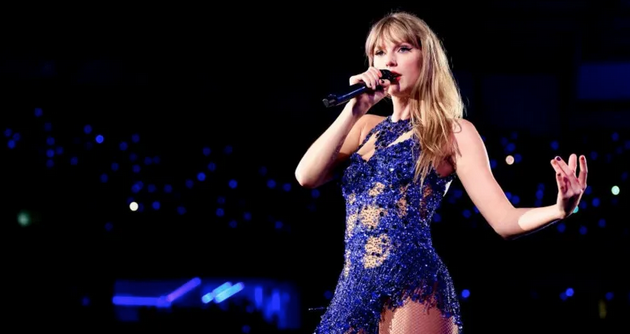
Getty Images
Taylor Swift in Sao Paulo
On the luxe end of things, the city’s landmark hotel Marina Bay Sands has sold out of its S$50,000 Swift packages which included four VIP tickets and a three-night stay in a suite.
Then there’s 22-year-old Allen Dungca in the Philippines, who scraped together his wages to take him and his mother to Singapore.
This Thursday, they’ll take a four-hour bus ride to Manila, stay at an airport motel for the night, then grab their dawn flight the next day.
The enterprising student snapped up the travel package back in July. He eventually tracked down the tickets on a resale night, after weeks of desperate hunting.
“I am very lucky,” he says of the S$400 outlay for seats in the nosebleed section. “The seller was kind and not a scalper.”
Resales now are going for thousands. And he had almost fallen for a scam, a shady character named Pat Steve, later exposed online.
He estimates the whole endeavour is costing him S$2,000 – the monthly income of an upper-middle class family in the Philippines, a country where a fifth of the population lives under the poverty line.
“Right now, I’m a student with a part-time job and I can afford my wants and needs. But it’s sad, other Swifties don’t have any means or budget to watch her overseas and I know most Filipino Swifties love her so much.”
The Philippines arguably has the most ardent Swift fan base – Spotify data showed Quezon City in Manila had played the most streams of the singer last year.
The pop star has toured in the Philippines before – but the bag of money from Singapore undoubtedly sweetened the deal, say analysts.
Clean, modern Singapore has long been seen as a base in the region for big events. It has the infrastructure, the transport links and a high-earning, expat-heavy population.
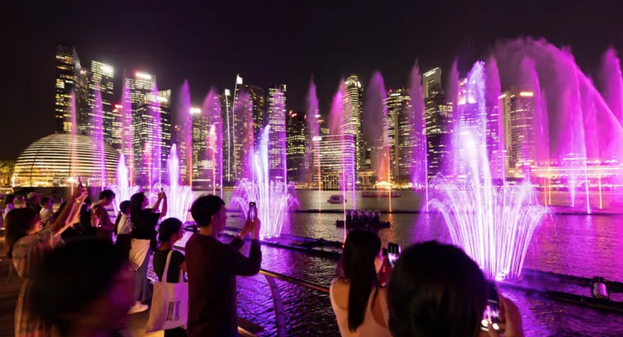
EPA
Swift-themed water and light shows on the bay are among the city’s Swiftie attractions this week
It’s also seen as reliably stable in a region which has experienced political chaos. A decade ago Swift cancelled her shows in Thailand because of the military coup and resulting protests.
Still, while it’s common for governments around the world to give out subsidies and tax breaks to bring in events, the reported spend goes beyond anything else publicly known in Singapore.
Samer Hajjar, a marketing lecturer at the National University of Singapore, says it’s “above average” even for the city-state.
And fans are quite blunt. “It’s kinda greedy,” says Mr Dunga. “But it’s wise… because their economic response will be way more than that.”
But will it be though?
Show me the money
In Australia, the leg of the tour preceding Singapore, officials suggested the tour had provided a A$145m “uplift” in consumer spending. More than 570,000 tickets were sold across seven nights in Sydney and Melbourne, nearly double the number sold for Singapore’s six shows.
But not all of that money counts, says economists.
More than 90% of show-goers were probably local, estimates KPMG’s chief economist Dr Brendan Rynne, so their dollars would be “just a transfer from one category of spending (or saving) to another”.
Only foreign visitors would have been adding to the books – and they accounted for just 2% of visitors, he estimated. After doing the maths he projected Swift had added only A$10m (£5.1m; $6.5m) to GDP.
Still, Australia didn’t use public funds to have Swift play in the country, state government officials confirmed to the BBC. Neither did Japan, the only other Asian stop on the tour.
Singapore has said Swift’s tour will bring certain economic benefits to the country.
But just how much net gain will be generated is unclear. The BBC has reached out to Singapore’s tourism board but they have refused to reveal foreign visitor estimates or other modelling.
A local bank, Maybank, has suggested that consumer spending may top S$350m – but that’s based on the very optimistic prediction of 70% of attendees being from out of town.
Even Singapore’s Formula One Grand Prix only saw 49% of spectators from overseas in 2022, with a record 300,000 crowd.
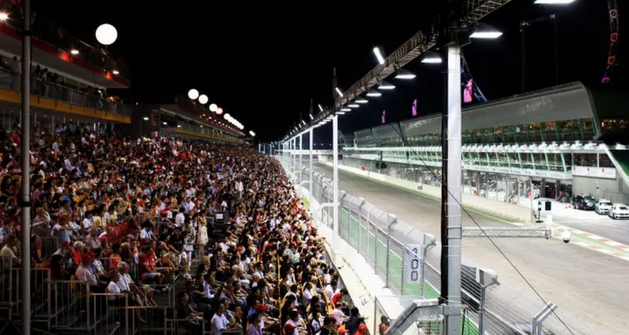
Getty Images
Singapore’s F1 Grand Prix brings thousands of overseas visitors each year
When pressed on the numbers, Maybank’s economist Erica Tay could not provide specifics, saying the 70% rate was based on Singapore’s “potential catchment” and the bank was not interested in estimating net profit.
“Six concerts may not move a nation’s economic growth materially, but the strategic value of Taylor Swift’s endorsement of Singapore as a tourism destination outweighs that one-off boost,” she said.
But business professor Julien Cayla from Singapore’s Nanyang Technological University points out that public spend should be scrutinised – especially when it’s only revealed to citizens by another country’s government.
And in a country where welfare benefits are relatively limited – it could be seen as a fraught spend.
“To justify spending [reportedly] S$24 million on something that on the surface might not seem that critical to the economic health of the country over spending on people and public services… there’s a tension there,” Prof Cayla said.
Nonetheless he and others say that when it comes to planning tourism, governments have mandate to throw around money and Singapore isn’t an exception.
“They don’t necessarily like to advertise it. But the minute the government sees something that fits into a long-term strategy, it will sink government money in to support that,” he says.
In a way, Singapore has just brought in Swift the same way it currently attracts huge multinational corporations.
“What’s different here is that Taylor Swift as a business, is a very emotional business,” he said.
“It’s dealing with the emotions of 10-18 year olds, who are very sad to not see the concert happening in Bangkok or Jakarta.”
And in the words of the songstress herself, that’s caused a lot of bad blood.
Singapore/Taylor SwiftAsia/ Pop music/United States
The post Bad blood over Singapore Taylor Swift Eras tour subsidies appeared first on CANADA VOICE.
]]>The post Eight of the world’s most remarkable homes appeared first on CANADA VOICE.
]]>From Jaipur to Whistler, eight extraordinary, award-winning houses that are both beautiful and low-energy.
“Passive home” design is all about low-energy building made to exploit passive solar energy and establish a comfortable indoor temperature with a low-energy requirement for heating or cooling. It’s a recurring theme in the shortlisted architects of the World Architectural Festival. Programme director Paul Finch tells BBC Culture that he has seen “a far greater concern for sustainability, reflected also in the use of environmentally-friendly materials and adoption of passive house design principles”.
Held annually over three days, the festival and its sister event Inside World Festival of Interiors offer a global survey of developments in architecture and interior design respectively. Around 550 shortlisted architects present their projects to a panel of judges, from architects and interior designers to engineers. The events’ judging process is unusually transparent, as festival-goers witness it, too.
The festival takes place in cities around the world – the last one was held at the exhibition centre at Marina Bay Sands in Singapore. On the final day, shortlisted architects present their projects to another jury and compete for the following gongs: World Building of the Year, Landscape of the Year, Future Project of the Year and Interior of the Year. “Many shortlisted houses and villas took an imaginative approach to sites and their various constraints, turning difficulties into opportunities. They frequently incorporated potential landscape elements and capitalised on natural light,” says Finch.
“There is a greater interest in knowing how much energy is expended when manufacturing materials,” adds Finch. “Wood has become increasingly popular because of its carbon-absorbing credentials. Architects also often favour retro-fitted projects now rather than ones involving demolition and new-builds.” Moreover, changing demographics, the pandemic and climate change are influencing residential architecture, he adds: “Greater life expectancy, intergenerational living and late-life medical and care treatment have pushed health and wellbeing, previously confined to health-sector buildings, such as hospitals, up the agenda.”
Future lockdowns can’t be ruled out, Finch points out. Some architects are factoring in more balconies and other external spaces. They are also including spaces for working from home.
BBC Culture looks at eight projects showcased by WAF and Inside.

1. 19 Waterloo Street, Sydney, Australia
This house, designed by Sydney-based SJB, presents an idiosyncratic facade with its irregularly sized and spaced windows. An interplay of semi-circular, rectangular and porthole openings reinforce this eccentricity, which is echoed in a patchwork of reclaimed materials and broken bricks, seen on the building’s exterior. Context is an important aspect of the project. Part of the façade has brickwork that resembles the sandstone bases of neighbouring buildings.
The house has previously been a butcher, grocer, hatter and restaurant. “Our intent was to deliver a mixed-use house. It now incorporates a home, self-contained flat and shop,” says Adam Haddow, a director at SJB.
Winner of WAF’s World Interior of the Year 2023 award, the house stands on a 30sq-m (323sq-ft) plot. Haddow took ideas from his university thesis that explored how film has been used to create an illusion of greater space. His reference points include Jacques Tati movies Mon Oncle and Playtime that satirised the obsession for regimented uniformity in modernist architecture.
Inside, a feeling of space is achieved by a series of contracting and expanding spaces, from a low-ceilinged kitchen to a grander, high-ceilinged living room. The project revolves chiefly around sustainability through its reuse of materials. The façade’s myriad openings encourage natural ventilation, obviating the need for air-conditioning. The building follows Passivhaus principles: it doesn’t overheat in summer, while sunlight enters easily in winter. Planting across the roof reduces urban heat island effect.

2. House of Solid Stone, Jaipur, India
This project reclaims a material that has long been sidelined by local architects – sandstone. Its robust, sustainable qualities have been overlooked for decades in the region (it’s normally reserved for cladding). This project designed by Mumbai-based Malik Architecture, revives it. “This house presented us with an opportunity to evolve a method of building prevalent in traditional, local buildings for centuries,” says Arjun Malik, principal architect at Malik Architecture. “We gave ourselves a simple brief: only stone should be used for its construction. The site read more like an archaeological excavation than a construction site, where the lines between the ‘found’ and ‘made’ were blurred.”
The architects used hard Jodhpur sandstone, hewn from a quarry five hours’ drive away. The quarry foreman predominantly deployed an age-old stone-splitting technique, using traditional tools along with more commonly used saw extraction, which, when used alone, results in the loss of natural stone’s desirable textures. The warm, neutral-toned sandstone is left exposed throughout the interior to unifying effect.
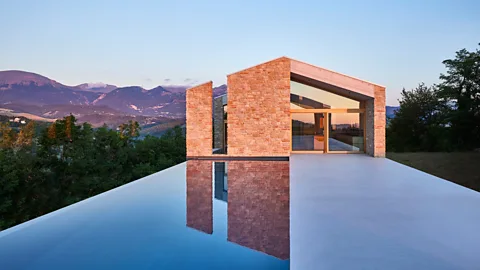
3. Casa Ward Sarnano, Italy
This holiday home owned by a Swedish couple epitomises the current trend for architects reusing existing materials found on site. Drastic circumstances resulted in providing the raw materials for Casa Ward, however: a farmhouse overlooking the Sibillini mountains near Sarnano, a village east of Perugia, was almost reduced to rubble by an earthquake in 2016.
The new house, which was highly commended in the house and villa category, was designed by Paris-based architect Carl Fredrik Svenstedt and comprises a concrete frame clad with these stone remnants. The reclaimed, rough-hued stone used for the new house channels the rugged character of the original farmhouse’s walls. This is used in the interior, too, further blurring the boundaries between inside and out.
The new building’s basic form is modelled on an archetypal house with a pitched roof. In an unorthodox twist, this appears to have been sliced, its segments separated and arranged in a linear sequence, each section echoing the others. The design is built to resist future tremors and faces rolling hills. Its connection between indoors and out is reinforced by incorporating enormous picture windows framing picturesque vistas. Between each section of the house are terraces and an infinity pool reflecting the sky.
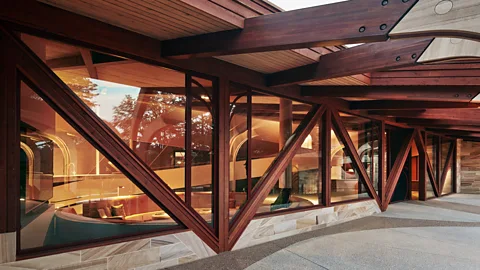
4. Three Spring Residential Gallery, Bunurong Land, Australia
This family residence near Melbourne, designed by local architects KGA Architecture, stands on a farm in open countryside. By contrast, the interior houses an art collection of work by Australian artists.
“We differentiated the family from the art-filled areas by making the former more formal and the latter more intimate,” says its lead architect Kristin Green. This extravagantly organic, asymmetric building has a correspondingly byzantine layout, its two distinct areas indirectly connected by oblique corridors instead of conventional doorways.
A spectacular double-height library is lined at ground-floor level with bookshelves. Tall arched windows look on to a garden with enormous, ornamental pools. The room has an ornate floor overlooked by a semi-circular mezzanine supported by wooden columns. Above this is a fluted plaster ceiling crowned by a skylight. A grand dining room with a vaulted ceiling and glass table seating 30 feels intimate and convivial. The main area for the family is an inward-looking, cosy living room with a sunken seating area. A warm, earthy palette – mainly ochre, terracotta and aubergine – in the interior was chosen to echo the surrounding landscape’s natural colours.
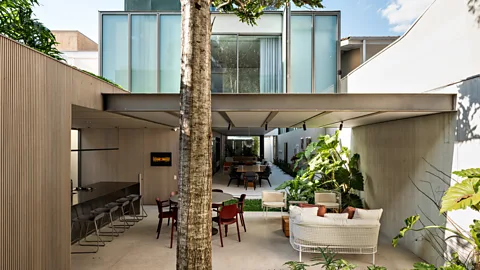
5. LRM House, São Paulo, Brazil
This rectangular, crisply geometric house occupies a long, narrow site sandwiched, on its longer sides, by buildings immediately adjacent to it. The main goal of its architects, São Paulo-based Studio AG, was to create a sense of more space, which was achieved mainly by installing an abundance of glazing and connecting the house to a garden. More space was added by incorporating two extra storeys.
The long open-plan ground floor contains a kitchen, living room and dining room area that leads to the garden. This indoor space is bordered by a double-height volume with a textured wall rising to meet windows that run along the entire wall. At the top of this space is a skylight that brings yet more daylight indoors. More diffuse natural light enters the adjacent, lower-ceilinged living area.
A lawn beyond the dining room leads to a covered area for alfresco dining. A boxy upper storey contains bedrooms. Frosted floor-to-ceiling windows allow privacy and provide natural ventilation, and a floor above this houses an office, gym, sauna and open-air swimming pool.
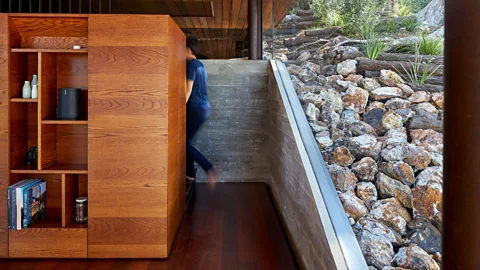
6. Mawhitipana House, Waiheke Island, New Zealand
The brief the owners of this holiday home gave to the house’s architects, Wellington-based MacKay Curtis, was to bring them into close contact with nature. They wanted outdoor areas that catch the sun where they could spend more time outside than in. A long, timber outdoor deck spans the narrow site and sits between mature Pōhutukawa trees without disturbing their roots. Perched high on a steep slope, the largely wood-clad house has sweeping views over Mawhitipana Bay.
The two-storey building is divided into two structures. The lower level, enclosed with glass, houses a living room, dining area and kitchen. Steel columns support the upper, cedar-clad storey. The timber window shutters with gaps allow natural ventilation and also the sound of the waves on the beach below to permeate the interior. The upper storey accommodates a bedroom, bathroom, a room with bunk beds, a study, a bathroom and laundry room.
The house’s modest footprint makes a minimal impact on the environment. “The house measures 133sq-m (1431sq-ft) overall,” says Jo MacKay, co-founder of MacKay Curtis. “This is slightly smaller than a typical detached villa in New Zealand, which measures closer to 160sq-m (1722sq-ft) to 200sq-m (2153sq-ft).”
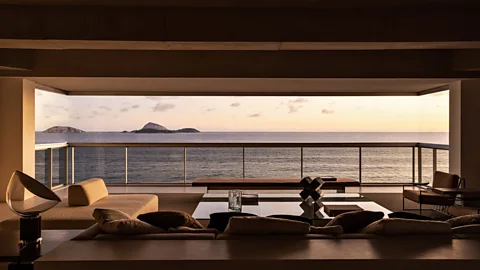
7. Orla Apartment, Rio de Janeiro, Brazil
A stunning panoramic view of the ocean from this apartment overlooking Ipanema Beach is one of its main attractions. It was designed for a couple with two young children, and the aim of São Paulo-based architects Studio Arthur Casas was to accommodate both a space for the family to relax in and a quiet, private home office. The office is in the main bedroom but can be concealed by a sliding panel.
An extensive use of natural materials throughout the house – including stone flooring in the living room and wood lining walls – creates a soothing environment. The streamlined kitchen, which also has ocean-facing views, connects to the living room. Sandy tones, chosen for everything from upholstery to ceramics, contribute to creating a restful atmosphere. When framing views of the great outdoors, these quiet colours help to draw the eye outside.
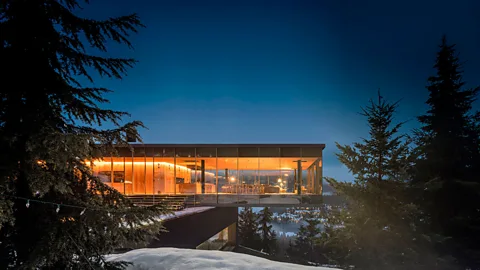
8. Flag House, Whistler, Canada
Established Brazilian practice Studio MK27 designed Flag House, a holiday house in Whistler, north of Vancouver. Its clients had seen some MK27 projects in Brazil and commissioned the studio to design their house. The practice, founded by Marcio Kogan in the 1970s, is normally known for its modernist villas suited to a tropical climate. But, undeterred, the architects applied one of the key principles of their practice to this new entirely different setting, namely establishing a strong connection between indoors and out. What’s more, the relatively low-lying, horizontal house blends sympathetically with its setting.
Flag House consists of two boxy forms, one resting on the other. The larger one, a glass-fronted living space, is supported by a dark wood-clad base containing the entrance and a guest bedroom. The upper floor is cantilevered and seems to hover above the plinth-like lower box.
The World Architecture Festival 2024 takes place in Singapore later this year
If you liked this story, sign up for The Essential List newsletter – a handpicked selection of features, videos and can’t-miss news delivered to your inbox every Friday.
If you would like to comment on this story or anything else you have seen on BBC Culture, head over to our Facebook page or message us on Twitter
The post Eight of the world’s most remarkable homes appeared first on CANADA VOICE.
]]>The post Your Fat Friend: Documentary examines the way fat people are seen on screen appeared first on CANADA VOICE.
]]>
Why are fat characters so often the butt of the joke or the focus of pity? A new documentary raises questions about the lack of complex portrayals of plus-size people on screen.
Actress Siobhan McSweeney is best known as Derry Girls’ imposing headmistress Sister Michael, a nun almost as large in stature as in character, and an imposing figure in both respects.
Two years ago, the actress starred in a very different role in ITV drama Holding. But the press were only interested in one thing.
“All they wanted to ask me about was the love scene and how brave I was doing it because of my body shape,” she says.
Now McSweeney is lending her support to a new documentary looking to give fat people a fairer and more balanced portrayal in media, as well as society in general.
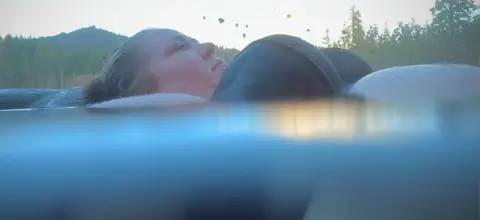
Filmed over six years, Your Fat Friend follows author and podcaster Aubrey Gordon from her first brutally honest online post, written under the pseudonym that doubles as the documentary’s title.
Describing her “fat experience”, she recalled being kicked off planes, having doctors’ appointments refused and the endless conversations and attempts at dieting. Gordon was a size 26 – the equivalent of 30 in the UK.
The documentary explores what happened after her post went viral. Viewers see her evolve and talk publicly about an issue that affects millions around the world.
During her journey into the public eye, Gordon amassed a huge following and became a New York Times best-selling author and host of the Maintenance Phase podcast. She looks unflinchingly at societal perceptions of fat people and the fat on our bodies.
At a preview screening of Your Fat Friend in Scotland attended by the BBC, it’s freezing cold and wet and yet there’s a huge queue of people snaking around the pavement waiting to go into the Glasgow Film Theatre. Their teeth chatter with cold and excitement.
“It’s a sensitive subject and one that needed to be treated with absolute care,” documentarian Jeanie Finlay tells BBC News. “I’m looking for stories that are unspoken, people who aren’t in the spotlight with considered perspectives. I wanted people to see a realistic experience of what it means to live with a larger body.
 Glimmer Films
“If you look at the way that LGBTQ+ stories have been told over the years, they have become much more nuanced on screen because people have a better understanding and have challenged the bias with which these stories have been told in the past. Why can’t we do the same with body size?
“Fat people can be heroes, not just the punchline,” Finlay says.
This point was echoed by audience questions after the screening, as many referred to the lack of onscreen representation from plus-sized actors in film and television. The ones that do exist fall into the same tropes – the fat friend to the slim, attractive main character or the depressed lonely fat person who is either bullied, pitied or despised.
McSweeney is a long-time admirer of Gordon’s work, so when she was asked to host one of the Q&A sessions, she jumped at the chance.
“Aubrey is a kind of talisman, the atmosphere was electric. It shows how important it is to explore the topic more deeply,” McSweeney says.
Recounting her memories of those journalists asking about her love scene, she adds: “It’s utterly wrong – they weren’t trying to be insulting but I think it’s something deeply ingrained that means we can’t deal with the issue.”
The actress is now well-respected and established in her career but when she started out, she was continuously told to lose weight.
 Getty Images
Casting director Shaheen Baig, whose credits include Lady Macbeth, Peaky Blinders and Black Mirror, says: “I hope we can get to a point with a character and script where it doesn’t specify body size. I still think people have a limited lens when it comes to what characters can look like – there’s still a lot of work to be done.
“As a casting director, things are improving, but it’s very slow and nowhere near where it should be. People say it’s an open playing field but it’s not.”
She adds: “Directors, producers, commissioners and studios need to think about characters in less conventional ways and also to commission a wider variety of scripts.”
Critics have referred to the film as an insightful view of fatness that is often neglected and rarely acknowledged by Hollywood.
Screen Daily’s Nikki Baughan described it as an “engaging, eye-opening documentary”, while the Guardian’s Peter Bradshaw said Finlay “paints a warm and generous portrait of a sympathetic subject”.
The Scotsman’s Alistair Harkness called it “fascinating and compelling viewing”, while Time Out’s Anna Smith said: “Gordon is a funny and frank subject: a tour of her vintage diet book collection is a treat.”
However, IndieWire’s Christian Zilko said that although the film “succeeds in offering a nuanced portrayal of a writer and the views that made her beloved, it’s hard to shake the feeling that the film actively infantilizes the very demographic that it wants to elevate”.
“Gordon’s points about mental health and unrealistic media expectations would be so much stronger if they weren’t offset by her criticisms of healthy habits and resistance to solve a problem that is quite literally killing people,” he wrote. “Even if she rightly identified a problem in the way American society treats fat people, the film’s fatal flaw is its insistence on replacing one extreme with another.”
Finlay’s previous documentary credits include Game of Thrones: The Last Watch, Sound it Out and the BIFA-winning Seahorse.
 Getty Images
Historically, the shorthand characterisation in literature and film has been to make evil, funny or silly characters fat or ugly.
“It’s so lazy and reinforces the stereotypes,” says Finlay. “The examples are endless: Miss Trunchbull, Shallow Hal, Thor in Avengers End Game, Mrs Scrubbit in Wonka.
“I wonder what the world would look like if the word fat wasn’t associated with such negative characteristics, but we have the power to change that with our writing and film-making choices.”
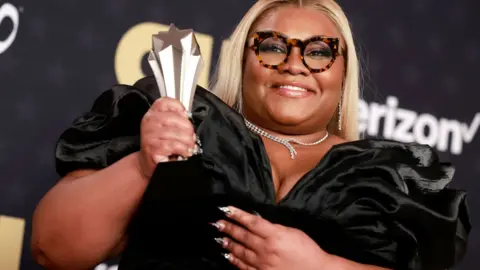
Oscar-nominated actress Da’Vine Joy Randolph is often quoted saying her big Hollywood break has taken longer because of her looks.
“People on screen don’t traditionally look like me,” Randolph said recently. “I’ve had to fight to play fully realised characters with complexities.”
The fact that she is the frontrunner for her category at the Oscars suggests there is progress taking place. But while there is some change, many feel it is too slow.
What started off as a passion project for Finlay has turned into a global talking point. Audiences say they have been moved by the film and it has reignited a desire to be authentic and truthful about the human body – and to see that properly fleshed out on the big and small screen.
Your Fat Friend is released in cinemas on 9 February.
The post Your Fat Friend: Documentary examines the way fat people are seen on screen appeared first on CANADA VOICE.
]]>The post Cillian Murphy: Barbenheimer was a ‘wonderful moment for cinema’ appeared first on CANADA VOICE.
]]>BBC culture / By Steven McIntoshEntertainment reporter
Actor Cillian Murphy has said last summer’s Barbenheimer phenomenon was “a wonderful moment for cinema”.
The viral trend saw thousands of fans book tickets to see both Barbie and Oppenheimer on the same day.
It came about after a string of memes which made light of the fact that two films which were so tonally different shared the same release date.
Murphy praised the organic nature of the trend, adding it “wasn’t any amazingly designed marketing strategy”.
Asked by the BBC’s culture and media editor Katie Razzall if the two films helped each other at the box office, Murphy said: “Yeah, they did. And it was a great moment for cinema.
“I think they’re both great films which couldn’t be more different. And I think it was wonderful it wasn’t any amazingly designed marketing strategy by the studio.
“It was people, you know, it was the internet and people who made up this Barbenheimer thing and it, yeah, it was a wonderful moment for cinema.”
Barbie has taken $1.44bn (£1.14bn) at the box office worldwide, while Oppenheimer has made $956m (£759m).
Both films are nominated for best picture at the Oscars on 10 March, but Murphy explained he tries not to let awards buzz affect his performances.
“I know everyone says this, but you never go into making a film thinking about awards,” he said. “That’s not what we do. It’s impossible to make a film that way.
“But, when a film connects with audiences like this particular one has in a way that none of us could have anticipated… it’s hugely flattering and hugely humbling and it’s lovely to see that.”
Murphy is seen as the co-frontrunner in the lead actor category alongside Paul Giamatti of The Holdovers, but he says he doesn’t spend much time worrying about the outcome.
“I genuinely don’t think about that,” he said. “It’s kind of wasted energy. I just feel so thrilled and humbled to be [mentioned] in the same breath as all those wonderful actors.”

Murphy’s co-stars in Oppenheimer include Florence Pugh, who plays psychiatrist Jean Tatlock/Universal Pictures
Born in the suburbs of Cork, Ireland in 1976, Murphy’s interest in acting developed in secondary school after he took part in a drama module.
But he actually pursued music as a career first – Murphy played guitar alongside his brother Páidi in a string of rock bands in his late teens and early 20s.
He also studied law at University College Cork, but failed his first year exams because his heart had increasingly become set on acting. His professional debut came with a theatre performance in 1996.
Film roles followed over the next decade, as Murphy was cast as a supporting character in movies such as Cold Mountain and Girl with a Pearl Earring, as well as the lead role in Danny Boyle’s horror film 28 Days Later.
“There isn’t a genre or a medium the actor has shied away from over the years,” wrote Variety’s Jenelle Riley.
“And while some films might not always work as a whole, Murphy always shines. He’s also a true actor’s actor, one who understands every role is integral and is comfortable taking on supporting parts.”
One particular role proved key to his career – with Murphy’s appearance in 2005’s Batman Begins marking his first collaboration with Memento, Interstellar and Tenet director Christopher Nolan.
Murphy had been asked to audition for the lead role in the first film of the Batman trilogy, and although he did not see himself as being the right fit, the actor jumped at the chance to work with Nolan. His instincts were right, and he was instead cast as Dr Crane, whose alter-ego is the villainous Scarecrow.
Over the following years, Murphy’s profile grew steadily with a stream of roles on stage and screen, including Nolan’s Inception and Dunkirk. The pair have now worked together on six films.
“It’s a 20-year relationship,” Murphy said, “and we met when we were much younger and we were kind of starting out in the business. He was a lot further ahead than I was.
“I have a huge respect for him, I’ve always loved the types of films that he makes. There’s all sorts of films that I go to the cinema to see. But we’ve developed over the years. And above all, the most important thing, I think, is trust. I really like being pushed as an actor, and he really, really pushes me, in the best way possible.”

Murphy’s breakthrough came when he was cast as Tommy Shelby in BBC drama Peaky Blinders
But although Murphy’s film career was going from strength to strength, it was a BBC drama series about a Birmingham street gang in the early 20th Century which provided his real breakthrough.
The actor’s role as Tommy Shelby in Peaky Blinders, created and written by Steven Knight, elevated him to a new level of fame.
The show had a healthy audience when it was first broadcast in the UK, but its popularity grew significantly over the following years as it was sold overseas and audiences caught up on streaming platforms.
Murphy’s performance was described as “spectacular”, winning him two Irish Film & Television Awards for best actor while the show itself won both a Bafta and National Television Award for best drama.
Over the decade that Peaky Blinders aired, Murphy continued to star in films such as A Quiet Place Part II.
And as the drama series was drawing to a close, Murphy was cast in the role that would define his career – theoretical physicist J Robert Oppenheimer.
The resulting film, Oppenheimer, was released last July, accidentally sparking the Barbenheimer trend which greatly benefitted both films at the box office.
But although Barbie made more money, it’s Oppenheimer which is seen as the current frontrunner to win best picture – hitting the Academy Awards’ sweet spot where artistic merit overlaps with commercial success.

Murphy has already won a Golden Globe for his performance and is also nominated for a Screen Actors Guild and Bafta award/Getty Images
Although the early part of the film focuses on the creation and development of the atomic bomb, the last hour sees Oppenheimer grappling with what he’s done, as he comes to terms with the many lives lost as a result of his work. It is a wide-ranging performance in a wide-ranging film.
“This is actually a very human story,” Murphy told Razzall. “And if you think about the sort of dilemmas they were wrestling with at the time, they are the biggest, most profound, most paradoxical, most important kind of moral dilemmas that we’re still wrestling with as a race and as the world.
“I feel that when you present those in a hugely entertaining way, his [Nolan’s] movies become like events. And there’s no one else that does it like that.
“And then for some reason, it just clicked and people started going, this momentum, and we were all on strike at the time. So we were just sort of texting each other, just watching this thing happen.”
The London premiere of Oppenheimer took place on the same day the Hollywood actors’ strike began last July.
It meant it was the final promotional event the actors were able to partake in before downing tools on the red carpet and ceasing to work. The strike was finally resolved after 118 days.

Barry Keoghan, Paul Mescal and Kerry Condon are among the Irish actors to have received Oscar nominations/Getty Images
This awards season has once again been a strong one for Irish actors. The release of the Banshees of Inisherin last year led to Oscar nominations for Colin Farrell, Kerry Condon, Brendan Gleeson and Barry Keoghan, while Paul Mescal was nominated for Aftersun.
This year, Keoghan was Golden Globe and Bafta-nominated again for his performance in Saltburn, while All of Us Strangers, starring Mescal and Andrew Scott, received nominations at the Globes, Baftas and British Independent Film Awards.
It suggests something has gone very right in the Irish talent pipeline.
“I think part of it is coincidence, and I think part of it is that Irish people tell stories very well, just in the pub to each other,” Murphy reflects. “We’re good at it. We have a long history of it.
“We’re comfortable with stories, with songs, with poetry. These things are just kind of second nature to us.
“But it is kind of phenomenal the level of talent that the country is producing. For like five million people, it’s kind of extraordinary.”
The post Cillian Murphy: Barbenheimer was a ‘wonderful moment for cinema’ appeared first on CANADA VOICE.
]]>The post Martin Scorsese says immersive screening experiences can weaken films appeared first on CANADA VOICE.
]]>Director Martin Scorsese has said he is “concerned” that immersive and 3D screenings risk detracting from the quality of films.
In recent years, some cinemas have introduced immersive experiences for movies, often known as 4DX screenings.
These see audiences sit in chairs that move with the action, while water and smoke are used to enhance some scenes.
But Scorsese said such techniques can mean films “don’t necessarily work as well” when those elements are removed.
In 2019, Scorsese gave an interview to Empire magazine in which he likened the Marvel superhero movies to theme parks, prompting a debate in Hollywood about the artistic value of blockbusters.

Smoke, smells, water and moving seats are among the special effects created in 4DX screenings/Getty Images
Speaking to BBC Radio 4’s Today programme, Scorsese reflected on his original comments – telling presenter Amol Rajan his primary concern was about techniques that take away from a film’s content.
“I was concerned that if a film needs more than just projection on a screen, if it needs chairs that bounce around or certain scents that are used in the theatre, or more technical elements besides the image on the screen, what would that film look like without those elements?” he said.
“Would it still be a film? There are major elements of it missing.”
Screenings in the sensory 4DX format are similar in some ways to simulators – audience members are in seats that shake and move to mirror action scenes like car chases.
Smoke is also used to replicate the effects of on-screen explosions, scented air is released, and water is lightly sprayed on audience members during scenes that take place in the rain or at sea.

The Super Mario Bros Movie was the most popular film at 4DX screenings last year/Nintendo/Universal
Last year, the highest-grossing films in the 4DX format in the US were Super Mario Bros, Avatar: The Way of Water and Spider-Man: Across the Spider-Verse.
However, 4DX is a tiny fraction of overall box office takings, accounting for $50m (£40m) of the $9bn (£7.1bn) earned in the US in 2023. In the UK, Cineworld offers 4DX screens in nearly 40 of its cinemas.
Phil Clapp, chief executive of the UK Cinema Association, told BBC News that cinemas were offering fans a choice of experiences as well as films.
“The recent advent of 4D at some UK sites, for example, has proved popular, particularly with family audiences and young people, but of course might not be appropriate for every film, nor for those cinema-goers who prefer a more traditional screening,” he said.
“Where that is the case, then luckily the diverse range of offerings which is now a feature of the sector ensures that those tastes are amply catered for as well.”
‘We’re missing the intimacy’
Scorsese is nominated for best director at the forthcoming Oscars for Killers of the Flower Moon, with the film nominated in 10 categories in total.
He is considered one of the greatest living directors, with credits also including The Wolf of Wall Street, Gangs of New York, The Departed, Goodfellas and Taxi Driver.
The 81-year-old has previously also dabbled in 3D, shooting his 2010 movie Hugo using 3D cameras and describing it as “liberating” at the time.

Scorsese’s Oscar-nominated film Killers of the Flower Moon stars Lily Gladstone and Leonardo DiCaprio/EPA
However, Scorsese suggested that when techniques like 3D are used, it can mean a film does not function as well for a viewer if they don’t see it in that format.
“When you see films that were shot in 3D, but you see them flat – well there’s an entire arena of information that’s missing,” he told Rajan.
“And the flat versus the 3D films don’t necessarily work as well. And so it’s almost like they are not films any more.”
The director also warned that if the film industry began relying too heavily on traditional narrative arcs with familiar character tropes, much of the nuance and subtlety of films could be lost.
“An archetype, I enjoy – certain films have archetypes, the good and the bad guys, all this sort of thing. I like the archetypes,” Scorsese said.
“But on the other hand, if it’s only archetypes, we’re missing the intimacy of character, and I think of younger people seeing this and thinking cinema may only be that.”
Killers of the Flower Moon is a three-and-a-half hour epic starring Leonardo DiCaprio, Robert De Niro and Lily Gladstone, who is seen as a strong contender to win the Oscar for best actress.
Set in 1920s Oklahoma, the true story depicts the gradual and brutal murders of Native Americans by white settlers who are fuelled by greed for the oil on their land.
The post Martin Scorsese says immersive screening experiences can weaken films appeared first on CANADA VOICE.
]]>The post Taylor Swift: Publicist denies star secretly married Joe Alwyn appeared first on CANADA VOICE.
]]>By Bonnie McLarenBBC Newsbeat
Taylor Swift’s publicist has hit out at rumours that the popstar secretly married ex-partner Joe Alywn.
Tree Paine accused anonymous celebrity gossip account, Deuxmoi, of causing “pain and trauma” after it made the claims.
In an Instagram Story, Deuxmoi said the Cruel Summer hitmaker married Joe in 2020 or 2021 in a non-legal ceremony.
“Enough is enough with these fabricated lies about Taylor from Deuxmoi,” Tree wrote on X/Twitter.
“There was NEVER a marriage or ceremony of ANY kind.”
News of Taylor and Joe splitting made headlines in May 2023, with the Shake It Off star since being linked with NFL player Travis Kelce.
Deuxmoi later responded to Tree’s post, writing that they “make zero dollars from lying”, then querying “can publicists say the same”.
“Either way, I apologise to Taylor,” the post ended.

Getty Images
News of Taylor Swift and Joe Alwyn’s split hit headlines earlier this year
Tree has led Taylor’s publicity team since 2014, and has often been seen at events with Taylor, such as the London premiere of Beyoncé’s Renaissance tour film.
The 12-time Grammy award winner previously told a fan that Tree “tells me what to do”.
Taylor has just released You’re Losing Me on streaming services, which many fans think is about the decline of her and Joe’s relationship.
But Jack Antonoff, Taylor’s collaborator, said the song was recorded on 5 December 2021 – before Joe and Taylor split.
What is Deuxmoi?
The account has over two million followers on Instagram and claims to be a “curator of pop culture”.
It’s known for posting anonymous messages from unverified sources about celebrities – covering everything from relationship news to music, film and product releases.
“Some statements made on this account have not been independently confirmed,” Deuxmoi’s Instagram bio reads.
“This account does not claim information published is based in fact.”
- Why are we obsessed with Taylor Swift’s love life?
- Taylor Swift is UK’s most-streamed artist of 2023
- Taylor Swift postpones Saturday show after fan dies
It also posts pictures of celebrities submitted by followers, which fans have snapped when they’re out and about.
The owner of the account prefers to stay anonymous, though MailOnline claimed it was a woman behind the account in 2022.
Speaking to the site, Deuxmoi said she wasn’t an “investigative journalist”.
Listen to Newsbeat live at 12:45 and 17:45 weekdays – or listen back here.
Taylor Swift/Music/United States/London/Celebrity
The post Taylor Swift: Publicist denies star secretly married Joe Alwyn appeared first on CANADA VOICE.
]]>The post Beyoncé tells fans (and Taylor Swift) to ‘laugh and dance’ at Renaissance premiere appeared first on CANADA VOICE.
]]>Beyoncé told fans they should “dance, sing, laugh and cry” as they watched the London premiere of her Renaissance tour film.
Dressed in a white suit, the star made a brief appearance before the three-hour documentary, and told the audience to “feel free to feel”.
Taylor Swift, whose own concert movie broke box office records earlier this year, was also there.
Beyoncé’s daughter Blue Ivy also attended the event.
Other guests included Destiny’s Child star Michelle Williams, musician will.i.am, Vogue’s former editor Edward Enniful, and actress Vivica A Fox.
All wore “opulent formal attire” requested in the dress code.
Swift’s appearance came after Beyoncé attended the Hollywood concert premiere for her Eras Tour on 11 October.
Swift donned a sparkling silver Balmain gown, and posed for photos with fans – unlike her counterpart, who made a quick stop on the red carpet with Blue Ivy before changing outfits to introduce the film.
Afterwards, Beyoncé released a surprise single, titled My House, to commemorate the movie’s opening.


Shot in 10 different countries, the film captures all the on and off-stage action from what became the highest-grossing tour ever by a black artist, and the eighth-highest-grossing tour of all time.
As well as hits like Crazy In Love, Cuff It and Drunk In Love, fans get to see Beyoncé’s creative battles, the impact of knee surgery, and how her daughter losing a tooth took precedence over anything that happens on stage.
Footage is taken from every date of the tour, often cutting seamlessly between different performances of the same song.
That allows Beyoncé to show off hundreds of costume changes, while capturing fleeting moments of spontaneity (and even the occasional mistake) in the meticulously-choreographed concert.
But the backstage footage is just as compelling.
Source: BBC
Getty Renaissance tour in numbers
Particularly moving is a sequence about her uncle Johnny – a black, gay man who designed Beyoncé’s first ever stage costumes, and whose love of house music inspired the disco grooves of the Renaissance album and tour.
“Wherever he went, it became better,” remembers Beyoncé’s mother, Tina Knowles, in the film.
“He helped me raise my kids and they loved and adored him. He was a lifesaver.”
Uncle Johnny – real name Jonathan Williams – died near the start of Beyoncé’s career from an Aids-related illness, but her embrace of gay and ballroom culture on Renaissance can be traced back to him.
By the time she tours the album, fans are holding up signs saying, “Uncle Johnny would be proud.”
“I just wish he could see this,” Beyoncé tells her mother in one sequence. “You know he’s looking,” Tina replies.
At the London premiere, Beyoncé dedicated the film to his memory.
“I’m really proud this film is coming out on December 1st, World Aids Day, in honour of Uncle Johnny,” she said, receiving a huge round of applause from the audience – many of whom had worked and performed on the tour.
Here are some more highlights from the film, which was screened at London’s Leicester Square Odeon ahead of its general release.
Six takeaways from the film
1) You get the best seat in the house
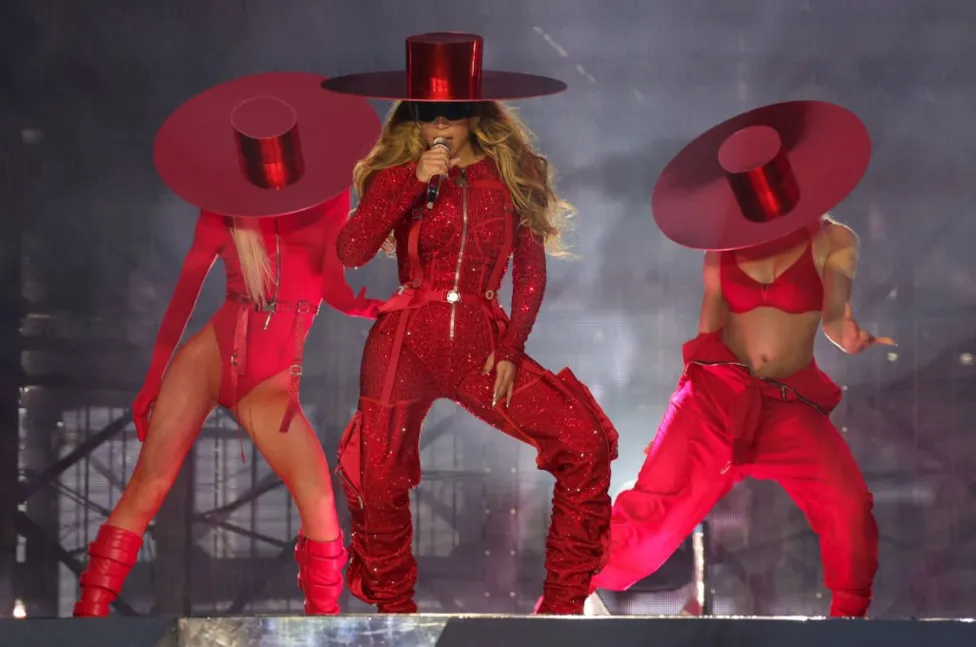
With VIP tickets costing as much as £2,400, most people couldn’t afford to get within touching distance of Queen Bey this summer.
The film changes that, putting you in the centre of the action, where you can focus on the elastic snap of the choreography and the stunning precision of Beyoncé’s vocals.
What’s more, she reveals an unexpected playfulness – reacting to dancers and letting the music guide her movements. Towards the end of the film, Beyoncé admits she broke the habit of “rehearsing ad nauseam” for this tour, and felt “liberated” on stage. It’s a joy to watch.
Added bonus: No-one blocks your view by filming the show on their phone.
2) Beyoncé’s knee problems
In the run-up to the tour, Beyoncé needed surgery after a decades-old knee injury (caused by crashing into stage equipment) flared up.
With only weeks to spare, she had to mix rehearsals with rehab in order to build up her fitness for the opening night.
“I was absolutely terrified because she had to rehab so quickly,” her mother Tina says in the film. “She rehearsed on that knee, she came out on tour on that knee, and so I was always scared that she was going to re-injure the knee, but she is always a trooper.”
“Usually I only rehearse in heels, but because of my knee, I haven’t gotten that far yet,” adds Beyoncé, whose post-surgery stitches are clearly visible.
“It’s been hurting like crazy, but the best thing to do is get back on the horse.”
3) A Destiny’s Child reunion
During a tour stop in Houston, Beyoncé reunites with her former band, Destiny’s Child.
That, we’ve seen before. What’s different this time is that the reunion features not only Kelly Rowland and Michelle Williams but founder members LeToya Luckett and LaTavia Roberson, who were controversially fired in 2000.
“It was like a new birth for us, and a lot of healing,” Beyoncé says in a voice-over. But it’s over in a flash.
Come on! We need to know more.
Who extended the olive branch? What did they discuss? And why didn’t Farrah Franklin get the invite?
4) Blue Ivy’s viral dance break
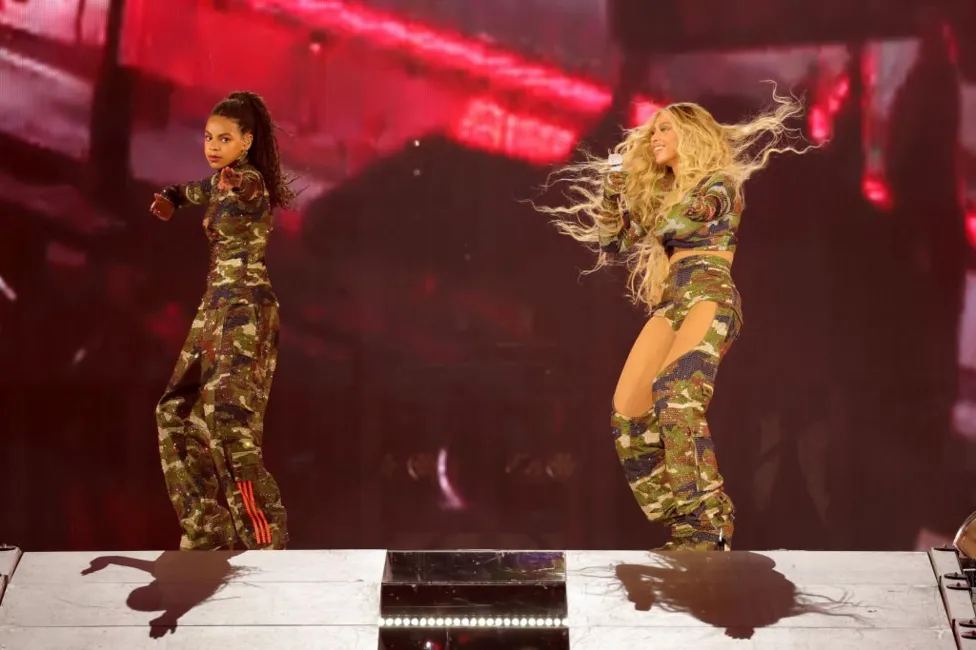
Beyoncé was joined on stage by her eldest daughter, Blue Ivy, during an early Renaissance tour stop in Paris.
Having watched the rehearsals, the 11-year-old knew the choreography by heart and performed a competent – if hesitant – routine to the songs My Power and Black Parade.
Then, as the tour progressed, her confidence grew and grew. By the finale in Kansas, her solo had become a much-anticipated feature of the show; and edits of her evolution started trending on TikTok.
But the film reveals she was never supposed to be a regular performer. Even her debut was the subject of tense mother-daughter negotiations.
“She told me she was ready to perform, and I told her no,” Beyoncé admits. “I did not think it was an appropriate place for an 11-year-old.”
She eventually relents on a once-only basis. When she sees Blue Ivy’s nerves beforehand, she thinks: “Why did I say yes.”
Her regret may grow when Blue sees negative reviews of her debut online. But instead of crumbling, she resolves to improve.
“That’s a Knowles girl, right there,” comments Beyoncé’s father, Matthew.
And by the end of the tour, Jay-Z is standing in the crowd, watching with fatherly pride as his wife and daughter slay in synchronicity.
5) Even the mistakes are included

“This tour is a machine,” says Beyoncé. But like every machine I’ve ever owned, it goes on the fritz.
During a show in Glendale, Arizona, the sound system fails during Alien Superstar. Cue pandemonium.
“We lost power to audio,” says a visibly stressed engineer. “We have lost comms”.
But rather than edit out the sequence, Beyoncé takes the audience inside the confusion.
Realising the malfunction could kill the show’s momentum, she grabs a costume off the rack and starts to get changed, serving fans a new look when she returns to the stage.
Also included: The moment she created a meme by dropping her glasses in Toronto.
6) Who Runs The World (This Girl)
Putting together a show of this magnitude is a challenge for anyone, but Beyoncé makes it clear that some artists face bigger hurdles.
“I feel like, being a black woman, the way people communicate with me is different,” she says. “Everything is a fight.”
She illustrates her point with footage of the rehearsal process, where technicians tell her the camera lens she wants doesn’t exist, and the camera tracks she’s requested are impossible.
“I was just looking up 30-foot camera tracks, and they do exist,” she replies – not unkindly, but with enough force to make her point clear.
“If I’m honest,” she adds in a voice-over, “it’s exhausting”.
Later, she performs Run The World (Girls) with a celebratory whoop of joy. You can see her point.
The post Beyoncé tells fans (and Taylor Swift) to ‘laugh and dance’ at Renaissance premiere appeared first on CANADA VOICE.
]]>The post Tina Turner: Music legend dies at 83 appeared first on CANADA VOICE.
]]>BBC \ By Emma Saunders
Turner had suffered a number of health issues in recent years including cancer, a stroke and kidney failure.
She rose to fame alongside husband Ike in the 1960s with songs including Proud Mary and River Deep, Mountain High.
She divorced the abusive Ike in 1978, and went on to find even greater success as a solo artist in the 1980s.
Dubbed the Queen of Rock ‘n’ Roll, Tina Turner was famed for her raunchy and energetic stage performances and husky, powerful vocals.
Her death was announced on her official Instagram page.
“With her music and her boundless passion for life, she enchanted millions of fans around the world and inspired the stars of tomorrow,” the post said.
“Today we say goodbye to a dear friend who leaves us all her greatest work: her music.”
- Tina Turner: A life in pictures
- Obituary: Incredible journey from abuse to music superstardom
- Her 10 best songs and the stories behind them
Turner won eight Grammy Awards and was inducted into the Rock ‘n’ Roll Hall of Fame in 2021 as a solo artist, having first been inducted alongside Ike Turner in 1991.
Upon her solo induction, the Hall of Fame noted how she had “expanded the once-limited idea of how a Black woman could conquer a stage and be both a powerhouse and a multidimensional being”.
Younger stars who have felt her influence include Beyoncé, Janet Jackson, Janelle Monae and Rihanna.
‘Force of nature’
Turner’s manager of 30 years, Roger Davies, said in a statement that “Tina was a unique and remarkable force of nature with her strength, incredible energy and immense talent”.
“From the first day I met her in 1980, she believed in herself completely when few others did at that time… I will miss her deeply,” he added.
American singer Gloria Gaynor, who also rose to fame in the 1960s, said Turner “paved the way for so many women in rock music, black and white”.
There were also tributes from Supermodel Naomi Campbell, Basketball legend Magic Johnson and singers Kelly Rowland, Ciara and Blondie’s Debbie Harry.
On Instagram, The Rolling Stones frontman Sir Mick Jagger said Turner was “inspiring, warm, funny and generous” and helped him when he was young.
Sir Elton John, who in his autobiography wrote about the heated arguments the pair had while trying to work together in 1997, said she was one of the world’s “most exciting and electric performers”.
Actress Viola Davis praised Turner as “our first symbol of excellence and unbridled ownership of sexuality!!”

Image source, Getty Images
Turner was also a style icon – here she’s performing in New York’s Central Park in 1969 wearing a red leather outfit
Simply the best
Born in Tennessee into a sharecropping family, she first found prominence as one of the backing singers for her husband’s band The Kings of Rhythm.
She soon went to to front the band, and the couple tasted commercial success with Fool in Love and It’s Gonna Work Out Fine, which made the US charts in the early 60s.
Their other hits included 1973’s Nutbush City Limits, about the small town where Tina was born. But Ike’s physical and emotional abuse was taking its toll.
It was he who changed her name from her birth name, Anna Mae Bullock, to Tina Turner – a decision he took without her knowledge, one example of his controlling behaviour.
She recalled the trauma she suffered throughout their relationship in her 2018 memoir, My Love Story, in which she compared sex with the late musician to “a kind of rape”.
“He used my nose as a punching bag so many times that I could taste blood running down my throat when I sang,” she wrote.
After escaping her abuser, she went on to rebuild her career and become one of the biggest pop and rock stars of the 80s and 90s, with hits including Let’s Stay Together, Steamy Windows, Private Dancer, James Bond theme GoldenEye, I Don’t Wanna Fight and It Takes Two, a duet with Rod Stewart.
She also starred in 1985 film Mad Max Beyond Thunderdome – which featured another of her smashes, We Don’t Need Another Hero – and The Who’s 1975 rock opera Tommy as the Acid Queen.

Image source, Getty Images
She found happiness with her second husband, German music executive Erwin Bac. They began dating in the mid-80s, and got married in 2013.
The pair lived in Switzerland, with Turner taking Swiss citizenship. He donated one of his kidneys to her in 2017 after it was discovered she was suffering from kidney failure.
She also suffered tragedy with the loss of her eldest son Craig to suicide in 2018. His father was Turner’s former bandmate, Raymond Hill.
Another son, Ronnie, whose father was Ike Turner, died in 2022. She also had two adopted sons, Ike Jr and Michael, Ike’s children from a previous relationship.
Tina’s life story spawned a 1993 biopic titled What’s Love Got To Do With It, which earned Angela Bassett an Oscar nomination for playing the star; and a hit stage musical – aptly titled Tina: The Musical. She was also the subject of HBO documentary Tina in 2021.
In an interview with Marie Claire South Africa in 2018, Turner said: “People think my life has been tough, but I think it’s been a wonderful journey. The older you get, the more you realise it’s not what happened, it’s how you deal with it.”
The post Tina Turner: Music legend dies at 83 appeared first on CANADA VOICE.
]]>The post Sexy secret life of basking sharks uncovered in Hebrides appeared first on CANADA VOICE.
]]>The Guardian \ Damian Carrington Environment editor @dpcarrington
Fin-to-fin synchronised swimming, thought likely to be part of courtship, has been seen in groups of basking sharks for the first time. Video cameras attached temporarily to the sharks gave scientists an unprecedented view of their hitherto secret underwater world.
The gentle giants are usually solitary creatures and virtually nothing is known about their breeding behaviour. The researchers also recorded one shark shooting out above the water, the first time a full breaching has been captured from the shark’s point of view. This may also be part of wooing a mate, perhaps by showing off the fish’s size.
Basking sharks are found in temperate water around the world, but are endangered, after being hunted in the past for the oil in their huge livers. They are the second largest fish in the ocean, with adults usually reaching 8 metres in length.
The scientists carried out their study in the Sea of the Hebrides, off the Scottish islands of Coll and Tiree. The site was known to attract the fish to feed in the summer and in December was declared a marine protection area, the first in the world to be designated specifically to protect basking sharks.
“One of the most exciting times in my career on basking sharks was seeing that footage of them all grouped together on the seabed,” said Matthew Witt, of the University of Exeter, in south-west England. “It was utterly phenomenal – you just don’t think of them doing that.”
“It’s been really fascinating to have this incredible insight,” said Jessica Rudd, also at the University of Exeter and who led the fieldwork. “It feels like a privilege to get a shark’s eye view into what they get up to. There were large congregations of the sharks, just swimming very slowly, side by side, or on top of each other, or nose-to-tail swimming, their fins touching, and in groups of up to 13.”
Copulation was not captured on camera but Witt said that, based on behaviours seen in other sharks, these congregations and social behaviours are often what precedes mating.
“It could be that feeding in these [food] hotspots also gives the opportunity for these solitary sharks to meet other sharks,” said Rudd. Scientists have been tagging animals for a long time, she said, but usually data is recorded once a day or only when a satellite tag breaks the surface.
“With video cameras, it is essentially around the clock,” she said. This means scientists cannot only determine where a shark is but also why it is there.
Breaching uses a lot of energy, especially for giants like basking sharks. Various reasons have been suggested for the behaviour, such as dislodging parasites or even just for fun, but courtship is another explanation.
“It’s a really eerie video, where the shark emerges from a depth of 77 metres and then reaches the surface in 70 seconds and breaches,” said Rudd. “We can see it fully out of the water and these are sharks that reach up to over a tonne in weight.”
Other research by the group, using Fitbit-like tags, showed basking sharks can breach four times in 45 seconds.
The researchers were also surprised to find the sharks spent up to 88% of daylight hours near the seabed, rather than near the surface where they mostly fed. Such information could be useful when considering whether to restrict fishing activity such as bottom trawling.
The research was published in the journal Plos One and followed six sharks for a cumulative total of 123 hours. The cameras were attached to the sharks using a darting pole and weighed just 300g in the water. The sharks quickly resumed normal activity within minutes and the cameras automatically detached and floated to the surface after a few days. More cameras will be attached to the sharks this summer.
Suz Henderson, at NatureScot, said: “The group behaviours described in this work, as well as the habitats the behaviours are associated with, could well be important in answering the key conservation question of where these sharks breed.”
Topics : Sharks \ Fish\Conservation\Oceans\Scotland\Animals\Marine life\news
The post Sexy secret life of basking sharks uncovered in Hebrides appeared first on CANADA VOICE.
]]>The post Irrfan Khan: a seductive actor capable of exquisite gentleness appeared first on CANADA VOICE.
]]>
The guardian/ Peter Bradshaw – @PeterBradshaw1
The Lunchbox star, who has died aged 53, was a vital bridge between Bollywood and Hollywood, and possessed a strong romantic appeal
Irrfan Khan was a distinguished and charismatic star in Hindi- and English-language movies whose hardworking career was an enormously valuable bridge between South Asian and Hollywood cinema. He was armed with a sensitive and seductive gaze: his good looks matured in middle age in such a way that he could play dramatic or villainous roles but also romantic leads of a certain age and of a certain emotional wistfulness. You could almost call him Mumbai’s Clooney — although it would be condescending to explain this colossal Indian star in Hollywood terms.
I first became aware of Khan and his marvellous screen presence in Asif Kapadia’s terrific 2001 film The Warrior, in which he has a powerful lead role as the warrior Lafcadia, the erstwhile servant and hitman to a murderous warlord who renounces the way of violence, retreats to the hills and must then confront another warrior who has been sent to kill him. It is an amazingly atmospheric movie (which Kapadia brought off with enormous skill before his own shift into documentaries) and Khan’s cool samurai hauteur was vital in making it work.
After a stretch of playing Bollywood bad guys, Khan found some further success in the Wilderesque ensemble romantic comedy Life in a … Metro in 2007, in which he was the gauche and leering guy with which one female character finds herself uncomfortably fixed up on a date. But perhaps the actual star-making breakthrough came with his lead role in the real-life drama Paan Singh Tomar in 2010, an extraordinary story that is a mix of Chariots of Fire and Ned Kelly. Khan played an Indian soldier whose talent for running made him a medallist at the Asian Games in the late 1950s – and then in the late 70s became a daaku, or rebel bandit, when he was involved in a murderous land feud in the Chambal valley with family members – he refused to surrender to armed police despatched to arrest him, resulting in a spectacular siege during which he was shot dead. The role – similar to The Warrior in some ways – was perfect for Khan’s ability to suggest mainstream heroism, but also a kind of capo di tutti i capi bad-guy aura, all encompassed in a still watchfulness in the eyes.
In the English-language world, Khan’s international prestige had been cemented two years before that as the police detective in Danny Boyle’s feelgood hit Slumdog Millionaire, a Mumbai-set film based around the TV contest Who Wants to Be a Millionare? with Dev Patel as Jamal, the teenager from the ghetto who somehow found himself within an ace of winning the top prize on the legendary gameshow. He has to explain himself to the cop, and Khan’s mixture of tough, careworn authority with a hint of gentleness makes him just right for the role, as he almost certainly would not have been good casting for the brasher part of the Tarrant-esque host, played by Anil Kapoor. He was well received in Mira Nair’s immigrant drama The Namesake in 2006, and was also a potent presence in Ang Lee’s Life of Pi.
In the last decade, Khan took what were arguably paycheque roles in Hollywood as the stereotypical enigmatic Indian plutocrat in The Amazing Spider-Man (2012) as Rajit Ratha, the corporate executive overseeing the fateful experimentation laboratory, and in Jurassic World (2015), playing the park’s super-rich owner. Cipher roles, perhaps, but ones to which he brought a deadpan yet debonair good humour.
These were only part of a string of credits, but the movie that allowed him to steal everyone’s hearts was the romantic drama The Lunchbox. He played the middle-aged office worker who finds that the wrong lunchbox has been delivered to his desk, with a note inside. This leads him into a heartrendingly chaste, romantic exchange of letters with an unhappy married woman, stuck at home in her housewife job, as he is stuck in his salaryman role. Khan found his finest hour in this story, with an exquisitely gentle, subtle performance. Rewatching The Lunchbox and The Warrior would be great ways to remember him.
Topics : Irrfan Khan/Bollywood/Drama films/Crime films/Biopics/Slumdog Millionaire/The Lunchbox
The post Irrfan Khan: a seductive actor capable of exquisite gentleness appeared first on CANADA VOICE.
]]>