The post Gene Hackman and his wife found dead at their home appeared first on CANADA VOICE.
]]>BBC / Paul Glynn – Culture reporter
Oscar-winning US actor Gene Hackman, his wife Betsy Arakawa and their dog have been found dead at their home in Santa Fe, New Mexico.
Gene Hackman: A look back on his career
In a wide-ranging career spanning more than six decades, Hackman won two Academy Awards for his work on The French Connection and Unforgiven.
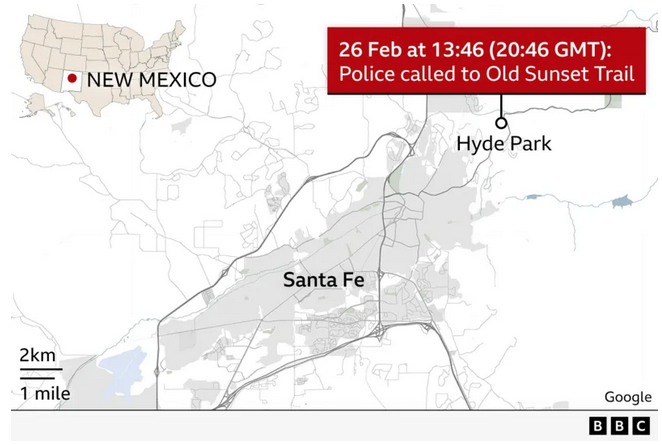
A statement from the Santa Fe County Sheriff in New Mexico said: “We can confirm that both Gene Hackman and his wife were found deceased Wednesday afternoon at their residence on Sunset Trail.
“This is an active investigation – however, at this time we do not believe that foul play was a factor.”
Hackman was 95, and his wife – a classical pianist – 63.
He won the best actor Oscar for his role as Jimmy “Popeye” Doyle in William Friedkin’s 1971 thriller The French Connection, and another for best supporting actor for playing Little Bill Daggett in Clint Eastwood’s Western film Unforgiven in 1992.
Gene Hackman obituary: One of Hollywood’s greatest ‘tough guys’
A relative latecomer to Hollywood, Hackman’s breathrough came in his thirties, when he was nominated for an Oscar for portraying Buck Barrow in 1967’s Bonnie and Clyde – opposite Warren Beatty and Faye Dunaway – and again for I Never Sang for My Father in 1970.
Both films saw him recognised in the supporting actor category. He was also nominated for best leading actor in 1988 for playing the agent in Mississippi Burning.
The Santa Fe County Sheriff’s office said: “On 26 February, 2025, at approximately 1:45pm, Santa Fe County Sheriff’s deputies were dispatched to an address on Old Sunset Trail in Hyde Park where Gene Hackman, his wife Betsy Arakawa, and a dog were found deceased.”
‘Gene Hackman could play anyone’
Much-celebrated actor Hackman played more than 100 roles in total, including supervillain Lex Luthor in the Christopher Reeve-starring Superman movies in the 1970s and 1980s.
Hackman acted opposite many Hollywood heavyweights including Al Pacino in 1973’s Scarecrow, Gene Wilder in 1974’s Young Frankenstein and Warren Beatty and Diane Keaton in 1981’s Reds.
He also starred in the hit movies Runaway Jury, Wes Anderson’s The Royal Tenenbaums and Francis Ford Coppola’s The Conversation.
Coppola led the tributes to the late star on Thursday, calling him “a great artist”. In a statement posted on Instagram, the director wrote: “Gene Hackman a great actor, inspiring and magnificent in his work and complexity. I mourn his loss, and celebrate his existence and contribution.”
Valerie Perrine, who featured alongside Hackman in Superman (1978) as his character’s on-screen girlfriend Eve Teschmacher, described the late actor as “a genius” and one of the “greatest to grace the silver screen”.
She posted on X: “His performances are legendary. His talent will be missed. Goodbye my sweet Lex Till we meet again.”
Gene Hackman reflects on career and acting
Star Trek actor George Takei posted that “we have lost one of the true giants of the screen”.
“Gene Hackman could play anyone, and you could feel a whole life behind it,” he wrote. “He could be everyone and no one, a towering presence or an everyday Joe. That’s how powerful an actor he was. He will be missed, but his work will live on forever.”
Slumdog Millionaire star Anil Kapoor also called Hackman a “genius” performer. “A true legend whose legacy will live on,” he wrote.
As well as his Oscar wins, Hackman also collected two Baftas, four Golden Globes and a Screen Actors Guild Award.
He took a comedic turn playing a conservative senator in 1996’s The Birdcage alongside Robin Williams and Nathan Lane, who starred as a gay couple.
His last big-screen appearance came as Monroe Cole in Welcome to Mooseport in 2004, after which he stepped back from Hollywood for a quieter life in New Mexico.
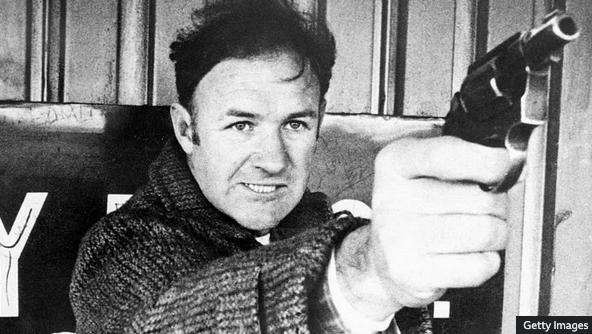
Getty Images / He won two Academy Awards – the first for 1971’s The French Connection – where as Detective ‘Popeye’ Doyle he swept not only the Oscar for best actor, but also Golden Globe and Bafta gongs
Gene Hackman with wife Betsy Arakawa, a classical pianist, at the 2003 Golden Globes
Hackman’s career spanned four decades and a variety of acclaimed roles. Here he starred alongside Warren Beatty in 1967’s Bonnie and Clyde as the older Clyde brother – a role for which he received a Best Supporting Actor nod
‘Actors had to be handsome’
Born in California in 1930, Hackman’s family moved frequently, and after lying about his age at 16, he enlisted in the US Marine Corps serving for four-and-a-half years.
He was stationed in China, Hawaii and Japan before being discharged in 1951.
Following his military service, Hackman lived and worked in a variety jobs in New York, and studied journalism and television production at the University of Illinois, before deciding to drop out and move back to California to pursue his childhood acting dream.
He joined the Pasadena Playhouse in California, where he befriended a young Dustin Hoffman.
“I suppose I wanted to be an actor from the time I was about 10, maybe even younger than that,” Hackman once said. “Recollections of early movies that I had seen and actors that I admired like James Cagney, Errol Flynn, those kind of romantic action guys.
“When I saw those actors, I felt I could do that. But I was in New York for about eight years before I had a job. I sold ladies shoes, polished leather furniture, drove a truck.
“I think that if you have it in you and you want it bad enough, you can do it.”
He added that he “wanted to act” but had “always been convinced that actors “had to be handsome”.
“That came from the days when Errol Flynn was my idol. I’d come out of a theatre and be startled when I looked in a mirror because I didn’t look like Flynn. I felt like him.”
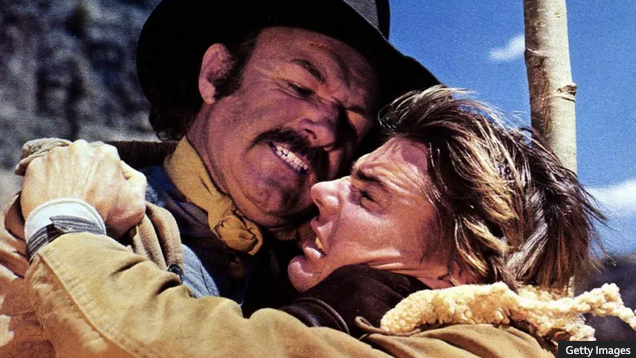
Getty Images / Hackman appeared with Jan-Michael Vincent in 1975’s Bite The Bullet
Hackman moved back to New York in 1963, performing in Off-Broadway productions – including at the Music Box Theatre for the comedy Any Wednesday – and smaller TV roles.
But he began to really make his name in the 1970s, becoming a leading man as New York City detective Jimmy ‘Popeye’ Doyle in The French Connection.
From then on he became a fixture on the big screen in the likes of 1972 disaster film The Poseidon Adventure.
He also appeared in Children From Their Games at the former Morosco Theatre, Poor Richard at Helen Hayes Theatre and The Natural Look at Longacre Theatre, before later returning in 1992 to perform Death And The Maiden at the Brooks Atkinson Theatre.
Hackman and his first wife, Faye Maltese, were together for 30 years and raised three children before getting divorced in 1986.
In his later years, he and his second wife, Betsy stayed out of the spotlight, but made a rare public appearance together at the 2003 Golden Globe Awards, where he won the Cecil B. deMille award.
‘Not going to act any longer’
In 2008 he told Reuters that despite the lack of any official announcement, he was “not going to act any longer”.
“I’ve been told not to say that over the last few years, in case some real wonderful part comes up, but I really don’t want to do it any longer.”
He also explained he was focusing his attentions away from the big screen and towards his quieter, calmer passion for writing novels.
“I was trained to be an actor, not a star. I was trained to play roles, not to deal with fame and agents and lawyers and the press,” he once said.
“It really costs me a lot emotionally to watch myself on-screen. I think of myself, and feel like I’m quite young, and then I look at this old man with the baggy chins and the tired eyes and the receding hairline and all that.”
Gene Hackman: One of Hollywood’s greatest ‘tough guys’
The post Gene Hackman and his wife found dead at their home appeared first on CANADA VOICE.
]]>The post Nicole Kidman honoured with AFI Life Achievement Award appeared first on CANADA VOICE.
]]>By Andre Rhoden-Paul,BBC News
Nicole Kidman has said “it is a privilege to make films” after being honoured with an American Film Institute Life Achievement Award.
Kidman, 56, is the first Australian actor to be given the highest honour bestowed by the organisation.
The Moulin Rouge actress was presented with the prestigious award by Meryl Streep in Hollywood.
Other stars in attendance included her husband, singer Keith Urban, and Big Little Lies co-star Reese Witherspoon.
Accepting the award in a floor-length shimmering gold Balenciaga gown, Kidman thanked all the directors she has worked with.
“It is a privilege to make films. And glorious to have made films and television with these storytellers who allowed me to run wild and be free and play all of these unconventional women,” she said.
“Thank you for making me better at my craft and giving me a place, however temporary, in this world.”
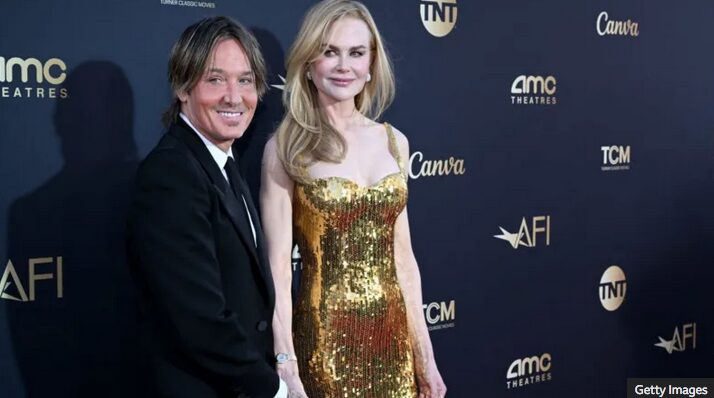
Getty Images / Kidman was joined by her singer husband Keith Urban
During the ceremony, Kidman teared up as her husband said she showed him “what love in action really looks like” when his substance abuse problems emerged soon after they married in 2006.
“Four months into our marriage, I’m in rehab for three months,” Urban said addressing Kidman and their two teenage daughters, who joined her on the red carpet for the first time.
“Nic pushed through every negative voice, I’m sure even some of her own, and she chose love. And here we are 18 years later.”
Australian actors Russell Crowe, Hugh Jackman and Cate Blanchett also gave video tributes to the first actor from their country to win the award.
Previous winners of the award, which the AFI calls the “highest honour in American cinema”, include Streep, Julie Andrews, Denzel Washington, Robert De Niro, Martin Scorsese and Steven Spielberg.
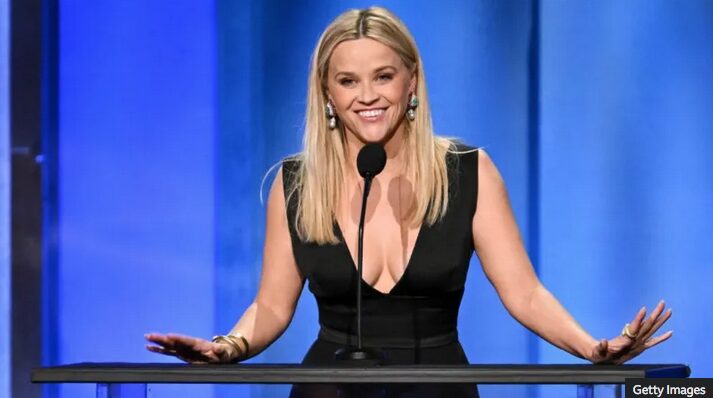
Getty Images / Kidman was joined by her Little Big Lies co-star Reese Witherspoon
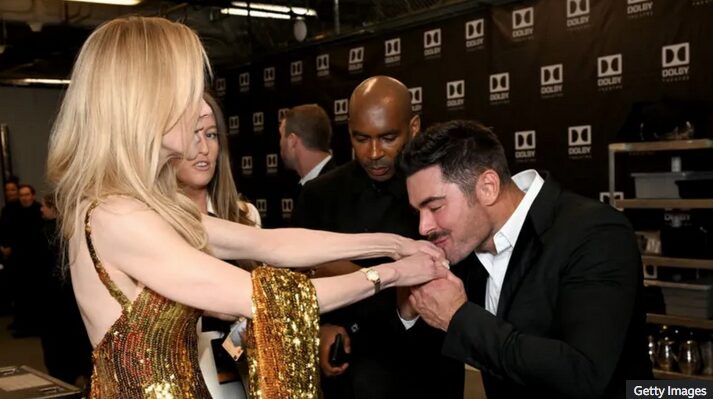
Getty Images / Zac Efron also attended the ceremony to honour Kidman
Kidman made her Hollywood breakthrough alongside Tom Cruise in 1990’s Days Of Thunder – marrying him in the same year.
She divorced him in 2001, but her stardom only grew after this.
She received her first Oscar nomination for Moulin Rouge in 2001, before going on to win the best actress Oscar for The Hours in 2003.
Nicole Kidman Hong Kong drama not shown in city
Keith Urban/Nicole Kidman/Film/Hollywood/Australia
The post Nicole Kidman honoured with AFI Life Achievement Award appeared first on CANADA VOICE.
]]>The post Furiosa: A Mad Max Saga to Kingdom of the Planet of The Apes: 11 of the best films to watch in May appeared first on CANADA VOICE.
]]>BBC / By Nicholas Barber,Features correspondent
Including the latest Mad Max and Planet of the Apes films and Jerry Seinfeld’s comedy about Pop-Tarts – this month’s unmissable movies to watch and stream.
Paramount / (Credit: Paramount)
- IF
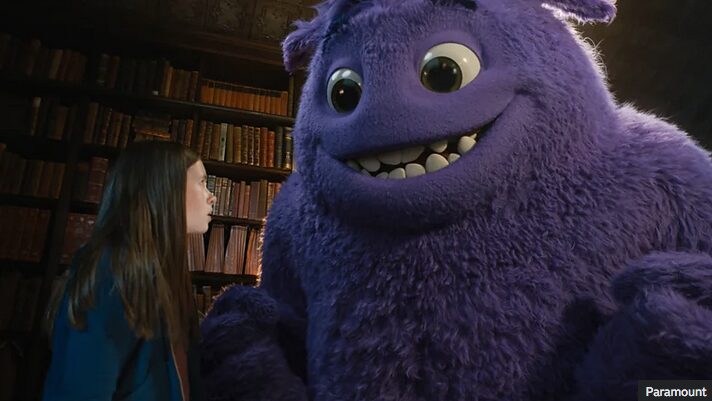
What if children’s imaginary friends weren’t actually imaginary? What if they were real creatures who had to hang around in limbo after the children who used to play with them had grown up? That’s the premise of IF, a family comedy written and directed by John Krasinski. Ryan Reynolds and Cailey Fleming star as two of the only people in the world who can see these obsolete IFs; Krasinki’s old co-star from the office, Steve Carell, provides the voice of a giant furry IF called Blue. Krasinski has said that he was inspired by his two daughters’ games, but also by his wife, Emily Blunt, who was pleased to see him move on from the doom and gloom of his directorial debut, A Quiet Place. “I remember Emily saying to me, ‘I’m really glad that you’re doing this,'” Krasinski said in Entertainment Weekly. “And I said, ‘Why?’ And she’s like, ‘Because living in that dark, dark place is really tough for too long.’ And coming from Mary Poppins, I thought, she must know what she’s talking about.”
On general release from 17 May
Neon / (Credit: Neon)
- Robot Dreams
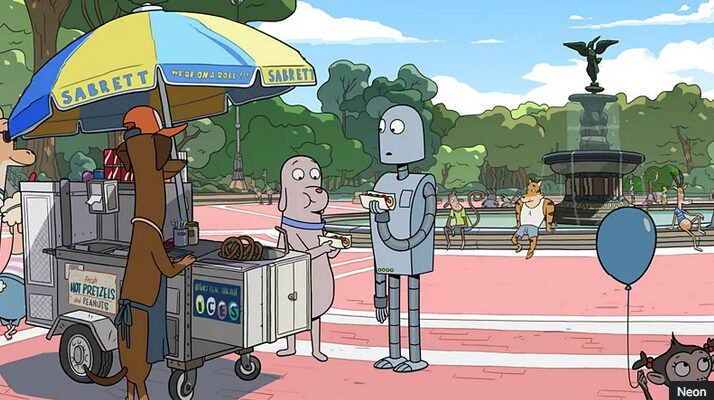
Pablo Berger’s Oscar-nominated Spanish-French cartoon, adapted from Sara Varon’s graphic novel, tells the delightful tale of a dog named Dog who lives alone in 1980s New York. His life changes when he buys a mail-order robot named Robot, and discovers how fun it is to have a best friend. But then the rusty Robot gets stuck on a beach, behind locked gates. Can Dog manage without him? Robot Dreams is packed with sparkling jokes, ingenious ideas and touching truths, and yet it’s all done with no dialogue. It is “one of the finest animations of recent years,” says Wendy Ide in The Observer. “There’s such tenderness to the storytelling, such empathy and emotional depth, that it broadens the film’s potential audience from kids, who will respond to the cute characters and gentle wit, to adolescents and adults, who will recognise the angst and awkwardness of trying to function alone.”
Released on 9 May in Germany and 31 May in the US
Sony Pictures
- The Garfield Movie
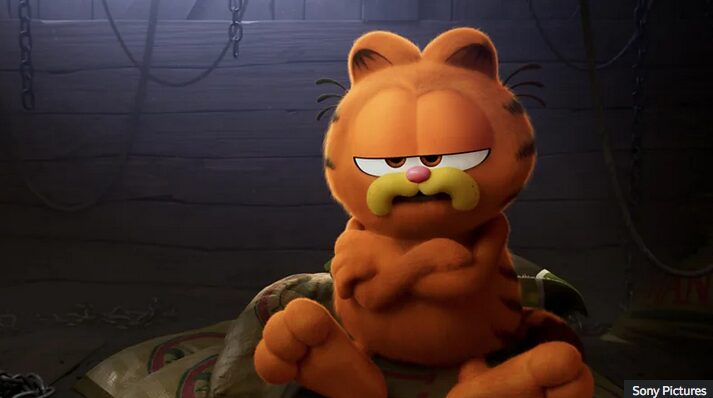
One of the funniest moments in Zombieland comes when the mortally wounded Bill Murray, playing himself, is asked if he has any regrets. With his dying breath, he replies, “Garfield, maybe.” Murray may not have been a fan of the two live-action Garfield films in which he voiced the CGI cat, but the new film is a different kettle of lasagne. Directed by Mark Dindal (The Emperor’s New Groove), The Garfield Movie is an action-packed cartoon. Chris Pratt voices Garfield, although, considering that he also voices the main characters in The Lego Movie and The Super Mario Bros. Movie, that’s not the most imaginative casting choice for a cartoon with the word “movie” in the title. Samuel L Jackson voices Garfield’s father, Vic; Nicholas Hoult is his owner, Jon; and Snoop Dogg plays a character called, yes, Snoop Catt. “There’s a physicality and curiosity and playfulness, a mischief at [Garfield’s] core,” said Pratt. “I lost myself in that. I literally just ate and napped, and the doctors were concerned… But I did make an authentic connection. I’m pretty sure audiences are going to feel it. And the Academy.”
On general release from 24 May
Focus Features / (Credit: Focus Features)
- Back to Black
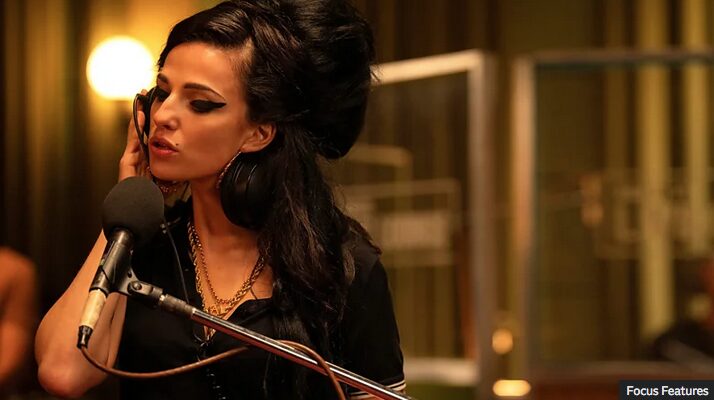
Amy Winehouse was one of the most important singer-songwriters of her generation, but she died in 2011 when she was only 27, after years of battling addictions and dodging tabloid photographers. In 2015, Asif Kapadia turned her life story into a heartwrenching documentary, Amy. Now comes the inevitable biopic, Back to Black, directed by Sam Taylor-Johnson and written by Matt Greenhalgh, the makers of a drama about John Lennon’s early years, Nowhere Boy. Marisa Abela stars as Winehouse alongside Jack O’Connell as her husband, Blake Fielder-Civil, and Eddie Marsan as her father, Mitch Winehouse. Taylor-Johnson’s “gentle, forgiving film” is “easily her best work so far”, says Peter Bradshaw in The Guardian. “There’s a thoroughly engaging and sweet-natured performance from Marisa Abela as Amy [that] conveys her tenderness, and perhaps most poignantly of all her youth, so tellingly at odds with that tough image and eerily mature voice.”
Released on 17 May in the US and Canada
Universal Pictures / (Credit: Universal Pictures)
- The Fall Guy
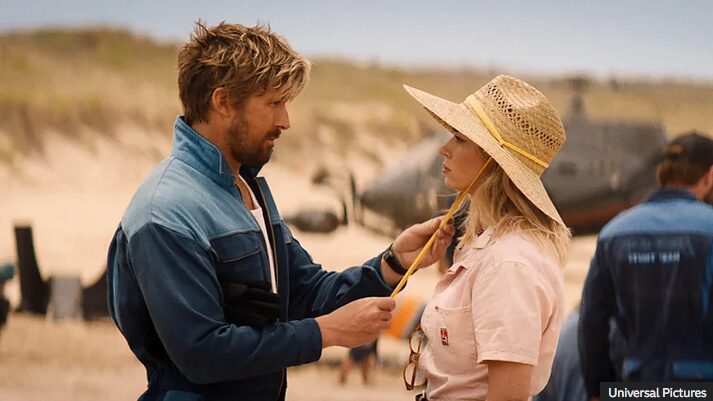
At this year’s Oscars, Ryan Gosling and Emily Blunt introduced a video tribute to Hollywood’s stunt performers. As sincere as they might well have been, the actors had an ulterior motive: their new film is an action comedy that just happens to be about Hollywood’s stunt performers. Based on the 1980s television series, and directed by David Leitch (Atomic Blonde, Deadpool 2), The Fall Guy features Gosling as Colt Seavers, a stuntman who is recruited by his ex (Blunt) when a movie star (Aaron Taylor-Johnson) goes missing. “I truly had a massive grin on my face from start to finish watching The Fall Guy,” says Perri Nemiroff at Collider. “It’s an extremely well-crafted action movie that’s absolutely buzzing with energy and charm for all 125 minutes of its running time… Yes, it’s a crowd-pleasing romantic comedy thriller, but first and foremost, it’s one big-hearted ode to the artists responsible for movie magic.”
On general release from 3 May
John P. Johnson/Netflix / (Credit: John P. Johnson/Netflix)
- Unfrosted
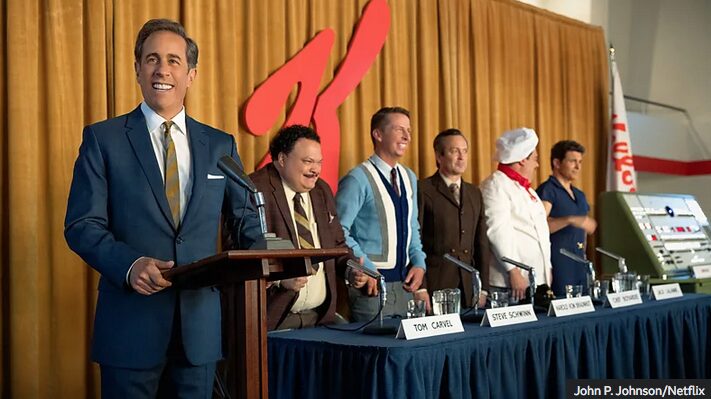
In the last year, we’ve had films about the development of Air Jordan shoes, BlackBerry phones, Flamin’ Hot Cheetos and Beanie Baby toys – and now we have a film about the development of Pop-Tarts. But don’t worry if that sounds like a ridiculous idea: it’s supposed to be. A gleefully parodic comedy with almost no connection to the true story, Unfrosted is directed and co-written by Jerry Seinfeld, who also stars as an executive at Kellogg’s. When the company’s rival, Post, launches a dehydrated breakfast pastry in 1964, Kellogg’s races to make their own version. Seinfeld’s co-stars include Melissa McCarthy, Amy Schumer, Peter Dinklage and James Marsden, along with Hugh Grant as a frustrated Shakespearean actor who plays Tony the Tiger in the adverts for Frosted Flakes. “I don’t think anybody’s done this before,” Seinfeld said in Total Film magazine. “I feel like we’re ready for a colourful, dumb, silly comedy.”
Jasin Boland /Warner Bros (Credit: Jasin Boland/Warner Bros)
- Furiosa: A Mad Max Saga
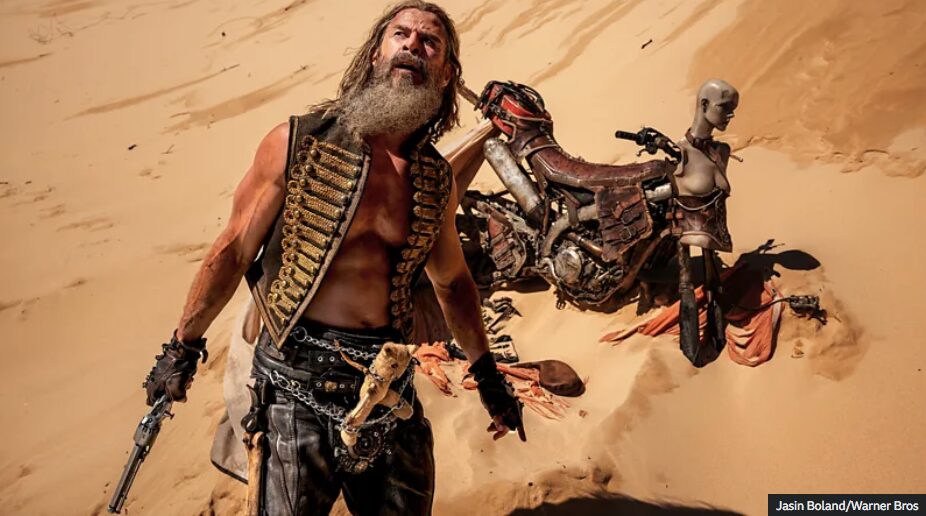
It’s been 45 years since the release of the first Mad Max film, and nine years since George Miller brought his post-apocalyptic series roaring back to life with 2015’s high-octane action extravaganza, Mad Max: Fury Road. But the 79-year-old director isn’t finished yet. His latest film is a prequel to Fury Road featuring Anya Taylor-Joy as Furiosa, the one-armed, shaven-headed heroine played by Charlize Theron in the previous film. “It’s different,” said Miller, as reported in IndieWire. “You don’t want a film to be a repetition of what you’ve just done, it has to be uniquely familiar, as I like to say.” The uniquely familiar villain is played by Chris Hemsworth, who is covered by so much prosthetic make-up that he is almost unrecognisable as the actor who played the mighty Thor.
On general release from 24 May
Anna Camerlingo/Cohen Media Group / (Credit: Anna Camerlingo/Cohen Media Group)
- Kidnapped
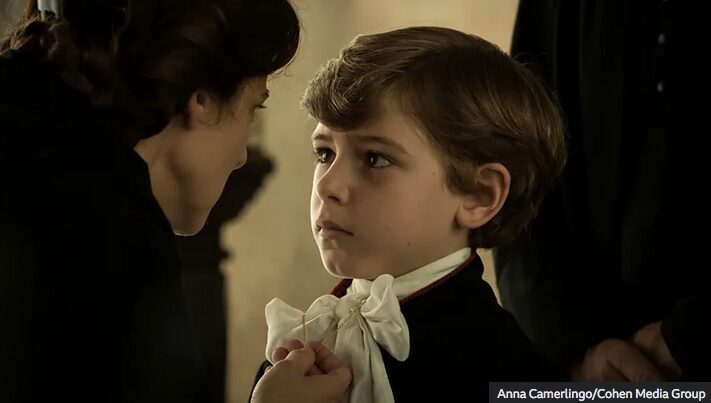
Marco Bellocchio’s lavish period drama tells the appalling true story of Edgardo Mortara, a six-year-old Jewish boy who was snatched from his home by the authorities one night in Bologna in 1858. His parents (Fausto Russo Alesi, Barbara Ronchi) are informed that when Edgardo was a baby, he was secretly taken by a maid to be baptised, and so he must now be raised as a Catholic. Pope Pius IX (Paolo Pierobon) keeps brushing aside the family’s efforts to rescue Edgardo, but, as the years pass, the scandal threatens to bring about the Pope’s political downfall. “Marco Bellocchio is the last man standing of a golden generation of Italian filmmakers,” says Jason Solomons in The New European. “What’s most remarkable about this career is not just its longevity or its continued productivity, but that his films are simply getting better and better. Kidnapped is beautifully and grippingly told, bursting with all the dark drama and human detail of one of those vast Renaissance canvasses you get in the great galleries, a Titian or a Caravaggio or a Tintoretto.”
Released on 24 May in the US
Bleecker Street / (Credit: Bleecker Street)
- Ezra
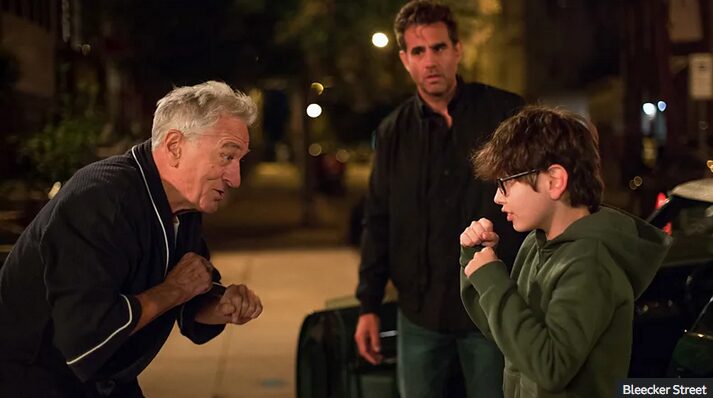
The always-excellent Bobby Cannavale gets a rare leading role in this sincere comedy drama, directed by Tony Goldwyn. Cannavale plays a New Jersey stand-up comedian who raises his autistic 11-year-old son, Ezra (William A Fitzgerald), with the help of his father (Robert De Niro). His ex-wife (Cannavale’s real-life partner, Rose Byrne) wants the boy to attend a school for children with special needs, but when the comedian is offered a slot on a high-profile talk show in Los Angeles, he decides to take Ezra on a road trip across the US instead. “Cannavale knows he’s landed a great role and really runs with it,” says Michael Rechtshaffen in The Hollywood Reporter. “[But] the superb ensemble and sensitive direction never get in the way of a tender screenplay by Tony Spiridakis, informed by the challenges of rearing his own neurodivergent son.”
Release on 31 May in the US
20th Century Studios / (Credit: 20th Century Studios)
- Kingdom of the Planet of The Apes
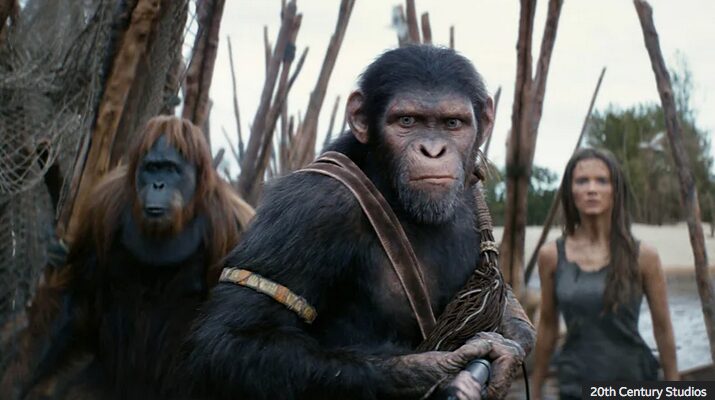
It can be tricky to keep track of the Planet of the Apes franchise. The first film came out in 1968, and was followed by four sequels. Tim Burton made an iffy attempt at a reboot in 2001. And then the series was revived in 2011 with a trilogy of prequels, concluding with War of the Planet of the Apes in 2017. But now it’s time for some more monkey business. In the latest Ape-isode, directed by Wes Ball, intelligent chimps and orangutans have ruled the Earth for 300 years, and humans who can speak are a rarity. “We are a new chapter in this long legacy of movies since 1968, but still honour what came before us,” Ball said in ScreenRant. “We are an extension, a continuation of [the previous trilogy], but we have our own new characters and story, and it opens up new opportunities.”
On general release from 9 May
Getty Images / (Credit: Getty Images)
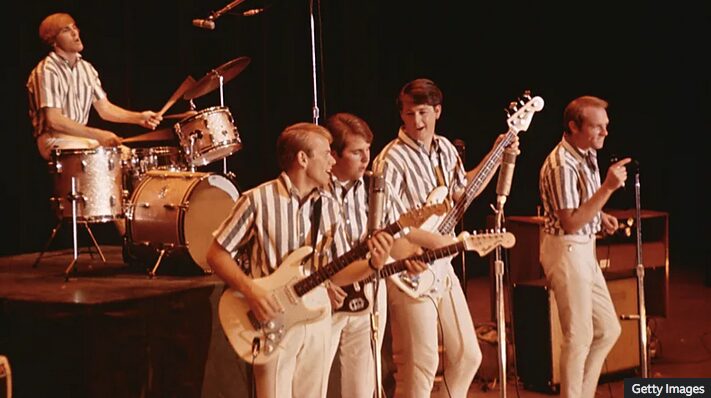
- The Beach Boys
The Beatles: Get Back, Peter Jackson’s three-part documentary series about the Fab Four, has been on Disney+ since 2021, and Jackson has since overseen the restoration of a classic Beatles documentary, 1970’s Let It Be, which will appear on the streaming service on 8 May. But what of The Beatles’ US peers, The Beach Boys? A new documentary dives into the history of the pop pioneers founded by three Californian brothers, Brian, Carl and Dennis Wilson. Brian was the musical genius of the family, but he was traumatised by his abusive father, Murry Wilson, who was also the band’s first manager. “I’m super happy with the way the documentary turned out, they did an amazing job,” says Brian Wilson. “It really brought me back to those days with the boys, the fun and the music. And of course those incredible harmonies.”
Released on 24 May on Disney+
—
If you liked this story, sign up for The Essential List newsletter – a handpicked selection of features, videos and can’t-miss news, delivered to your inbox twice a week.
For more Culture stories from the BBC, follow us on Facebook, X and Instagram.
The post Furiosa: A Mad Max Saga to Kingdom of the Planet of The Apes: 11 of the best films to watch in May appeared first on CANADA VOICE.
]]>The post Megan Thee Stallion: Cameraman accuses rapper of ‘hostile’ workplace appeared first on CANADA VOICE.
]]>Megan Thee Stallion has been accused of fat-shaming her former cameraman – and having sex next to him in a car – in a new lawsuit.
The US rapper is alleged to have made an “intolerable” work environment by ex-employee Emilio Garcia.
In a claim filed in Los Angeles, Mr Garcia also claims a change to his contract left him with unpaid wages.
Megan’s lawyers said the claim was “an attempt to embarrass her” in a statement to the AP news agency.
“This is an employment claim for money with no sexual harassment claim filed and with salacious accusations,” they said, adding that they will deal with the lawsuit in court.
‘Mortified’
Mr Garcia claims to have started working for the Savage rapper in 2018 as her personal cameraman, and remained in the role full-time until June 2023.
In the legal documents, his lawyers say that he was trapped in a moving car with Megan – real name Megan Pete – while she had sex “right beside” him.
It allegedly happened during a trip to Ibiza in 2022, when he says he was left “embarrassed, mortified and offended”.
Mr Garcia has also filed claims that during the same trip, he was taunted about his weight – being told to spit out his food and that he didn’t need to be eating.
The court documents say Megan’s behaviour “created a hostile work environment” for Mr Garcia, “making the conditions of his employment intolerable”.
The lawsuit also includes a number of allegations of breaches of employment law, for which Mr Garcia is seeking financial compensation.
The allegations include a change to his contract which saw him paid “per task” rather than a monthly rate, which he says meant he earned “significantly less”.
He also claims he missed out on healthcare benefits after his role was “misclassified” as an independent contractor.
Mr Garcia says that after the trip to Ibiza, he was booked for fewer photoshoots until June last year when he was told by Megan’s management, Roc Nation, that his services were no longer required.
He alleges this was “in retaliation for his complaints of wage and hour violations”.
Roc Nation, which is also named in the court documents alongside Megan, has not yet commented on the allegations.
BBC Newsbeat has contacted Mr Garcia’s lawyers, Megan Thee Stallion’s representatives and Roc Nation for comment.
The post Megan Thee Stallion: Cameraman accuses rapper of ‘hostile’ workplace appeared first on CANADA VOICE.
]]>The post ‘Lost’ Gustav Klimt painting to be auctioned appeared first on CANADA VOICE.
]]>BBC culture / By Bethany Bell,BBC News, Vienna
A painting by the Austrian artist Gustav Klimt that was believed lost for the past 100 years, is to be auctioned in Vienna.
There are many unanswered questions about the unfinished painting, Portrait of Fraulein Lieser, which Klimt began in 1917 – a year before his death.
There are also debates about who the woman in the picture is, and what happened to the painting during the Nazi era.
The painting’s value is estimated at up to €50m ($53m; £42m), although it may fetch a higher price.
It is believed to depict one of the daughters of either Adolf or Justus Lieser, who were brothers from a wealthy family of Jewish industrialists.
Art historians Thomas Natter and Alfred Weidinger say the painting is of Margarethe Constance Lieser, the daughter of Adolf Lieser.
But the im Kinsky auction house in Vienna, which is auctioning the artwork, suggests the painting could also depict one of the two daughters of Justus Lieser and his wife Henriette.
Henriette, who was known as Lilly, was a patron of modern art. She was deported by the Nazis and died in the Auschwitz concentration camp during the Holocaust.
Her daughters, Helene and Annie, both survived the Second World War.
The auction house said in a statement that the exact fate of the painting after 1925 was “unclear”.
“What is know is that it was acquired by a legal predecessor of the consignor in the 1960s and went to the current owner through three successive inheritances.”
The identity of the current Austrian owners has not been made public.
The painting is being sold on behalf of these owners and the legal successors of Adolf and Henriette Lieser, based on the Washington Principles – an international agreement to return Nazi-looted art to the descendants of the people the pieces were taken from.
Ernst Ploil from im Kinsky told the BBC: “We have an an agreement, according to the Washington principles, with the whole family”.
The im Kinsky catalogue described this agreement as “a fair and just solution”.
However Erika Jakubovits, the executive director of the Presidency of the Austrian Jewish Community, said there were still “many unanswered questions”.
She has called for the case to be researched by “an independent party”.
“Art restitution is a very sensitive issue, all research must be carried out accurately and in detail, and the result must be comprehensible and transparent,” Ms Jakubovits said.
“It must be ensured that there is also a state-of-the-art procedure for future private restitutions.”
Klimt’s art has fetched huge sums at auction in the past.
His Lady with a Fan piece sold for £85.3m at Sotheby’s in June 2023, making it the most valuable work of art ever sold at auction in Europe.
The post ‘Lost’ Gustav Klimt painting to be auctioned appeared first on CANADA VOICE.
]]>The post Taylor Swift fans lose hundreds in scams appeared first on CANADA VOICE.
]]>BBC culture / Josh Sandiford,Kath Stanczyszyn
Two Taylor Swift fans have spoken out about their experience of losing money after being targeted by ticket scammers.
The US megastar is set to embark on the UK leg of her Eras tour in June.
A report by Lloyds bank last week found Swifties had lost an estimated £1m in scams ahead of the shows.
Two fans told BBC Radio WM they had fallen victim, losing £1,200 between them despite carrying out research.
Gemma Moore, from Rubery, said she thought she was getting tickets on Facebook from a friend of a friend.
But this turned out not to be the case, ultimately costing her £800.
Despite conducting background checks and concluding the seller’s account looked genuine, it had in fact been hacked by a scammer.
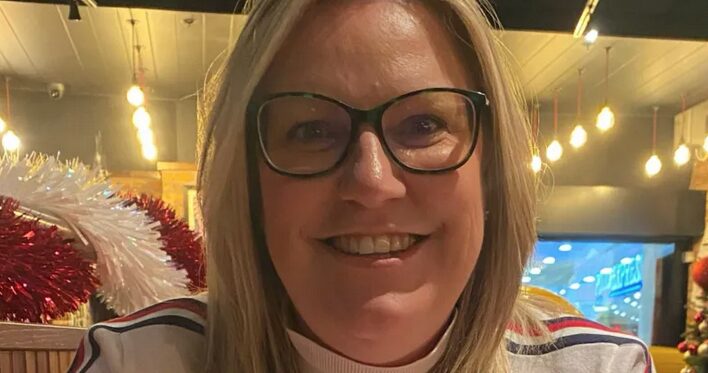
Gemma Moore thought she was getting tickets from a friend of a friend/Gemma Moore
“We had a conversation and sent the money then all of sudden we were blocked,” Gemma explained.
She said the tickets were intended for her daughter’s 18th birthday.
“I thought I would justify spending [the money] because it would be a real treat for her,” she added.
“We’ve totally been scammed.”
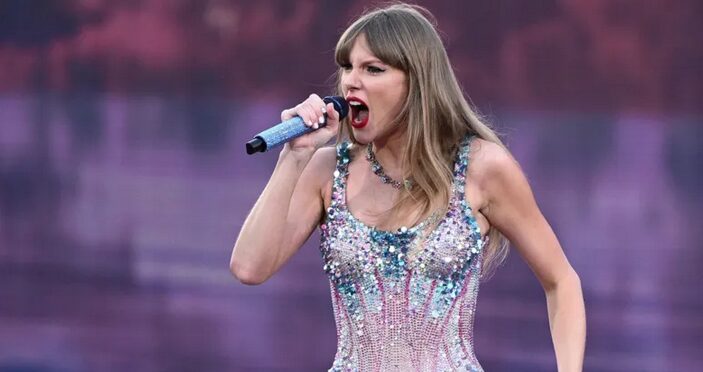
EPA-EFE/REX/Shutterstock / The two fans lost a combined £1,200 trying to purchase tickets
A second fan, Amanda Beasley, from Stourbridge, said she had also fallen foul of bad actors.
In a similar experience, she lost £400 trying to get tickets for her daughter’s 21st birthday.
Ms Beasley told BBC Radio WM she had also conducted research, but soon discovered something was off after sending money through PayPal.
When she complained to the seller, it quickly became clear what had happened.
Amanda said: “They literally sent me a scripted message saying ‘hi’ and in brackets ‘her name’. They forgot to insert my name.”
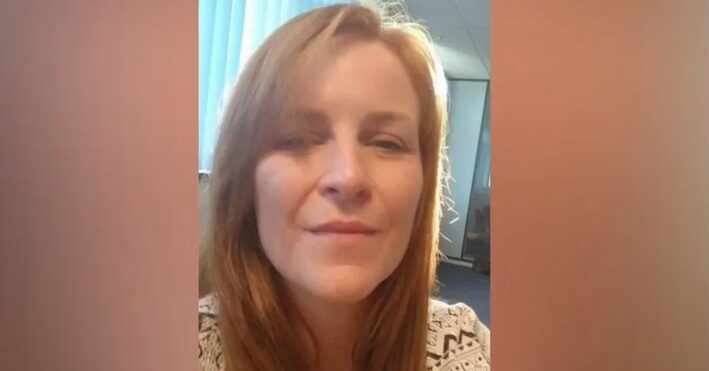
Amanda wanted tickets for her daughter’s 21st birthday/Amanda Beasley
The mother added she was most distraught by the fact her daughter would not be able to see her idol.
“I thought she was actually going to be able to go,” Ms Beasley said.
“It’s really upsetting that she’s missing out on that now. I wish I hadn’t told her we got the tickets.”
Buyer protection
The Lloyds Bank report said more than 600 of its customers had come forward to report being scammed, with some losing as much as £1,000.
PayPal said it was unable to comment on individual accounts without express written permission from the account holder.
But the company explained it had a comprehensive buyer protection programme covering purchases that are not as they claim.
Follow BBC West Midlands on Facebook, X, and Instagram, Send your story ideas to: newsonline.westmidlands@bbc.co.uk
The post Taylor Swift fans lose hundreds in scams appeared first on CANADA VOICE.
]]>The post The truth about Emily Dickinson, who might be Taylor Swift’s distant cousin appeared first on CANADA VOICE.
]]>BBC culture / By Hephzibah Anderson,Features correspondent
Long seen as a poet for moody teenagers, Emily Dickinson is largely associated with being a ‘patron saint of the shy’. But it’s an idea that gets the 19th-Century poet all wrong.
The news that Taylor Swift and Emily Dickinson might be related seems particularly timely, given that the pop singer’s latest album – due out in April – is called The Tortured Poets Department. And over the years, there have been links between the two – who genealogy website Ancestry.com claims are sixth cousins, three times removed. (Swift hasn’t yet responded to requests for comment on the report.)
Swift’s 2020 album, Evermore, has been linked to the US poet, with its release date (10 December) being Dickinson’s birthday, and its name similar to “forevermore”, a word that appears in Dickinson’s poem One Sister Have I in Our House. Swift also told Entertainment Weekly that, when imagining the cover of her album Folklore, she had an idea for “this girl sleepwalking through the forest in a nightgown in 1830” – the year Dickinson was born. Some fan theories even suggest that the proposed release date for Swift’s next album, 19 April, is a reference to a Dickinson work labelled as poem 419, also known as We Grow Accustomed to the Dark.
Theories aside, Swift made a concrete mention while accepting the Songwriter-Artist of the Decade award from the Nashville Songwriters Association International in 2022, saying: “If my lyrics sound like a letter written by Emily Dickinson’s great-grandmother while sewing a lace curtain, that’s me writing in the quill genre.” That quote draws on associations with the 19th-Century poet that have long lingered since her death in 1886.
The cult of Dickinson has coalesced around a very precise image, one that tells us a lot about how we view poets and how we view women poets in particular. It’s pieced together from the most outlandish details of Dickinson’s biography: her penchant for dressing in white, her reluctance to leave her bedroom, her habit of addressing visitors through a door rather than face to face.
It seems to have taken hold almost as soon as her poems found their audience. Though Dickinson wrote nearly 1,800 poems, just 10 were printed during her lifetime. Significant publication came only after her death, aged 55, at which point her work immediately attracted an ardent fan base. Women readers were especially devoted, and started to make pilgrimages to the Homestead, the Dickinson’s home in Amherst, Massachusetts, which is now a museum. Since then, the idea that such poems could have been penned by a secluded spinster toiling in recluse has proven irresistible – especially to generations of gauche, overwrought teenagers. As Nixon puts it, Dickinson is the “patron saint of shy persons”. It’s only part of the story, however, and Terence Davies’ 2017 film A Quiet Passion was just one of a series of creative projects seeking to show other sides of Emily Dickinson.
Truth told slant
“We were taught that she was this reclusive spinster who lived with her family, dressed all in white, and wrote in her room all day”, recalls artist Rosanna Bruno of her high school introduction to the poet in the 1980s. Even then, Bruno felt that the mythology of the poet didn’t really mesh with the poems. “It seemed so incongruous to what she wrote”, she says. “Have you ever heard Helen Mirren reading Wild Nights!? You really have to rethink Dickinson as a reclusive spinster after that rendition.”
Bruno drew a cartoon of one of Dickinson’s best-known poems, Because I could not stop for Death, and when she found herself reading Dickinson’s work again while on a fellowship at the Yaddo artists’ colony in Saratoga Springs more than 20 years later, more drawings came. The result is The Slanted Life of Emily Dickinson, a graphic novel that offers speculative glimpses of Dickinson’s social media feeds.
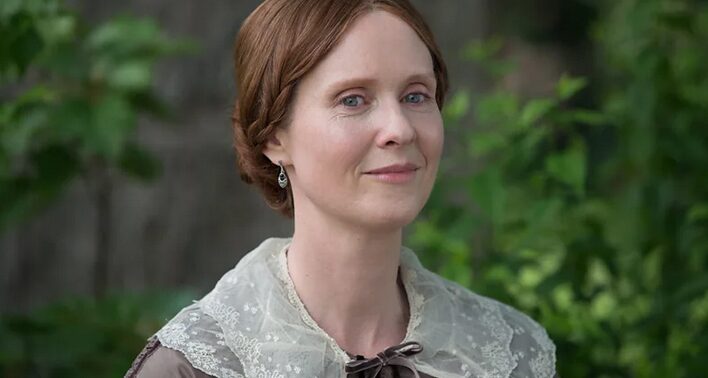
Alamy / Sex and the City’s Cynthia Nixon played Emily Dickinson in Terrence Davies’ film of the poet’s Life, A Quiet Passion (Credit: Alamy)
Among cartoons that imagine Dickinson’s Instagram account (“@recluse1830”) and OKCupid profile (“ethnicity: white as alabaster”) are fake scholarly tomes whose titles send up our fascination with Dickinson’s personal life: Her Daily Bread: Emily Dickinson’s Silent Struggle with Gluten Intolerance, and Emily Wiccanson: The Poet and Her ‘Craft’, exploring her possible involvement in witchcraft.
Dickinson the social media star may be the stuff of satire, but as a young woman, the poet was indeed socially active. Even later in life, she maintained and formed new friendships through her correspondence, some of which went on show in New York at the Morgan Library’s 2017 exhibition I’m Nobody! Who Are You? The Life and Poetry of Emily Dickinson. (An accompanying program of events featured a reading and recital by Patti Smith and her pianist daughter.) Its curator, Carolyn Vega, is a long-time Dickinson fan. “While it is true that she did retreat from society, it is also true that she was deeply connected to her world through family, friendships, and literary mentors and editors. She also read widely and was aware of political realities, including the American Civil War, that were going on around her. It is not true that she lived in a vacuum,” Vega says. Nor did Dickinson write in one: as the exhibition shows, she also sent out hundreds of poems to a coterie of carefully chosen friends and editors. “She was not shy or reticent about sharing her work with them.”
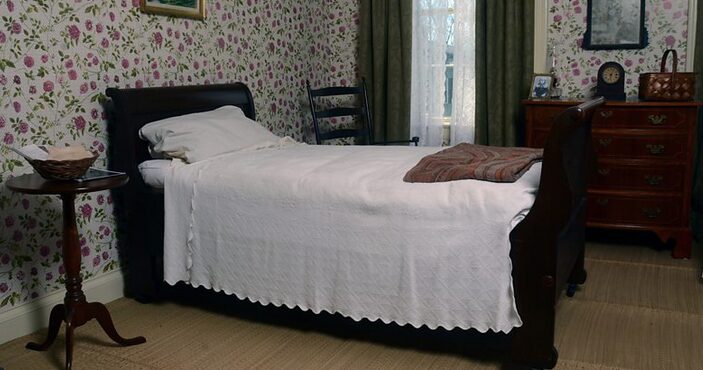
Michael Mederios / The bedroom of Emily Dickinson in her home in Massachusetts – myth suggests that, like the teenagers who love her, she was reluctant to leave it (Credit: Michael Mederios)
To the extent that she did later opt for physical isolation, it would be a mistake to read timidity into that choice. As Paul Hetherington, a Dickinson expert and professor of writing at the University of Canberra, notes: “The image of her as being a reclusive eccentric overshadows, and skews, our reading of her work because it separates her from the mainstream and casts her in the role of perennial bridesmaid, unsuited to a more robust life and always working at the margins.” In fact, he says, holing up in her father’s comfy home gave her licence, in a staunchly patriarchal society, “to speak openly about love, desire and various ideas of devotion in a way countenanced by no other 19th-Century writer. She is in this way perhaps the first truly modern poet in the English language.”
‘Poster girl’
Writer and academic Dr Cassandra Atherton agrees. “Dickinson’s mythology is often misread by scholars and teachers. Far from being trapped in her father’s house, she was a subversive and brilliant poet whose rebellion can be seen in her battle against patriarchal society and its attempted containment of her as an intellectual female.”
Like Bruno and Vega, Atherton was an early convert to Dickinson’s poetry. “Emily Dickinson was my poster girl,” she says of her teen self. She would even go to school dressed in white with her hair parted and pulled back like the poet. “Dickinson was a fierce observer – a role in which I felt cast as a teenager, and she took up themes concerning the importance of self, as well as pain and suffering, love and death, all essential to my experience growing up.” That infatuation hasn’t waned with adulthood – she even owns (and uses) an Emily Dickinson cookie cutter.
For others, the myth is off-putting. Playwright and film-maker Madeleine Olnek lost all interest after hearing in middle school that Dickinson was agoraphobic. As a single university graduate, she’d tell anyone who asked that she hoped to become “the Emily Dickinson of comedy” – the joke being that Dickinson wasn’t funny. Or so she thought. “Later, when I started researching her, I was very, very surprised to learn that she was funny – things she said were laugh-out-loud funny. And she wrote very funny things too,” she says. “It was fascinating to me as a writer that the truth of Emily Dickinson’s life was so different [from] what the world was told about her. This struck me as a story about the marketing of an artist, and how a constructed public image can wholly obscure the true meaning of an artist’s work.”
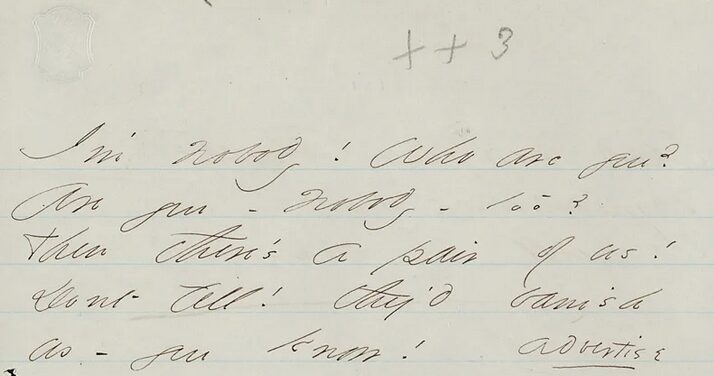
Houghton Library, Harvard University / I’m Nobody, Who Are You? is a poem first published in 1891, shown here in Dickinson’s own hand (Credit: Houghton Library, Harvard University)
Olnek has already had a play about Dickinson staged, and her 2018 film Wild Nights with Emily portrayed the poet as a passionate rebel. “The movie explores the meaningful relationships that Emily forged and maintained throughout her life. She’s always been portrayed as a loner who never came out of her room, but in fact she had loving and satisfying relationships,” she says. It’s a drama with comic moments and Dickinson is played by none other than Saturday Night Live’s Molly Shannon. “Molly is a performer who is sui generis, with a quick, lively mind, just like Dickinson herself. It took a lot of nerve to write poems, to put your mind on paper – especially in the way Dickinson did, so far ahead of her time she was creating new forms – there’s an audacity to it, a subversiveness, and a willingness to cross boundaries.”
Olnek’s research, which is funded by a Guggenheim fellowship, was inspired by the use of infrared technology to access crossed out and erased words in Dickinson’s papers. Much of this heavy editing is the work of Mabel Todd, the mistress of Dickinson’s brother, Austin. In particular, Todd was keen to delete mentions of Dickinson’s friend – and possibly more, according to Olnek – Susan Gilbert, who also happened to be Austin’s wife. “It was such a soap opera, so opposite of everything I had ever heard,” Olnek told Vox.
Tantalising though these discoveries are, they’re also a reminder to stick with what Dickinson left behind: her words. And what words they are. They’re perhaps best summed up by a quote that the Morgan Library’s Vega likes to offer from one of Dickinson’s own letters: “If I feel physically as if the top of my head were taken off, I know that is poetry.”
This article was originally published in 2017.
If you liked this story, sign up for The Essential List newsletter – a handpicked selection of features, videos and can’t-miss news delivered to your inbox every Friday.
If you would like to comment on this story or anything else you have seen on BBC Culture, head over to our Facebook page or message us on Twitter.
The post The truth about Emily Dickinson, who might be Taylor Swift’s distant cousin appeared first on CANADA VOICE.
]]>The post One Day author David Nicholls on writing the British love story that’s left the world heartbroken appeared first on CANADA VOICE.
]]>BBC culture / By Neil Armstrong,Features correspondent
In the first in our new Culture Shifters series looking back at artworks that have had a major impact, the novelist reflects on his 2009 romance turned Netflix phenomenon.
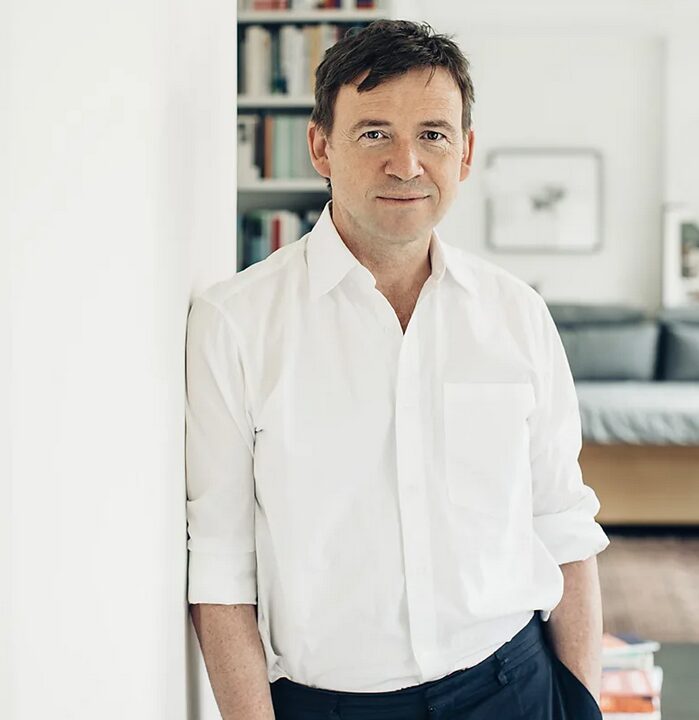
Bestselling author David Nicholls is thought of by his fans as a master of the romantic comedy. His new novel You Are Here is already receiving rave reviews and will fly off the shelves. However, it’s a much older work that readers typically want to talk to him about. One Day, his 2009 book, has been nudged back into the public conversation by the huge success of the 14-part Netflix adaptation starring Ambika Mod and Leo Woodall, which premiered in February.
“People have sent me really lovely messages about watching it to the end and then going back and watching it from the beginning again and treating it almost like a record that they love,” Nicholls tells the BBC. “That’s brilliant because it’s very hard to put narrative pull into a love story. It’s very hard to find a way to keep people coming back because often the incidents are so small – just looks or smiles or arguments. They’re not big events. They’re not murders or explosions. They are tiny and those actors managed to make the smallest things feel important and emotional.”
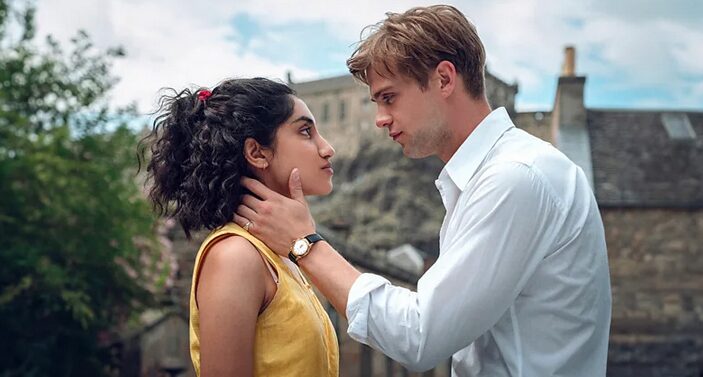
The Netflix adaptation of One Day has been one of the most talked-about TV shows of the year (Credit: Netflix)
The year 2009 was a good one for novels by British writers. Among the titles published were Hilary Mantel’s Wolf Hall, Sarah Waters’ The Little Stranger and AS Byatt’s The Children’s Book. All three made the Booker Prize shortlist and Wolf Hall won it. But despite not making even the Booker longlist, One Day has had a greater cultural impact than any of them.
How it came about
A screenwriter and former actor, Nicholls was writing a BBC television adaptation of Tess of the d’Urbervilles when he was reminded of a passage in Thomas Hardy’s novel that had impressed him when he first read it as a teenager. The passage, in which Tess realises that one date in the year has a particular significance, gave Nicholls the germ of an idea for his third novel.
In One Day a couple meet and spend the night together on 15 July, 1988, the day of their graduation from the University of Edinburgh, and then we check in with Emma and Dexter on the same day every year for the next 20 years to see how – or if – their relationship is progressing. It is a love story, and Nicholls planned it meticulously. He worked out detailed biographies for Emma and Dexter so that he knew what they would be doing all year round, not just on the day we visit them. He printed out a draft of the novel and then typed up the entire manuscript again, editing as he went along. His hard work paid off.
With the One Day series, I did think that everyone had done their best possible work. After that, you can’t predict anything at all – David Nicholls
The Guardian reviewer thought it “a novel that is not only roaringly funny but also memorable, moving and, in its own unassuming, unpretentious way, rather profound”. The critic in The Times described it as “a wonderful, wonderful book: wise, funny, perceptive, compassionate and often unbearably sad”. The novelist Jonathan Coe declared it the best novel he had read in 2009, writing: “It’s rare to find a novel which ranges over the recent past with such authority, and even rarer to find one in which the two leading characters are drawn with such solidity, such painful fidelity, to real life that you really do put the book down with the hallucinatory feeling that they’ve become as well known to you as your closest friends.”
Readers agreed. One Day has sold more than six million copies worldwide, and has been translated into 40 different languages. There was a period in Britain when everyone on public transport seemed to be reading it. A headline in The Observer referred to Nicholls as “the man who made a nation cry”, a reference to the book’s now famous – infamous even, given the shock it causes readers – twist.
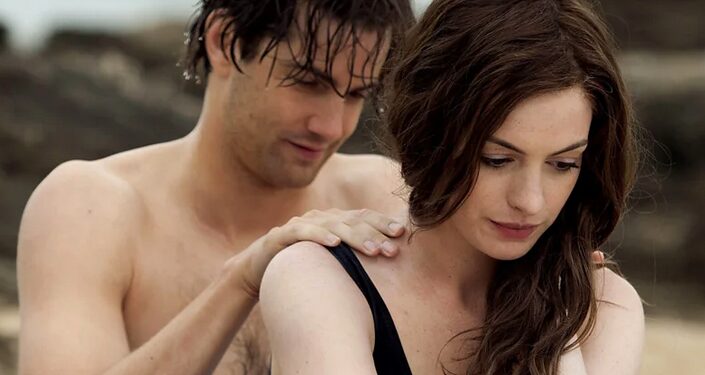
A film version released in 2011 and starring Anne Hathaway as Emma has some devotees but received some pretty vicious reviews. Many felt Hathaway was miscast. However, the series, with Mod and Woodall as Emma and Dexter, has been a smash hit. It reached the Netflix top 10 in 89 countries, was number one in numerous territories, and remained in the global top 10 list for seven weeks. There was a social media craze for fans posting videos of themselves crying after watching the final scene. On X, viewers jokingly declared that they were going to send Netflix the bill for the therapy required to help them recover from the emotional devastation wrought by the series. Kim Kardashian recommended it to her 364 million Instagram followers.
The secret of its success
How to account for its mega-hit status? “Romance is a popular genre on Netflix. Bridgerton, Heartstopper, and other series have been hits for the platform,” says Richard Lawson, the chief critic at Vanity Fair magazine. “The book’s popularity and the easily marketed hook of the premise are certainly factors.
“One Day also really lends itself to the bingeing format – it’s built in such a way, one vignette tumbling into the next, that proves highly addictive. Plus, it’s genuinely good, and that cannot be said about a lot of Netflix originals these days. There’s thought and artistry behind it.”
Sophia Spring / One Day was David Nicholls’ third novel and it made him a publishing star (Credit: Sophia Spring)
Jonny Weldon is the actor who plays Emma’s irritating sometime partner Ian in the Netflix adaptation, a role that has given him real a career boost. He tells the BBC that he feels One Day strikes a chord with viewers because it’s about “fundamental stages of human life, and in particular it dives into those years when you leave university, released from a safe bubble into the big wide world where you have to work out how you identify with yourself, others and the world around you”.
Both the show and the novel open and end in Edinburgh, a city Nicholls has loved since staying there when appearing in a student play at the celebrated Fringe festival. Jenni Steele, film and creative industries manager at VisitScotland, the national tourism organisation, says: “The Netflix adaptation of One Day has certainly created a buzz in the city. It’s too early to say how much of an impact the series has had – however we know screen tourism is a long-term trend and the effects will last long after the initial broadcast. Our own research shows that the original film adaptation of One Day, back in 2011, is still mentioned by visitors, years after its release.”
The VisitScotland SEO and analytics team also noted that there was a boost to the search terms “Edinburgh One Day” and “Edinburgh Scotland” following the release of the series.
Hence, as You Are Here is published, Nicholls is still being asked about a novel he began writing more than a decade and a half ago. He was involved in the show as an executive producer and he also wrote episode 13, the penultimate in the series. The reason he didn’t write the whole thing – despite winning a Bafta for his TV adaptation of Edward St Aubyn’s Patrick Melrose novels – “is because it was so familiar to me. I’ve been thinking about One Day for 17 years, and I just felt like it needed someone to take it to pieces in a more radical way than I’d have been capable of.”
David Nicholls’ five culture-shifters
Kate Bush – Hounds of Love (1985) It still sounds extraordinary now. Entirely original, wild and beautiful.
Glenn Gould – Goldberg Variations, 1955 recording. The record that revolutionised Bach on the keyboard, played in a unique way.
Francois Truffaut – The 400 Blows (1959) Tough and true and intensely moving film.
Bob Fosse – All That Jazz (1979) I saw this musical as a teenager and it has haunted me, and a whole generation of writers and directors, ever since. Far better than Cabaret.
Muriel Spark – The Girls of Slender Means (1963) Unsentimental, witty and cruel, the best book by a wonderful writer.
Of working on the show, he says, “It was a very, very happy experience. I love what Nicole Taylor [the lead writer] and her team have done. They made really smart decisions and they improved on the novel. I completely adore Ambika and Leo and their performances. It’s been a model of an experience. So much so that I kind of worry about doing it again with someone else.”
And yet he insists that when he first watched it, he had no idea it would become the monster hit that it has. “Absolutely not. I’ve never watched anything and known what its fate is going to be but I did think that everyone had done their best possible work. After that, you can’t predict anything at all.”
His latest heart-tugger
The new novel You are Here, Nicholls’s sixth and, he believes, “the best thing I’ve written”, contains all the elements that have become his trademark: comedy, piercing social observation, more cultural references than Taylor Swift and, of course, romance. It revolves around two lonely, disappointed people, bruised by break-ups, who meet on a coast-to-coast walk across the north of England. Marnie and Michael are 38 and 42 respectively.
“Looking across the six novels, they are all about love and the experience of love, and what it’s to like fall in and out of love between the ages of 16 and 58 – Douglas is 58 at the end of Us [Nicholls’s fourth novel] and Charlie is 16 at the beginning of Sweet Sorrow [the fifth novel]. [With You are Here] I wanted to write about the bit in the middle,” Nicholls says.
Alamy / The 2011 film version of One Day starring Anne Hathaway and Jim Sturgess flopped at the box office (Credit: Alamy)
“I also wanted to write a love story about loneliness. I think it came indirectly out of lockdown and out of feeling unusually self-conscious and self-aware when I started to see friends again. A little bit wary and nervous about the whole business of human interaction, as if it was a skill that I’d forgotten.”
The Observer says of You Are Here: “The reader becomes so invested in the outcome of this unspectacular, everyday, cagoul-clad romance that it makes the whole world shimmer with a kind of secret possibility”. The Sunday Times says it is “a triumph, a real gift of a novel”. A screen version would seem a certainty.
“There’s been some discussion about it,” says Nicholls. “I can’t say more than that. It’s a hard one because it’s outside in the English weather, and a lot of it is very internal and unspoken and you have to find a way to put that onscreen but the cast of One Day did it amazingly well. It’s absolutely possible with great actors so, we’ll see.”
You Are Here is out now in the UK and published on May 28 in the US
—
If you liked this story, sign up for The Essential List newsletter – a handpicked selection of features, videos and can’t-miss news delivered to your inbox every Friday.
For more Culture stories from the BBC, follow us on Facebook, X and Instagram.
The post One Day author David Nicholls on writing the British love story that’s left the world heartbroken appeared first on CANADA VOICE.
]]>The post Bluebeard: Why the grimmest of fairytales is still all-too-relevant appeared first on CANADA VOICE.
]]>BBC culture / By Lillian Crawford,Features correspondent
The old French folk story about a young bride and her monstrous husband is a harrowing fable that continues to inspire powerful modern adaptations, writes Lillian Crawford.
“Once upon a time… Where did this happen? Outside or within?” Thus begins the prologue of Béla Balázs’s libretto for the 1918 opera Duke Bluebeard’s Castle, with music by Béla Bartók. It is an invitation to enter another realm, one of fairytale and horror. “The curtain that rises – or is it just our eyelids?” it continues. Seven locked doors appear around Bluebeard’s bedchamber, each of which his wife Judith begs him to let her see behind. Upon unlocking and entering the final door, she sees the reason for his secrecy – the Duke’s former wives petrified before her, whom she now joins, as Bluebeard moves away into “Darkness… darkness”.
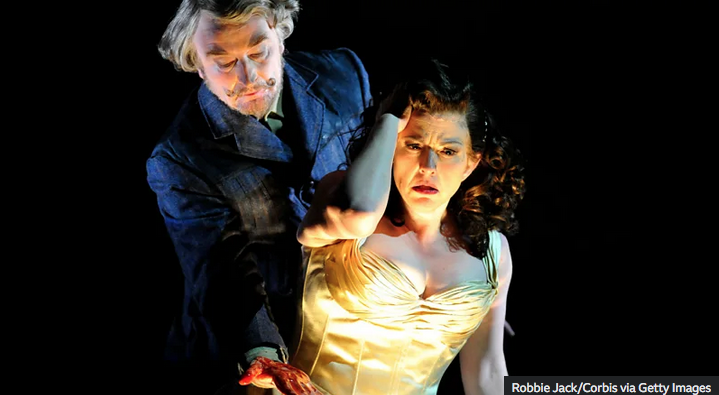
The opera, based on the French fable about a young bride and her monstrous husband, continues to be a popular part of the repertoire. Its latest London revival is at English National Opera this week, where it is being presented as a semi-staged concert two-hander between mezzo-soprano Allison Cook as Judith and bass John Relyea as Bluebeard. In Bartók’s score, the music ebbs and flows between the newlyweds in imitation of their wedding-night lovemaking, Judith’s voice receding as Bluebeard grows bolder, and vice versa. It is a tumultuous story of domination and submission, the tension of the sexes and their respective mysteries.
Robbie Jack/Corbis via Getty Images / Bartok’s opera Duke Bluebeard’s Castle, seen here in a 2009 English National Opera production, is a powerful psychodrama (Credit: Robbie Jack/Corbis via Getty Images)
The psychological battlefield of heterosexual marriage has changed significantly in the century between the premiere of Duke Bluebeard’s Castle and today. As indeed it had over more than 300 years between two Hungarians taking up its narrative in the 1910s, and Charles Perrault penning his Contes du temps passé (Tales of Past Times) in1697, including one entitled La Barbe Bleue. It is a fairytale most parents are liable to skip over when reading the canonical stories to children, due to its harrowing imagery rendering it less familiar than Perrault’s Cinderella or Little Red Riding Hood. Instead it is more likely to resonate with the parents themselves – as proved by its continual reinvention, with new theatrical and literary adaptations over the past few months giving it contemporary resonance.
The original Barbe Bleue tells the story of a woman who marries a man with a repulsive blue beard and moves into his castle, wherein he gives her keys to every room but implores her not to enter his secret chamber. Inevitably, condemned by Eve’s original sin, the wife opens the door to find the floor and walls covered in blood, and Bluebeard’s murdered wives hanging from the walls. The moral? Perrault gives us two. The first is that women’s curiosity is not worth the cost. But the second says that this is a bygone fable, and that now, “Whether his beard be black or blue, / The modern husband does not ask / His wife to undertake a task / Impossible for her to do”. These appended morals reveal that La Barbe Bleue is not so much a condemnation of the wife as it seems. If it were, she would die at the end; instead her brothers arrive at the 11th hour and rip Bluebeard apart with their swords. Rather, it is a warning that a man should not blame his wife for her curiosity but share his secrets with her.
My take on Bluebeard is an anti-romance novel where the typical dark romance hero represented by such characters as Fifty Shades of Grey’s Christian Grey turns out to be the Bluebeard hes hinted to be after all – Anna Biller
Operatic adaptations of the story before Balázs and Bartók’s version brought a lightness to the ending, such as Jacques Offenbach’s 1866 opéra bouffe which reveals Bluebeard’s wives were merely drugged rather than killed and sees him marry a woman who manages to tame him. Another is Ariane et Barbe-bleue, a 1901 opera with music by Paul Dukas after a libretto by Maurice Maeterlinck. In this version, the new wife, Ariane, enters Bluebeard’s castle to free his five imprisoned previous spouses. She sings that a woman’s first duty to a man is to disobey “when the order of things is threatening and offers no explanation”, and because the other wives did not, they met their fate at their husband’s hands. Even when Ariane frees the other wives, they choose to stay at the castle, afraid of unknown freedom. As in the Bartók version, Bluebeard’s castle is really a psychological state, and the conflict between husband and wife takes place in the mind. It is not so much about physical dissonance, but the irreconcilability of masculine and feminine ways of thinking.
One interpretation is that it is out of fear that Bluebeard murders or locks away his wives – the threat of vulnerability that comes from proximity to a woman’s psyche. This becomes entwined with his fear of physical intimacy, the act of inserting key into lock steeped in obvious sexual imagery. In Bartók’s opera, Balázs uses the Symbolist device of the seven doors, each revealing a different room and colour to Bluebeard’s character – his red torture chamber, golden treasury, blue-green garden, a sentimental pool of tears. The demand to open each door represents Judith’s sexual demands on their wedding night. Bluebeard’s reluctance can be read as performance anxiety, his fear of making himself vulnerable to her.
It is significant that Balázs names the wife in his libretto Judith, after the Biblical heroine whose first husband was unable to consummate their marriage, and who beheaded the Assyrian general Holofernes to liberate her home city of Bethulia. Sigmund Freud described Judith in his essay The Taboo of Virginity (1917) as “the woman who castrates the man who has deflowered her”. In 1901 Austrian painter Gustav Klimt depicted Judith with the head of Holofernes in similarly alluring nakedness and expression to Salomé, she who danced the Dance of the Seven Veils to win the head of John the Baptist – a devious, dangerous temptress.
Steve Tanner / Emma Rice’s Blue Beard uses the story to comment on contemporary male violence (Credit: Steve Tanner)
Yet consider the rendering of Judith beheading Holofernes by Italian baroque painter Artemisia Gentileschi, a more vengeful, bloodthirsty decapitation scene. It is typically read as an artistic expression of vengeance on her mentor Agostino Tassi, who was convicted of raping Gentileschi. This approach to the biblical Judith is echoed in more modern feminist retellings of Perrault’s story, by way of Bartók’s opera – first in Angela Carter’s 1979 short story The Bloody Chamber and more recently by Anna Biller, director of feminist horror comedy The Love Witch (2016), in her 2023 debut novel Bluebeard’s Castle. In both versions, Bluebeard’s wife is shown to have the last laugh over their violent husband.
I have become more and more haunted by the regular chime of women being attacked, murdered, and abused. With Blue Beard, I wanted to use my craft, my platform, and my experience to make a small difference – Emma Rice
“My book took a lot from Bartók’s opera,” Biller tells BBC Culture, including the name Judith for her protagonist. “I borrowed from the end when Bluebeard’s other wives are piled with jewellery that is so heavy it chains them to the castle.” The riches that Bluebeard offers his wives are central to Carter and Biller’s versions, which explore the fantastical allure of this man in greater detail. “Mine is an anti-romance novel,” Biller explains, “where the typical dark romance hero represented by such characters as Christian Grey [in Fifty Shades of Grey] turns out to be the Bluebeard he’s hinted to be after all. It’s about the horror of accidentally marrying a Bluebeard.”
‘Opening the door’
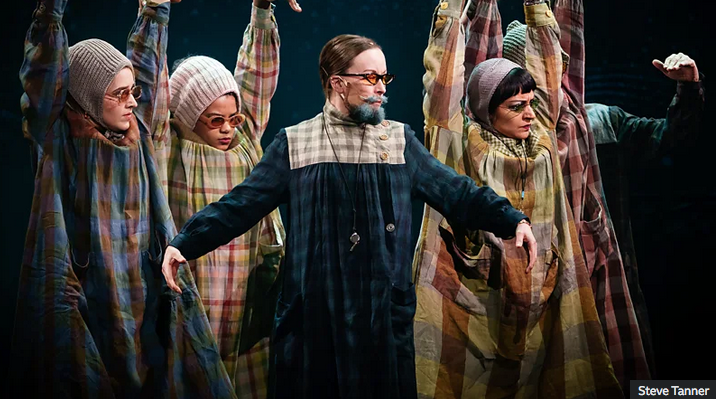
For Biller, new adaptations of Bluebeard are essential responses to widespread domestic and sexual violence in contemporary society. It is also the impetus for British theatre maker Emma Rice’s new play, Blue Beard, currently on tour around the UK, which takes Perrault’s moral of not blaming women for their curiosity further in its tagline: When someone tells you not to look, open the bloody door! “I have become more and more haunted by the regular chime of women being attacked, murdered, and abused,” Rice tells BBC Culture, citing the 2022 murder of Zara Aleena in East London in particular. “She was just walking home. A week later her family, friends, and people she would never know, met at the spot where she was killed and walked her memory home. This was the moment that I knew I wanted to walk Bluebeard’s victims home. I wanted to use my craft, my platform, and my experience to make a small difference.”
Music is the tool of expression for Bluebeard’s wives in these later versions. Music is central to Rice’s play, and Biller has her Judith write an opera based on Perrault’s story as a mise en abyme to catch the conscience of the Duke. The narrator in The Bloody Chamber is a pianist who muses, “It must have been my innocence that captivated him – the silent music, he said, of my unknowingness, like La terrasse des audiences du clair de lune played upon a piano with keys of ether”. The transmutation of bloodied door keys to piano keys is fully rendered in Jane Campion’s 1993 film The Piano, whose story about a newlywed woman fighting for agency echoes Bluebeard, in which music becomes the voice of mute protagonist Ada. Emphasising the parallels, one key scene sees a pantomime version of Bluebeard performed – but just as the Duke is about to stroke off the head of his seventh wife with his sword, a group of Māori tribesmen storm the stage and disrupt the performance.
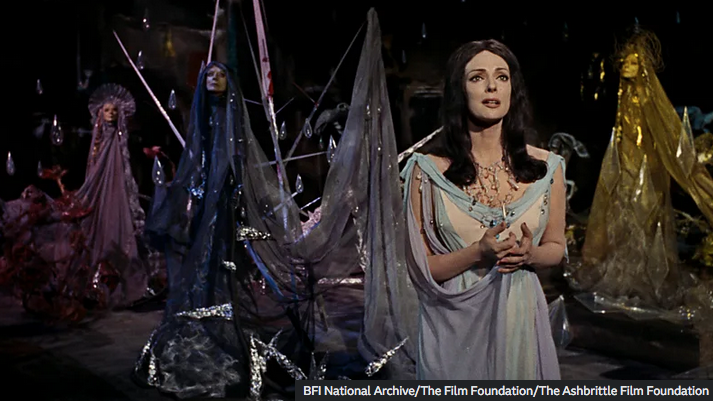
BFI National Archive/The Film Foundation/The Ashbrittle Film Foundation / Michael Powell’s film of Duke Bluebeard’s Castle depicts Judith as triumphant (Credit: BFI National Archive/The Film Foundation/The Ashbrittle Film Foundation )
In that moment the retelling of Bluebeard becomes too real to its audience that they take on the role of the wife’s brothers in the original tale, saving her from her murderous husband. The scene raises the question again, coming back to Balázs’s libretto, of whether the action is taking place “outside or within”, a concept which the Hungarian writer later expanded on in his film theory, including the 1924 book Visible Man. His ideas influenced Michael Powell, who explored the feminine subconscious in films with Emeric Pressburger including Black Narcissus (1947) and The Red Shoes (1948).
In 1963 Powell directed a film adaptation of Bartók’s Duke Bluebeard’s Castle for German television starring Norman Foster and Ana Raquel Satre. Despite being funded by Foster as a vehicle for his own performance, Powell found greater interest in Satre’s Judith. She is incessantly inquisitive, refusing to acquiesce to Bluebeard’s masculine secrecy. When the fifth door opens, and the score calls for Judith to let out an enormous shriek, Satre does not, instead pushing through the threshold into Bluebeard’s “vast and beautiful kingdom”, the swelling score announcing her triumph rather than his.
Bartók’s opera and the films of Powell and Pressburger are favourites of Anthony, the cruel, enigmatic lover to protagonist Julie in Joanna Hogg’s 2019 film The Souvenir. The score plays when Julie enters her apartment to find Anthony there for the first time, and recurs throughout the film, including when they have sex. Julie is a more subdued Judith than Satre in Powell’s film, choosing to believe her lover’s lies, rather than opening the door and discovering the uncomfortable truth. When she does, her Bluebeard dies, but at last she finds her own means of expression, through her filmmaking in the film’s sequel – her film within the film being a remake of Hogg’s student film Caprice, a gauzy fever dream directly inspired by Powell and Pressburger’s The Red Shoes and The Tales of Hoffmann. An exploration of the castle within.
In The Souvenir Part II, Julie enters a soundstage and sees a man sitting on an actor’s chair against a giant backdrop like those painted by Hein Heckroth for Powell and Pressburger’s films. It depicts a towering castle, a grave harbinger of another Bluebeard on the horizon. Hogg’s reimagining of Bluebeard differs greatly to that of Powell or Carter, Biller or Rice. It reveals the continuing resonance of Perrault’s fairytale, and the potential for new ways of presenting it across artforms. As long as there remains conflict in love, so too does the shadow of Bluebeard.
A semi-staged concert production of Duke Bluebeard’s Castle will be performed at London’s Coliseum on 21 and 23 March
Emma Rice’s Blue Beard is currently touring the UK
Bluebeard’s Castle (Michael Powell, 1963) is available now
—
If you liked this story, sign up for The Essential List newsletter – a handpicked selection of features, videos and can’t-miss news delivered to your inbox every Friday.
If you would like to comment on this story or anything else you have seen on BBC Culture, head over to our Facebook page or message us on Twitter.
The post Bluebeard: Why the grimmest of fairytales is still all-too-relevant appeared first on CANADA VOICE.
]]>The post Agatha Christie artefacts at Cambridge University crime novel exhibition appeared first on CANADA VOICE.
]]>BBC culture / By Helen Burchell and PA Media,BBC News, Cambridgeshire
Crime novelist Agatha Christie’s typewriter and Dictaphone are among items on show in a new exhibition celebrating the literary genre.
Christie’s 1937 Remington portable typewriter together with the typescript for her last Poirot novel can be seen at Cambridge University Library.
Various first editions from other famous novelists are also on show.
Murder by the Book: A celebration of 20th Century British Crime Fiction is on until 24 August.
The university said one of the “star exhibits” is the typescript of her final Poirot novel, Curtain, which was so top secret it was kept in a bank vault for three decades until its eventual publication in 1975, the year before Christie’s death.
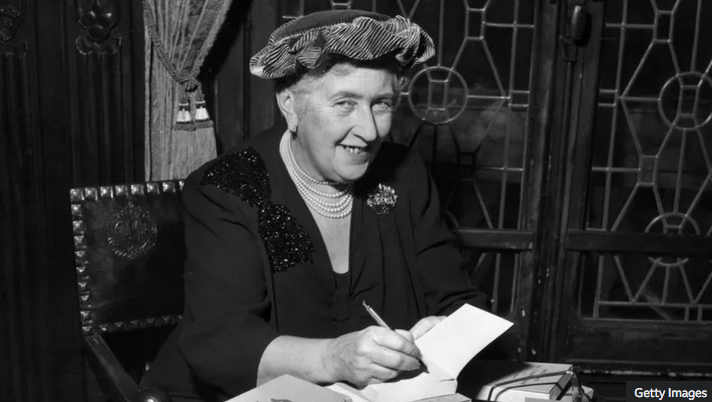
Getty Images / Many of Dame Agatha Christie’s novels have been turned into films
In this book she finally revealed the death of detective Hercule Poirot – an event so culturally significant, his demise was covered in a front page New York Times mock obituary.
The Christie artefacts have been loaned by the Christie Archive Trust, and include her draft notebooks from the writing of Curtain and Witness for the Prosecution.
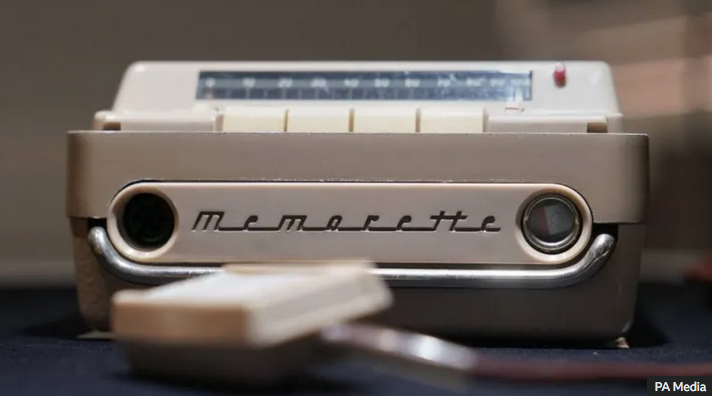
PA Media / Agatha Christie’s 1959 Grundig Memorette portable dictating machine and microphone are on show
Dame Agatha Christie, who died in 1976 aged 85, wrote 66 detective novels, 14 short story collections and more than 20 plays.
The exhibition also features Victorian novelist Wilkie Collins’ writing desk, as well as the library’s first edition copy of his seminal 1868 work The Moonstone.
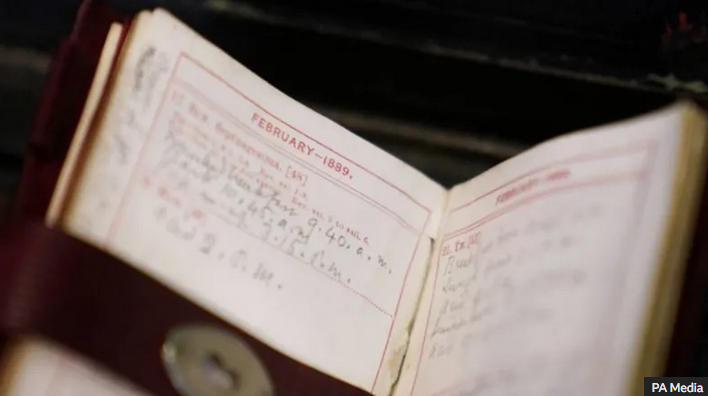
PA Media / The is the last diary belonging to Wilkie Collins, in his travelling writing desk
In addition, almost 100 of the most famous, influential and best-selling crime novels in UK history, and other works that are now long out of print will be on show.
The vast majority of these novels are drawn from the library’s own collection of first editions in their original dust jackets.
First editions going on display range from the earliest British crime fiction of Sir Arthur Conan Doyle, Charles Felix and Wilkie Collins – to some of the 20th and 21st Century’s most recognisable authors.
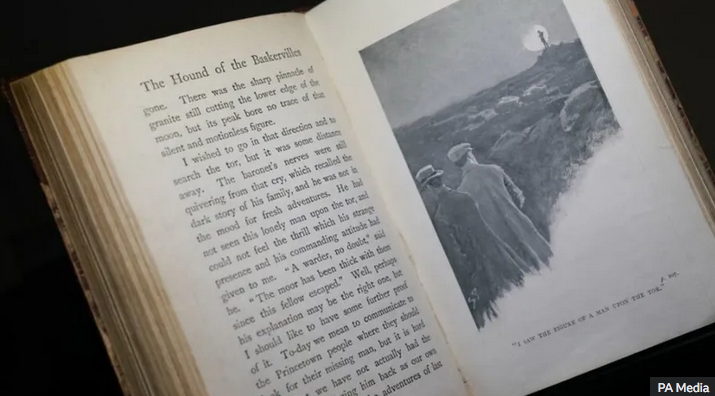
PA Media / A first edition of The Hound of the Baskervilles by Arthur Conan Doyle
Crime novelist and exhibition curator Nicola Upson, said: “This exhibition is a glorious selection of the novels that have influenced the genre and made household names of Sherlock Holmes, Miss Marple, Jane Tennison and Inspector Morse.
“We look at the brilliant ideas, atmospheric settings, vivid characters, the dark and dangerous themes – and those perfect, unguessable endings.
“There are books in the exhibition which have pioneered the genre.”
The exhibition and events programme has been supported using public funding by Arts Council England.
Follow East of England news on Facebook, Instagram and X. Got a story? Email eastofenglandnews@bbc.co.uk or WhatsApp 0800 169 1830
The post Agatha Christie artefacts at Cambridge University crime novel exhibition appeared first on CANADA VOICE.
]]>