The post RCI: Shopify CEO appears to endorse giving more votes to wealthy Canadians appeared first on CANADA VOICE.
]]>The billionaire CEO of one of Canada’s largest companies has come under fire for seeming to endorse the idea of stripping voting rights from some people and giving more votes to the ultra-wealthy.
On Saturday, Shopify CEO Tobi Lütke replied to a post on X from former TD Bank executive Eric Thor, who suggested an electoral system of “weighted voting proportional to the amount of income tax you pay”, from zero votes for people who don’t pay income tax to five votes for anyone paying $500,000 or more….
To read the full article on the official website, click here
The post RCI: Shopify CEO appears to endorse giving more votes to wealthy Canadians appeared first on CANADA VOICE.
]]>The post RCI: All eligible Canadians can now renew their passports online appeared first on CANADA VOICE.
]]>RCI / Darren Major (new window) · CBC News ·
All eligible Canadian adults can now apply online to renew their passports, Immigration Minister Lena Diab announced on Tuesday.
Previously, Canadians could only renew online if their passport expires in the next six months or had already expired. Otherwise, they were required to apply in person….
To read the full article on the official website, click here
The post RCI: All eligible Canadians can now renew their passports online appeared first on CANADA VOICE.
]]>The post RCI: 2 months after her fall, this 93-year-old is still waiting for home care assessment appeared first on CANADA VOICE.
]]>“I need some help.”
That’s the message 93-year-old Rosanna Montesi wants her local public clinic and health authorities to hear.
Montesi’s plea comes after a bad fall at her home in Montréal-Nord on May 12 landed her at the Santa-Cabrini hospital where she was treated for scrapes and bruises.
Montesi fell and hit her head while attempting to go out on her balcony….
To read the full article on the official website, click here
The post RCI: 2 months after her fall, this 93-year-old is still waiting for home care assessment appeared first on CANADA VOICE.
]]>The post RCI: Calgary hiker dies falling from Mount Temple in Banff National Park appeared first on CANADA VOICE.
]]>A 65-year-old Calgary man died at Mount Temple in Banff National Park after slipping and falling on the trail, according to Parks Canada.
The federal agency’s Lake Louise, Yoho and Kootenay field unit said the incident took place at about 8 p.m. on Saturday.
Justin Brisbane, a public relations and communications officer, said Parks Canada rescuers responded to the area….
To read the full article on the official website, click here
The post RCI: Calgary hiker dies falling from Mount Temple in Banff National Park appeared first on CANADA VOICE.
]]>The post كارني يعد بلقاء الأُمم الأوَل الساحلية بعد تصويت قادتهم ضد خط الأنابيب appeared first on CANADA VOICE.
]]>RCI / راديو كندا الدولي
وعد رئيس الحكومة الفدرالية مارك كارني بلقاء الأمم الأُول الساحلية في مقاطعة بريتيش كولومبيا بعد أن صوّت قادتهم بالإجماع اليوم الثلاثاء لممارسة الضغط على حكومته لكي تُبقي على حظر مرور ناقلات النفط قبالة سواحل شمال المقاطعة على المحيط الهادي ولكي تنسحب من مذكرة التفاهم التي وقعتها مع حكومة مقاطعة ألبرتا يوم الخميس الفائت والتي تفسح المجال أمام بناء خط أنابيب جديد لنقل نفط ألبرتا إلى ساحل مقاطعتهم من أجل تصديره إلى الأسواق الآسيوية.
الزعيم الإقليمي للأمم الأُوَل في بريتيش كولومبيا، تيري تيغي، قال مخاطباً كارني خلال الاجتماع الخاص لجمعية الأمم الأُوَل (APN / AFN) في أوتاوا إنّ ملكية الأمم الأُول في المقاطعة ’’ليست مسألة سياسية‘‘.
’’هل تحترمون توجيهات أصحاب الحقوق والملكيات، وما الإجراءات العملية التي ستتخذها حكومتكم لضمان منح الأمم الأُول سلطة اتخاذ قرارات حقيقية، كما ينص عليه الإعلان العالمي لحقوق الإنسان؟‘‘، سأل تيغي بعد خطاب ألقاه كارني أمام المئات من زعماء السكان الأصليين الحاضرين.
ردّ كارني بأنّ مكتبه قد قدّم طلباً رسمياً لعقد اجتماع مع الأمم الأُوَل الساحلية.
’’أتطلع إلى عقد هذا الاجتماع في أقرب فرصة ممكنة‘‘، قال رئيس الحكومة الفدرالية.
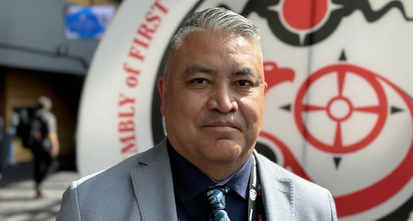
الزعيم الإقليمي للأمم الأُوَل في بريتيش كولومبيا، تيري تيغي (أرشيف).
الصورة: Radio-Canada / Ismaël Houdassine
وعندما سُئل تيغي عن رأيه في ردّ كارني على سؤاله، قال إنّ الوعد بعقد اجتماع لا يساوي شيئاً ما لم يتبعه فعل.
’’إذا لم يتابع (رئيسُ الوزراء) الأمر سيكون كلّ هذا مجرد وعود فارغة، وهذا أمر مقلق للغاية للعديد من الأمم الأُول، ليس فقط في بريتيش كولومبيا‘‘، أضاف تيغي.
ووقّع كارني ورئيسة حكومة ألبرتا دانييل سميث مذكرة تفاهم في 27 تشرين الثاني (نوفمبر) للتعاون في مجال الطاقة، فاتحيْن الباب أمام إمكانية رفع الحظر المفروض على ناقلات النفط الساحلية من أجل دعم مشروع خط الأنابيب.
وكان الحظر قد أُقرّ في تشريع في عام 2019، ما أعطى قوة قانونية لوقف مؤقت غير ملزم كان سارياً في المنطقة منذ سبعينيات القرن الفائت. وبموجب الحظر تُمنَع الناقلات التي تحمل أكثر من 12.500 طن من النفط الخام من التوقف أو التفريغ في الموانئ الواقعة بين الطرف الشمالي لجزيرة فانكوفر جنوباً وحدود بريتيش كولومبيا مع ولاية ألاسكا الأميركية شمالاً.
(نقلاً عن وكالة الصحافة الكندية، ترجمة وإعداد فادي الهاروني)
روابط ذات صلة:
- كارني وسميث يوقّعان مذكرة تفاهم لبناء خط أنابيب نفط
- سميث في أوتاوا للدفع نحو شراكة مع الحكومة الفدرالية في مشاريع الطاقة
- الطاقة النووية والغاز المُسال من ضمن مشاريع كارني الكبرى
The post كارني يعد بلقاء الأُمم الأوَل الساحلية بعد تصويت قادتهم ضد خط الأنابيب appeared first on CANADA VOICE.
]]>The post US inserts itself into Israel’s war with Iran, striking 3 Iranian nuclear sites appeared first on CANADA VOICE.
]]>CITYnews halifax / By Sam Mednick, Aamer Madhani And David Rising, The Associated Press
TEL AVIV, Israel (AP) — The United States struck three sites in Iran early Sunday, inserting itself into Israel’s war aimed at destroying the country’s nuclear program in a risky gambit to weaken a longtime foe despite fears of a wider regional conflict.
Addressing the nation from the White House, President Donald Trump asserted that Iran’s key nuclear were “completely and fully obliterated.” There was no independent damage assessment.
It was not clear whether the U.S. would continue attacking Iran alongside its ally Israel, which has been engaged in a nine-day war with Iran. Trump acted without congressional authorization, and he warned that there would be additional strikes if Tehran retaliated against U.S. forces.
“There will either be peace or there will be tragedy for Iran,” he said.
Iran’s top diplomat, Foreign Minister Abbas Araghchi, warned in a post on X that the U.S. attacks “will have everlasting consequences” and that Tehran “reserves all options” to retaliate.
Iran’s ambassador to the United Nations called for an emergency Security Council meeting to discuss what he described as the U.S.’s “heinous attacks and illegal use of force” against Iran.
In a letter obtained by The Associated Press, Ambassador Amir Saeid Iravani said that the U.N.’s most powerful body must “take all necessary measures” to hold the U.S. accountable under international law and the U.N. charter.
The U.N. nuclear watchdog said later that there has been “no increase in off-site radiation levels” at the locations that the U.S. hit. The International Atomic Energy Agency sent the message via the social platform X.
Early Sunday morning Israel alerted the public of an Iranian missile launch and urged people to take shelter. Sirens sounded in Jerusalem a short while later and a series of booms were heard.
Iranian has been firing missile barrages at Israel since the war began but they have decreased in size as Israel targets Tehran’s missile launchers. The Islamic Republic may also be keeping some arms in reserve.
The Atomic Energy Organization of Iran confirmed that attacks took place on its Fordo, Isfahan and Natanz sites, but it insisted that its work will not be stopped. Iran said there were no signs of radioactive contamination at the three locations and no danger to nearby residents.
Iran has maintained that its nuclear program is for peaceful purposes only, and U.S. intelligence agencies have assessed that Tehran is not actively pursuing a bomb. However, Trump and Israeli leaders have claimed that Iran could quickly assemble a nuclear weapon, making it an imminent threat.
The decision to directly involve the U.S. in the war comes after more than a week of strikes by Israel on Iran that aimed to systematically eradicate the country’s air defenses and offensive missile capabilities, while damaging its nuclear enrichment facilities. But U.S. and Israeli officials have said American stealth bombers and the 30,000-pound (13,500-kilogram) bunker-buster bomb they alone can carry offered the best chance of destroying heavily fortified sites connected to the Iranian nuclear program buried deep underground.
“We have completed our very successful attack on the three Nuclear sites in Iran, including Fordow, Natanz, and Esfahan,” Trump said in a post on social media. “All planes are now outside of Iran air space. A full payload of BOMBS was dropped on the primary site, Fordow. All planes are safely on their way home.”
Trump added in a later post: “This is an HISTORIC MOMENT FOR THE UNITED STATES OF AMERICA, ISRAEL, AND THE WORLD. IRAN MUST NOW AGREE TO END THIS WAR. THANK YOU!”
Israeli Prime Minister Benjamin Netanyahu praised Trump’s decision to attack in a video message directed at the American president.
“Your bold decision to target Iran’s nuclear facilities, with the awesome and righteous might of the United States, will change history,” he said. Netanyahu said the U.S. “has done what no other country on earth could do.”
Israel announced Sunday that it would close the country’s airspace to both inbound and outbound flights in the wake of the U.S. attacks. The war has disrupted air travel throughout the Middle East.
The White House and Pentagon did not immediately elaborate on the operation. U.S. military leaders are scheduled to provide a briefing at 8 a.m. Eastern.
The attack used bunker-buster bombs on Iran’s Fordo nuclear fuel enrichment plant that is built deep into a mountain, a U.S. official said. The weapons are designed to penetrate the ground before exploding. The official spoke on condition of anonymity to discuss military operations.
In addition, U.S. submarines launched about 30 Tomahawk missiles, according to another U.S. official who also spoke on condition of anonymity.
The strikes are a perilous decision, as Iran has pledged to retaliate if the U.S. joined the Israeli assault, and for Trump personally. He won the White House on the promise of keeping America out of costly foreign conflicts and scoffed at the value of American interventionism.
U.N. Secretary-General Antonio Guterres said he was “gravely alarmed” by the “dangerous escalation” of American strikes.
“There is a growing risk that this conflict could rapidly get out of control — with catastrophic consequences for civilians, the region, and the world,” he said in a statement.
Trump told reporters Friday that he was not interested in sending ground forces into Iran, saying it’s “the last thing you want to do.” He had previously indicated that he would make a final choice over the course of two weeks.
Iran’s Supreme Leader Ayatollah Ali Khamenei warned the United States on Wednesday that strikes targeting the Islamic Republic will “result in irreparable damage for them.” And Iranian Foreign Ministry spokesman Esmail Baghaei declared “any American intervention would be a recipe for an all-out war in the region.”
Trump has vowed that he would not allow Iran to obtain a nuclear weapon, and he had initially hoped that the threat of force would bring the country’s leaders to give up its nuclear program peacefully.
The Israeli military said Saturday it was preparing for the possibility of a lengthy war, while Iran’s foreign minister warned before the U.S. attack that American military involvement “would be very, very dangerous for everyone.”
The prospect of a wider war loomed. Iranian-backed Houthi rebels in Yemen said they would resume attacks on U.S. vessels in the Red Sea if the Trump administration joined Israel’s military campaign. The Houthis paused such attacks in May under a deal with the U.S.
White House press secretary Karoline Leavitt said Thursday that Trump planned to make his decision on the strikes within two weeks. Instead, he struck just two days later.
Trump appears to have made the calculation — at the prodding of Israeli officials and many Republican lawmakers — that Israel’s operation had softened the ground and presented a perhaps unparalleled opportunity to set back Iran’s nuclear program, perhaps permanently.
The Israelis say their offensive has already crippled Iran’s air defenses, allowing them to significantly degrade multiple Iranian nuclear sites.
But to destroy the Fordo nuclear fuel enrichment plant, Israel appealed to Trump for the bunker-busting American bomb known as the GBU-57 Massive Ordnance Penetrator, which uses its weight and sheer kinetic force to reach deeply buried targets and then explode. The bomb is currently delivered only by the B-2 stealth bomber, which is only found in the American arsenal.
It was the first combat use of the weapon.
The bomb carries a conventional warhead, and is believed to be able to penetrate about 200 feet (61 meters) below the surface before exploding, and the bombs can be dropped one after another, effectively drilling deeper and deeper with each successive blast.
The International Atomic Energy Agency has confirmed that Iran is producing highly enriched uranium at Fordo, raising the possibility that nuclear material could be released into the area if the GBU-57 A/B were used to hit the facility.
Previous Israeli strikes at another Iranian nuclear site, Natanz, on a centrifuge site have caused contamination only at the site itself, not the surrounding area, the IAEA has said.
Israeli strikes on Iran have killed at least 865 people and wounded 3,396 others, according to the Washington-based group Human Rights Activists. The group said of those dead, it identified 363 civilians and 215 security force personnel.
Trump’s decision for direct U.S. military intervention comes after his administration made an unsuccessful two-month push — including with high-level, direct negotiations with the Iranians — aimed at persuading Tehran to curb its nuclear program.
For months, Trump said he was dedicated to a diplomatic push to persuade Iran to give up its nuclear ambitions. And he twice — in April and again in late May — persuaded Netanyahu to hold off on military action against Iran and give diplomacy more time.
All the while, Trump has gone from publicly expressing hope that the moment could be a “second chance” for Iran to make a deal to delivering explicit threats on Khamenei and making calls for Tehran’s unconditional surrender.
The military showdown with Iran comes seven years after Trump withdrew the U.S. from the Obama-administration brokered agreement in 2018, calling it the “worst deal ever.”
The 2015 deal, signed by Iran, U.S. and other world powers, created a long-term, comprehensive nuclear agreement that limited Tehran’s enrichment of uranium in exchange for the lifting of economic sanctions.
Trump decried the Obama-era deal for giving Iran too much in return for too little, because the agreement did not cover Iran’s non-nuclear malign behavior.
Trump has bristled at criticism from some of his MAGA faithful who have suggested that further U.S. involvement would be a betrayal to supporters who were drawn to his promise to end U.S. involvement in expensive and endless wars.
___
Madhani reported from Morristown, N.J. Rising reported from Dubai, United Arab Emirates. Associated Press writers Nasser Karimi in Iran; Mehmet Guzel in Istanbul; Josef Federman in Jerusalem; Samy Magdy in Cairo; Matthew Lee and Josh Boak in Washington; and Farnoush Amiri and Jon Gambrell in Dubai contributed to this report.
Sam Mednick, Aamer Madhani And David Rising, The Associated Press
The post US inserts itself into Israel’s war with Iran, striking 3 Iranian nuclear sites appeared first on CANADA VOICE.
]]>The post ‘Strong and free’: Throne speech delivered by King Charles underscores Canada’s sovereignty appeared first on CANADA VOICE.
]]>Reading the throne speech on Tuesday, King Charles said Prime Minister Mark Carney’s government vows to protect Canadian sovereignty by building up the military and redefining the relationship with the United States.
The speech from the throne lays out the government’s priorities for the new Parliament.
Ahead of laying out the government’s priorities, the King gave a personal message to Canadians about his connection to Canada.
“Every time I come to Canada, a little more of Canada seeps into my bloodstream and from there, straight to my heart,” he said.
The speech mentioned Canadian sovereignty several times and the King finished his address by saying, “As the anthem reminds us, the true North is indeed strong and free.”
It also confirmed that Canada will join the ReArm Europe plan — a major defence procurement project to ramp up arms production in Europe. The move could reduce Canada’s reliance on the U.S. as a source of military equipment.
The speech follows months of U.S. President Donald Trump calling for Canada’s annexation and deploying tariffs against U.S. allies.
King Charles III opens parliament: Full throne speech
King Charles III opens the 45th parliament with his throne speech, outlining the government’s economic plans and relations with allies.
The King said Canada faces a “critical moment” as the system of global trade that made it prosper undergoes a shift.
He said Canada faces “unprecedented challenges” as the world changes and as relationships with key allies come under pressure.
The King also said the world is now “a more dangerous and uncertain place” than at any point since the Second World War.
He said that while Canadians feel anxious about the future, the moment also brings an “opportunity for renewal.”
The King is the first reigning British monarch to read the speech from the throne since his mother Queen Elizabeth II delivered the speech in 1977.
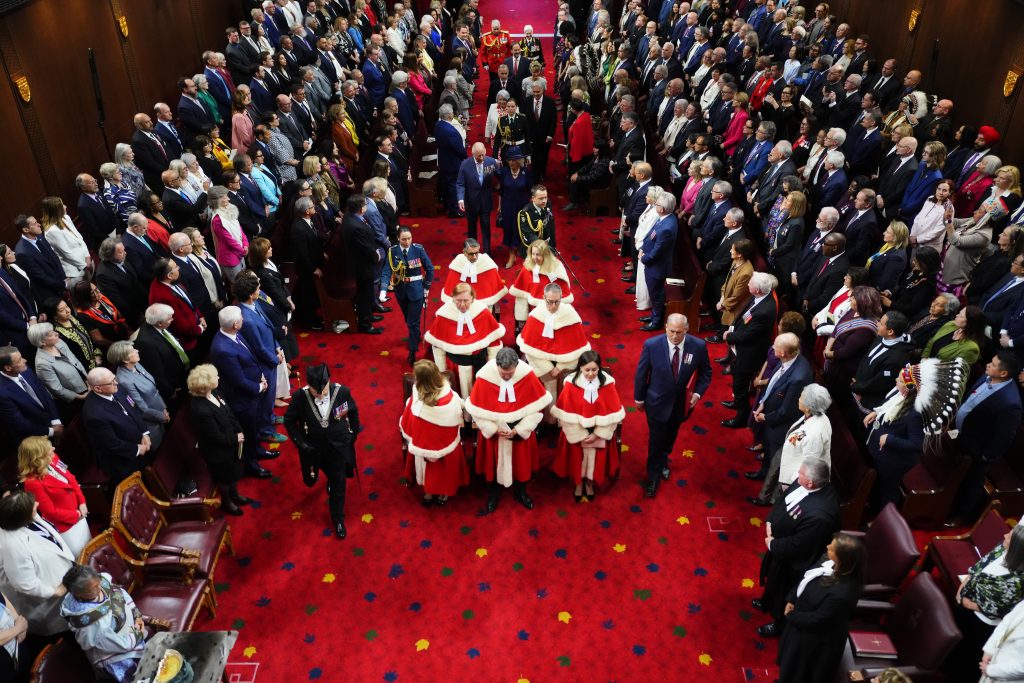
King Charles and Queen Camilla arrives to the Senate ahead of the King delivering the speech from the throne in the Senate in Ottawa on May 27, 2025. THE CANADIAN PRESS_Sean Kilpatrick
King Charles travels in carriage to Senate for throne speech
King Charles and Queen Camilla started the second day of their Canadian visit on Tuesday by travelling in Canada’s state landau past crowds of admirers in front of Parliament Hill.
The King wore a dark blue striped suit with the Order of Canada around his neck and his customary medal array. Next to him, the Queen was wearing a navy blue dress and hat.
They were joined by Gov. Gen. Mary Simon and her husband Whit Fraser.
The landau was escorted down Wellington Street in Ottawa by mounted RCMP officers.
The King and Queen arrived shortly after 10 a.m. ET at the Senate building, where the King received full military honours and a 100-person honour guard from the 3rd Battalion of the Royal Canadian Regiment.
The ceremony included an inspection of the guard and band and a 21-gun salute.
Photos: King Charles III delivers throne speech, opening Parliament
After delivering the throne speech, the King shook hands in gathered crowds alongside the Queen.
The royal couple visited the National War Memorial where he a trumpeter played Last Post and a band played the national anthems of Canada and the U.K.
The King laid a wreath at the Tomb of the Unknown Soldier, while the Queen placed flowers atop.
They again shook hands with dignitaries before entering a motorcade and making their way to the airport to leave Canada following the two-day visit.
The royal couple arrived in Ottawa Monday afternoon. They spent time at a local farmers market and held private audiences with Carney and the governor general.
King Charles made at least 18 official visits to Canada as the Prince of Wales. This was his first trip to Canada since his coronation.
The post ‘Strong and free’: Throne speech delivered by King Charles underscores Canada’s sovereignty appeared first on CANADA VOICE.
]]>The post CBC News : Compare the election promises of Canada’s major parties appeared first on CANADA VOICE.
]]>Read the policies and promises of the six main parties on the election’s pressing issues. These will be updated as parties add to their platforms ahead of the April 28 vote.
Climate change, energy
Liberal
The Liberals cut consumer carbon pricing before the campaign. They plan to introduce incentives to help families invest in clean energy, including reinstating the zero-emissions vehicle subsidy program. They would tighten the output-based pricing system for large industrial emitters to ensure carbon markets work properly. They are open to building pipelines and speeding up energy projects. They would allow Quebec to veto any pipeline on its territory. They say they would phase out the use of fossil fuels in government buildings by 2030. They would develop a carbon border adjustment mechanism to tax imports from countries that don’t have comparable carbon pricing. They would invest $20 million to help the Nunavut Nukkiksautiit Corporation complete the first phase of the development of its hydroelectricity facility. They would invest $94 million to upgrade power plants in Cambridge Bay, Gjoa Haven, Igloolik and Iqaluit.
Conservative
Conservatives would repeal all carbon pricing, including on industrial emitters. They would boost incentives (e.g., expand tax credits) for businesses that reduce emissions and to promote clean energy technologies. The party hasn’t announced its carbon emissions reduction target. It would support an east-west pipeline and would approve projects such as LNG Quebec. The party would be open to exporting oil from the Port of Churchill and has pledged to speed up development of the port.
New Democrat
The NDP supported the removal of consumer carbon pricing. The party would keep the industrial carbon price. It would introduce a border carbon adjustment mechanism to tax imports from countries that don’t have comparable carbon pricing. The NDP says it would cut “$18 billion in oil and gas subsidies,” but did not specify which. It is against building an LNG pipeline in Quebec and believes the province should have the right to veto energy projects on its territory. The party opposes the Energy East project but isn’t shutting the door to pipelines. It would prioritize creating an east-west electricity grid. It would continue the 100 per cent tariff on Chinese-made electric vehicles. It would rebate Canadian families and businesses $10,000 for buying or leasing over 12 months a Canadian-manufactured zero-emissions vehicle and $5,000 for buying or leasing a zero-emissions vehicle manufactured elsewhere.
Bloc Québécois
The Bloc would respect Quebec’s opposition to pipelines and opposes any pipeline project passing through Quebec. The party wants to end support for offshore oil and gas exploration in marine protected areas. It suggests taxing the profits of oil and gas companies and reinvesting the sums into climate change adaptation initiatives. The party would introduce a border carbon adjustment mechanism to tax imports from countries that don’t have comparable carbon pricing. It would ask the federal government to increase its share of funding for the Canada-Quebec Nature Agreement fund from $100 million to $300 million.
Green
It would invest in an east-west national electric grid. It would respect Quebec’s opposition to pipelines. It would remove barriers to inter-provincial energy trade. It would stop giving public money to oil and gas companies and invest it in clean energy instead. It would stop all new fossil fuel projects. It would create a new national emergency response agency.
People’s Party
It would abolish all climate change programs. But it would invest in adaptation strategies for floods and forest fires. It would find a buyer for the Trans Mountain pipeline. It would withdraw from the Paris Accord. It would repeal C-48, which regulates vessels that transport crude oil to or from ports or marine installations along B.C.’s north coast and C-69, the federal government’s Impact Assessment Act. It would reassert federal jurisdiction over pipeline construction by invoking section 92(10) of the Constitution if necessary. It would keep Line 5, which runs from Sarnia, Ont. to Michigan and Wisconsin, in operation.
Cost of living
Liberal
The Liberals say they would trim one percentage point off the lowest income tax bracket. They would also cancel a proposed hike to the capital gains inclusion rate. They would ease access to employment insurance by raising regional unemployment rate percentages and eliminate the GST on all homes up to $1 million for first-time homebuyers. They would suspend rules that prevent people with severance packages from collecting employment insurance for six months.
Conservative
The Conservatives say they would drop the tax rate on the lowest income tax bracket from 15 per cent to 12.75 per cent. They would defer capital gains taxes if the proceeds are reinvested in Canada. They would increase the annual TFSA contribution limit by $5,000 a year, provided the money is invested in Canadian companies. The party would remove the GST on new homes sold for under $1.3 million. They promise to allow working seniors with an annual income under $42,000 to earn as much as $34,000 without paying taxes, and let seniors continue to contribute to RRSPs until the age of 73, rather than the current limit of 71. The party would also allow travelling trades workers to write off the full cost of food, transportation and accommodation.
New Democrat
New Democrats pledge to raise the amount of untaxed income from $16,129 to $19,500. The party would eliminate GST on essentials (e.g., energy, internet and mobile phone bills). They would keep the proposed increase in capital gains tax cut. The party would double the amount of the Canada disability benefit and increase the guaranteed income supplement at a combined cost of $3 billion to $4 billion. It wants to open up more $10-a-day child-care spots. It would increase the EI replacement rate to two-thirds of insurable earnings, with a minimum weekly benefit of $450; extend EI benefits to 50 weeks nationwide; implement a national 360-hour standard to qualify for benefits; and remove the one-week waiting period. It would expand pharmacare, dental care and mental health supports for Canadians and ban U.S.-style private health-care clinics.
Bloc Québécois
The party would introduce a bill to increase old age security payments for those aged 65 to 74 by 10 per cent and propose tax incentives for seniors who choose to remain in the workforce. It wants the child benefit adapted to blended families and based on the income of the parents who have custody. The Bloc would call for the GST credit to be doubled in quarters when the inflation rate exceeds the Bank of Canada’s target (between one and three per cent) and pay it out monthly. The party says it would restrict credit-card interest rates. It would push to cut the GST on all second-hand goods and require a single tax report, which Quebec would administer.
Green
The Greens would raise the amount of untaxed income to $40,000. They would create a guaranteed livable income. The party plans to expand paid leave to elder care, miscarriage and other family needs. It wants to create universal early learning and child care that every family can afford, although the Green Party has not provided details of how the plan would work. It wants to make college and university free.
People’s Party
It would reinstate the fair disability pension for veterans, as previously provided for by the Pension Act. The pension would apply retroactively to 2006 and lump-sum payments received since then would be treated as advance payments. The party would request a line-by-line review of the New Veterans Charter to assess which policies and programs should be kept, in order to help simplify the system. It would abolish new spending programs by the Trudeau government, such as day care, pharmacare and dental care programs. It would eliminate all other programs that duplicate provincial programs or intrude on provincial jurisdictions.
Defence
Liberal
The Liberals would aim to increase NATO defence spending to two per cent of Canada’s GDP by 2030. They would review Canada’s contract for U.S.-built F-35 fighter jets and partner with allies for the next generation of aircraft. They would invest $420 million to protect sovereignty in the Arctic. They would modernize procurement legislation to enable the Canadian Armed Forces to buy equipment. It is unclear whether the Liberals will keep the $1.3-billion border security plan announced in December, which promises to increase drones and enhance aquatic and aerial surveillance in the Arctic as well as at the U.S. border.
Conservative
The Conservatives would reinforce the military and commit to the NATO spending target for member nations (two per cent of gross domestic product). They say “extra revenue from expanded trade with the U.S.” would go to the Armed Forces. They say they would double the size of the 1st Patrol Group of the Canadian Rangers from 2,000 to 4,000 rangers. They would acquire two additional polar icebreakers for the Royal Canadian Navy and deliver the two polar icebreakers currently being built for the Coast Guard by 2029. They would build at least one permanent Arctic military base within two years.
New Democrat
New Democrats would increase defence spending to two per cent of Canada’s GDP by 2032. They would cancel the contracts for U.S.-built F-35 fighter jets and P-8 Poseidon aircraft. They would establish new marine search and rescue stations — including in central Nunavut — and build new small craft harbours. They would attempt to re-establish a full-time military base in Inuvik, N.W.T., set up a base in Iqaluit as well as a new CAF Reserve Unit in Whitehorse. They would aim to complete construction of a deep-water port in Nanisivik, Nunavut. They would also work with Indigenous communities and the territorial government to establish more deep-water ports, including in Qikiqtarjuaq and Grays Bay.
Bloc Québécois
The Bloc wants Canada to hit the NATO goal of two per cent of GDP for military spending before the end of the next legislature. It would invest in Quebec technologies and prioritize partnerships with allies for procurement. It says the federal government should obtain the source code for F-35 fighter jets or end its contract. The party wants to strengthen sovereignty in the Arctic with the help of Quebec-based Davie Shipbuilding. The Bloc wants the federal government to support the creation of a global shipbuilding hub in the St. Lawrence Valley. The party would demand a review of the CBSA’s decision to reduce the operation hours of many border crossings in Quebec. It wants tougher penalties for border smugglers.
Green
The Greens have not committed to meeting the NATO defence spending target of two per cent of Canada’s GDP by 2032. They would suspend the contract for U.S.-built F-35 fighter jets and consider acquiring French Rafale or Swedish Gripen fighters instead and secure production and maintenance jobs in Canada. They would increase domestic artillery and ammunition production and boost investments to create ammunition reserves. They would join the Norwegian-German Type 212CD submarine development process. They would strengthen Arctic and coastal security with more patrols and better equipment. They would revise the Canadian Military Doctrine to account for the U.S. threatening Canadian sovereignty. They would stop selling weapons to countries that “abuse human rights.”
People’s Party
It would prioritize relations with the U.S. for our defence.
Foreign policy
Liberal
The Liberals would try to strengthen ties with allies that share Canada’s values. They would impose sanctions on Russia to push for a ceasefire with Ukraine.
Conservative
The Conservatives would slash foreign aid and divert the money to Canada’s military. They would support Ukraine by selling Canadian oil from proposed pipeline projects like Energy East, which TransCanada cancelled in 2017. They want Ukraine to be part of all peace negotiations related to the war. The party is against having Russia join the G7.
New Democrat
New Democrats would aim to contribute 0.7 per cent of gross national income to international aid and invest in the foreign service. They would create a 500-member Quick Reaction Force, which would be ready to deploy in UN peacekeeping missions. They would ratify the Treaty on the Prohibition of Nuclear Weapons.
Bloc Québécois
The Bloc supports Ukrainian sovereignty. It would allocate up to 0.7 per cent of Canada’s gross national income for foreign aid and prioritize supporting education, health, climate change adaptation and shrinking poverty. It would want Canada to contribute more to support international organizations, such as the World Health Organization, to compensate for the cuts of U.S. President Donald Trump’s administration. It would prioritize relationships with French-speaking nations, especially those in Africa.
Green
The Greens would support Ukraine by “demonstrating economic and moral support.” They would stop selling weapons to countries that abuse human rights. They would support the International Criminal Court and the International Court of Justice. The party would recognize a Palestinian state. They would offer the UN an alternative headquarters in Canada. They want to form a coalition with European and Pacific allies to boost funding for places and programs that the USAID is no longer serving, in light of funding cuts by the Trump administration.
People’s Party
It would not get involved in foreign conflicts such as the war in Ukraine, “unless we have a compelling strategic interest in doing so.” It would withdraw from all UN commitments (including Sustainable Development Goals, the Global Compact on Migration and the Paris Agreement on Climate Change) and reduce Canada’s presence in UN institutions. It would phase out development aid and focus Canadian international assistance exclusively on emergency humanitarian action “in cases such as health crises, major conflicts and natural disasters.” It would liberalize trade with as many countries as possible. To ensure “prosperity and security,” the party says it would prioritize relations with the U.S.
Government spending
Liberal
The Liberals would shrink public spending. They would cap the size of the public service and attempt to make government operations more efficient by “leveraging AI and machine learning.” They would aim to balance the government’s operational spending within three years, while running a “small deficit” on capital spending.
Conservative
Conservatives would cut government support for businesses and foreign aid. They plan to defund the CBC but maintain Radio-Canada. They would cut the federal public service and have called for public servants to be given clear assignments and be monitored to ensure they’re completing tasks. The Conservatives don’t plan on making “big changes” to the equalization program.
New Democrat
To increase government revenue, the party would eliminate bearer shares that hide stock ownership and boost compliance funding to Canada Revenue Agency’s enforcement section dealing with international and corporate taxation. The party says it would strive toward balancing the budget, but would be willing to borrow “when required” to support Canadian families.
Bloc Québécois
The Bloc is against the federal government imposing conditions on transfers to provinces. It would ask the federal government to transfer oversight of the public dental care program to Quebec.
Green
The party has yet to share its campaign promises on this issue.
People’s Party
It would set up a department of government downsizing. It would eliminate targeted tax measures that are “inefficient and serve no compelling public policy purpose.” It promises to eliminate the deficit by the end of the first mandate, and says it would accomplish this by reducing government support to corporations, including the CBC/Radio-Canada. It would cut foreign development aid, equalization payments and funding for programs that are under provincial or municipal jurisdiction.
Housing
Liberal
In addition to eliminating GST for first-time homebuyers on new and majorly renovated homes under $1 million, they would create a standalone entity that would act as a developer overseeing the construction of affordable housing in Canada. That entity would supply $25 billion in debt financing and $1 billion in equity financing to “innovative Canadian prefabricated home builders.” The Liberals would invest almost $74 million to improve critical housing infrastructure, speed up housing development and help meet the growing demand for affordable housing in the North. They would invest almost $66 million to build, renovate and repair hundreds more homes across Nunavut, including for Indigenous Peoples and underserved groups.
Conservative
The Conservatives would cut the GST on new homes up to $1.3 million. They would tie federal funding to cities to the number of housing starts. Cities or municipalities would be expected to increase the number of homes they build by 15 per cent each year; they would offer bonuses to municipalities that surpass that target. They would sell off 15 per cent of federally owned buildings so the land can be used to build affordable homes. They would implement a NIMBY (not in my backyard) fine on municipalities that block construction because of “egregious” opposition from local residents.
New Democrat
The party would redesign and double the Public Land Acquisition Fund, investing $1 billion over five years to build more rent-controlled homes. They would set aside all suitable federal Crown land in order to build more than 100,000 rent-controlled homes by 2035. They would speed up approvals on lands owned by the federal government to build homes sooner. They also say they would require the CMHC to offer low-interest, public-backed mortgages. The New Democrats are promising more money for the Rental Protection Fund — a federal program that supports community housing projects. They say they would ban corporate landlords from buying existing affordable rental properties and stop providing them with low-interest federal loans and mortgage loan insurance if they gouge tenants. They would “rescue at-risk home-building projects impacted by tariffs,” with the aim of stabilizing housing markets and creating jobs in construction.
Bloc Québécois
The Bloc wants the $1.2 billion from the Canada Housing Infrastructure Fund to be transferred to Quebec without conditions and integrate the funding to an existing program or use it for a new one that would better serve municipalities. The party is in favour of a GST rebate on new homes for first-time homebuyers and wants to eliminate the GST for services related to the purchase of a first home, such as building inspections.
Green
The Greens plan to stop corporations from buying single-family homes. They would use covenants to ensure housing built with public money stays affordable “forever.” They want to close loopholes to prevent the use of real estate for money laundering. They would eliminate unfair tax advantages for real estate investment trusts (REITs). They would push for the creation of intergenerational co-housing.
People’s Party
It would stop accepting new permanent residents to Canada until the housing crisis has cooled down. It would privatize or dismantle the Canada Mortgage and Housing Corporation and change the Bank of Canada’s inflation target from two per cent to zero per cent. It says it would work with provinces to curb speculation and money laundering by foreign homebuyers.
Immigration
Liberal
The party would maintain caps on immigration until it determines Canada has the capacity to receive more newcomers.
Conservative
They promise to reduce the number of non-permanent residents in Quebec and would grant the province more powers to choose temporary immigrants. They would tie Canada’s population growth rate to a level that’s below the number of new homes built, and would also consider factors such as access to health care and jobs. They would cap the number of asylum seekers Canada receives. They promise to crack down on fraud linked to international students and temporary workers.
New Democrat
The party has not set an immigration target but has said levels should match Canada’s needs and take into account whether there are enough resources to welcome newcomers. They would end Canada’s closed work permits and provide temporary workers with open work permits to help them avoid abusive employers.
Bloc Québécois
The Bloc wants Canada to reduce its immigration levels and distribute asylum seekers across provinces in a “fair” way. It would table a bill to improve the processing of asylum claims and grant additional powers to the immigration minister. It would tighten the eligibility criteria for claims made 14 days after a person irregularly crossed the border. The party wants to add an emergency component to the Immigration Ministry in order to help refugees during major crises.
Green
It would co-ordinate immigration levels with the provinces and set targets based on Canada’s capacity to welcome newcomers. It would suspend the Safe Third Party Agreement with the U.S. and work with provinces and territories to build the infrastructure needed to screen, process and settle new arrivals. It would change refugee provisions in order to extend access to scientists, activists, civil servants, journalists, judges, lawyers, doctors and other categories of U.S. citizens and permanent residents who have felt targeted by U.S. President Donald Trump.
People’s Party
After halting immigration until the housing crisis subsided, it would bring down immigration targets to 100,000 to 150,000 people annually and lower it further during times of crisis. It would accept fewer refugees, temporary foreign workers and students in favour of economic immigrants. It would withdraw from the UN’s Global Compact for Migration. The party would abolish the reunification program for parents and grandparents. It would eliminate work permits for students, except for academic work on campus. It would increase resources for CSIS, the RCMP and the IRCC so they can determine whether immigrants share “Canadian values and societal norms.” It would change the law to criminalize “birth tourism” and stop granting Canadian citizenship to babies born in Canada to foreign parents.
The post CBC News : Compare the election promises of Canada’s major parties appeared first on CANADA VOICE.
]]>The post Carney captured 85.9% of the vote, sweeping Liberal leadership race appeared first on CANADA VOICE.
]]>CITYnews halifax / By Kyle Duggan, The Canadian Press
OTTAWA — Federal Liberals elected Mark Carney to lead their party into the next election in a resounding first-ballot victory on Sunday, putting him on track to soon become the next prime minister of Canada.
This brings an end to an unusually short, two-month long leadership race called to replace outgoing leader Justin Trudeau and clears the path for an expected early election call.
“I feel like everything in my life has helped prepare me for this moment,” Carney said in his victory speech. “Two months ago, I put up my hand to run for leader because I felt we needed big changes — big changes guided by strong Canadian values.”
It’s not clear when Carney will be sworn in as prime minister. After the Liberal event, hundreds of his supporters attended a victory party at an Ottawa venue, where Carney encouraged the crowd to party tonight, then get to work tomorrow.
Carney captured 85.9 per cent of the vote, beating former finance minister Chrystia Freeland, who came in a distant second despite precipitating the race when she resigned from cabinet.
Speaking to reporters afterward, Freeland hailed the win as a sign the party is in great shape, but said of the final results that she “always knew this was going to be an uphill battle.”
“We saw many of my colleagues in cabinet looking at that and choosing not to run,” she said.
Freeland had previously said in a CBC Radio interview during the race that Carney was the preferred candidate of the prime minister’s office and that many Liberal establishment figures were organizing for his campaign.
Liberal MP Karina Gould and former Liberal MP Frank Baylis were also vying for the top job.
The Conservatives branded Carney’s sweeping victory as a coronation.
Leader Pierre Poilievre said at a rally in London, Ont. that the Liberals are pulling a “sneaky trick” to try to secure a fourth term by swapping Trudeau with Carney, who has advised the Liberal party on economics.
Carney exchanged blows with Poilievre in his victory speech, getting a big reaction from the partisan crowd, calling his opponent a “lifelong politician who worships at the altar of the free market — despite never having made a payroll.”
The candidates and evening’s speakers took on a patriotic tone as they took shots at President Donald Trump’s tariffs and threats of annexing Canada.
The strongest turned out to be former prime minister Jean Chrétien, who addressed Trump directly: “From one old guy to another old guy: Stop this nonsense!”
“My mother taught us good manners,” he continued. “She would be ashamed of me if I treated anyone (the way) the president treated my prime minister and the president of Ukraine.”
Carney, who cast himself in the race as the best to handle the economy given his past experience as a central banker, arrived on the convention floor with his brother Brian Carney, his wife Diana, and other family members by his side, parting a sea of Liberal partisans as he made his way to the stage.
He vowed to fight back against Trump’s threats to make Canada the 51st state.
“The stakes have never been higher,” Carney said. “Our neighbours want to take us. No way!”
The crowd loudly booed Trump’s threat.
Freeland had arrived holding hands with her husband Graham Bowley with her family in tow to the song “Man Eater” by Nelly Furtado. She had branded herself as the best Trump fighter among the candidates.
“There is a remarkable wave of patriotism across our country,” Freeland said. “Canadians are ready to stand for Canada. Canadians are ready to fight for Canada. And I know all of us have one message for Donald Trump tonight: Canada will never be the 51st state!”
Baylis, a Montreal businessman, was the first of the evening to take shots at Trump’s economic threats against Canada.
“We will not be intimidated by a tweet and we will not be broken by a tariff,” he said.
Gould arrived waving and hugging supporters to loud applause and said in her remarks she’s proud to be a Liberal, touting accomplishments such as the Charter of Rights, child care and other hallmark policies.
Liberal party president Sachit Mehra said Carney won with 131,674 votes, Freeland netted 11,134 – just eight per cent of the vote.
Gould garnered 4,785, or 3.2 per cent, while Baylis came last at 4,038 or 3 per cent.
The party said 151,899 Liberals voted in the race. The party had announced in January that nearly 400,000 registered to vote.
In his farewell speech, Trudeau said he is deeply proud of everything the party has done over the past decade and singled out two people to thank: Adam Scotti, his official photographer, and Katie Telford, his longtime close friend and chief of staff.
Trudeau said Canadians have proven resilient as they face crisis after crisis, but they always emerge stronger.
“Canadians are showing exactly what we are made of,” he said.
This report by The Canadian Press was first published March 9, 2025.
Kyle Duggan, The Canadian Press
The post Carney captured 85.9% of the vote, sweeping Liberal leadership race appeared first on CANADA VOICE.
]]>The post Why Canada can’t strip Elon Musk of Canadian citizenship appeared first on CANADA VOICE.
]]>House of Commons petition signed by more than a quarter of a million Canadians

Elizabeth Thompson · CBC News ·
An online petition calling on the Canadian government to revoke Elon Musk’s citizenship is on track to become one of the most popular in the history of the House of Commons.
There’s just one problem — Canada can’t revoke Musk’s citizenship.
Immigration lawyer Gabriela Ramo says that under Canadian law, someone’s citizenship can only be revoked if it can be proven that they committed fraud or misrepresentation to obtain it.
“Before they could move to do this, they would need to introduce legislation, there would have to be amendments to the current Citizenship Act,” said Ramo, former chair of the Canadian Bar Association’s immigration section. “There’s no provision that would allow them to pursue revocation of citizenship of a Canadian birth, by virtue of his birth to a Canadian mother.”
Ramo said it is “fairly rare” for Canadian citizenship to be revoked.
Rémi Larivière, media relations officer for Immigration, Refugees and Citizenship Canada, said the government does not take the revocation of citizenship lightly.
“A person’s citizenship can be revoked if the person obtained, retained, renounced or resumed his or her citizenship by false representation or fraud or by knowingly concealing material circumstances,” Larivière said.
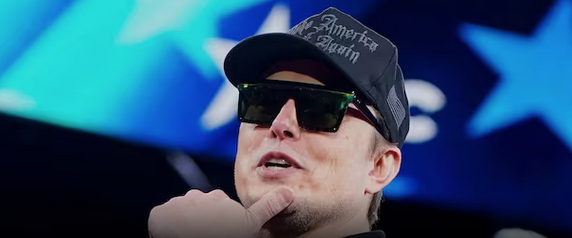
NDP MP Charlie Angus says the petition he’s sponsoring to Parliament to strip Elon Musk of his Canadian citizenship is about ‘sending a message’ to Musk and the U.S. government. Legal experts say someone’s citizenship can only be revoked if it can be proven that they committed fraud or misrepresentation to obtain it.
He said the process includes several steps and a decision by a Federal Court judge unless the citizen in question asks the immigration minister to make the decision.
Musk’s citizenship has been in the spotlight in recent days after British Columbia author Qualia Reed launched the petition last week calling for the Canadian government to revoke Musk’s citizenship and his Canadian passport, given the role that he is playing in U.S. President Donald Trump’s government.
“Elon Musk has engaged in activities that go against the national interest of Canada,” reads the petition sponsored by New Democrat MP Charlie Angus. “He has used his wealth and power to influence our elections; he has now become a member of a foreign government that is attempting to erase Canadian sovereignty; and the attempts of Elon Musk to attack Canadian sovereignty must be addressed.”
The petition has collected more than 263,000 signatures since it was posted on Feb. 20. The province with the most signatures, more than 96,000, is Ontario, followed by more than 53,000 from British Columbia, more than 43,000 from Quebec and more than 25,000 from Alberta.
Petition nearing record
Those who sign a House e-petition have to provide their email address, full name, postal code and phone number. Canadian citizens living outside of Canada are eligible to sign petitions as well, said Olivier Duhaime, spokesman for the House of Commons. House staff verify a signatory’s information and if they find it is not authentic or permissible, the clerk of petitions can disallow it.
The record number of signatures for a House of Commons e-petition is 387,487 for a petition calling for a vote of no confidence in the Liberal government, tabled in January 2024 by Conservative MP Michelle Ferreri.
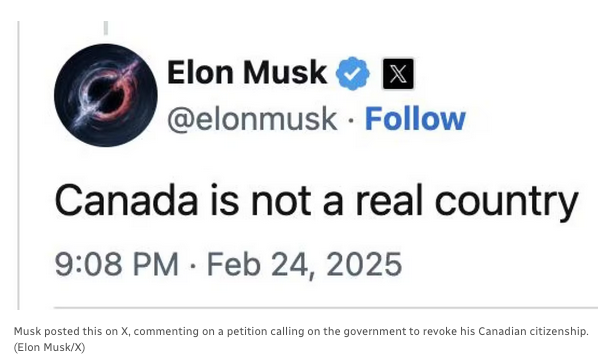
Musk posted this on X, commenting on a petition calling on the government to revoke his Canadian citizenship. (Elon Musk/X)
Musk was born in South Africa but his mother, Maye Musk, was born in Regina, giving him the right to Canadian citizenship. As a teenager, Musk decided to move to Canada.
“I left South Africa by myself when I was 17 with just a backpack & suitcase of books,” he posted on Dec. 28, 2019. “Worked on my Mom’s cousin’s farm in Saskatchewan & a lumber mill in Vancouver. Went to Queens Univ with scholarship & debt, then same to UPenn/Wharton & Stanford.”
Musk met his first wife, Canadian author Justine Wilson, at Queen’s University.
In February 2024, Musk posted on X that it took him over a decade to get U.S. citizenship, which he is reported to have received in 2002.
Musk and his companies have not responded to questions from CBC News in recent weeks about the status of his Canadian citizenship.
His mother has posted on X that it took her 12 years to get U.S. citizenship but now all of her children and her grandchildren have U.S. citizenship.
As recently as July 31, 2023, Musk posted a picture of himself wearing an I Love Canada T-shirt. In April 2023, he posted a picture of Canadian astronaut Jeremy Hansen with the message “I’m proudly half Canadian!”
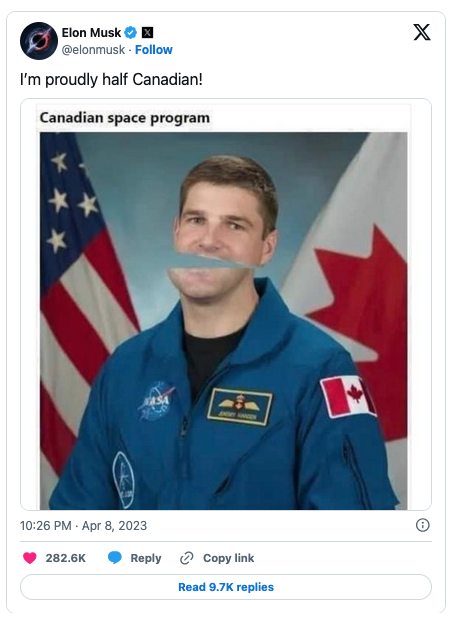
On Jan. 8, 2024, Musk posted “I do love Canada,” the same day as he posted “They won’t make it past the next election” in response to a post about Chrystia Freeland.
Musk has also posted messages supporting Conservative Leader Pierre Poilievre.
In 2024, Musk’s political involvement increased, throwing his support behind U.S. President Donald Trump’s re-election bid and making donations worth an estimated $288 million US to Trump and other Republican candidates.
In return, Trump put Musk in charge of his newly created Department of Government Efficiency (DOGE), which has turned the U.S. government upside down with mass firings in one department after another.
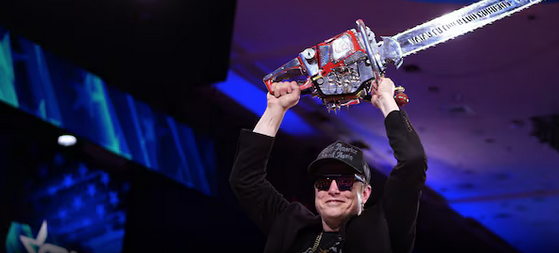
U.S. federal workers were ordered to justify their jobs this weekend by submitting five bullet points on their accomplishments from the past week or face termination. The initiative, spearheaded by Elon Musk and his Department of Government Efficiency (DOGE) team, has Republican backing, Democratic opposition and warnings of legal challenges ahead.
When Trump threatened in January to turn Canada into the 51st state and Prime Minister Justin Trudeau responded on X “There isn’t a snowball’s chance in hell that Canada would become part of the United States,” Musk mocked Trudeau, who had announced earlier in the week he would resign.
“Girl, you’re not the governor of Canada anymore, so doesn’t matter what you say.”
Angus, who sponsored the petition to strip Musk of Canadian citizenship, admits that the move is symbolic but has touched a lot of people.
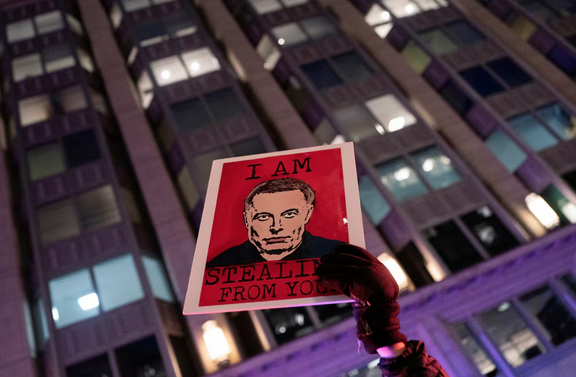
Americans have targeted Musk in protests of the Trump administration’s cutting of government agencies. (Nathan Howard/Reuters)
“I wasn’t expecting that it would explode the way it did,” Angus said in an interview. “To me it was really instructive because it shows just how angry Canadians are about what’s happening in Washington and how angry people are at the actions of Elon Musk. To me this is a real symbol of this moment.”
Angus has also sponsored an e-petition from Albertan Gerard Aldridge, which calls on the Canadian government to refuse Trump entry to Canada because of his criminal conviction and his actions in office. That petition, started at the same time, currently has more than 23,000 signatures.
Last month, Angus sent letters to Elections Canada and the Commissioner of Canada Elections, asking them to investigate his concerns that Musk could use his platform X to interfere in the upcoming Canadian election.
At the time, Elections Canada said it was an issue for the commissioner’s office. Angus said Monday that he has not yet heard back from the Commissioner of Canada Elections.
Elizabeth Thompson / Senior reporter
CBC’s Journalistic Standards and Practices|About CBC News
Corrections and clarifications|Submit a news tip|
Related Stories
- Elon Musk is on a tear as he shakes up politics in Europe. What’s his endgame?
- Elon Musk’s speech in Germany raises concerns about his increased political meddling abroad
- To X or not to X: Halifax debates leaving Elon Musk-owned platform behind
The post Why Canada can’t strip Elon Musk of Canadian citizenship appeared first on CANADA VOICE.
]]>